


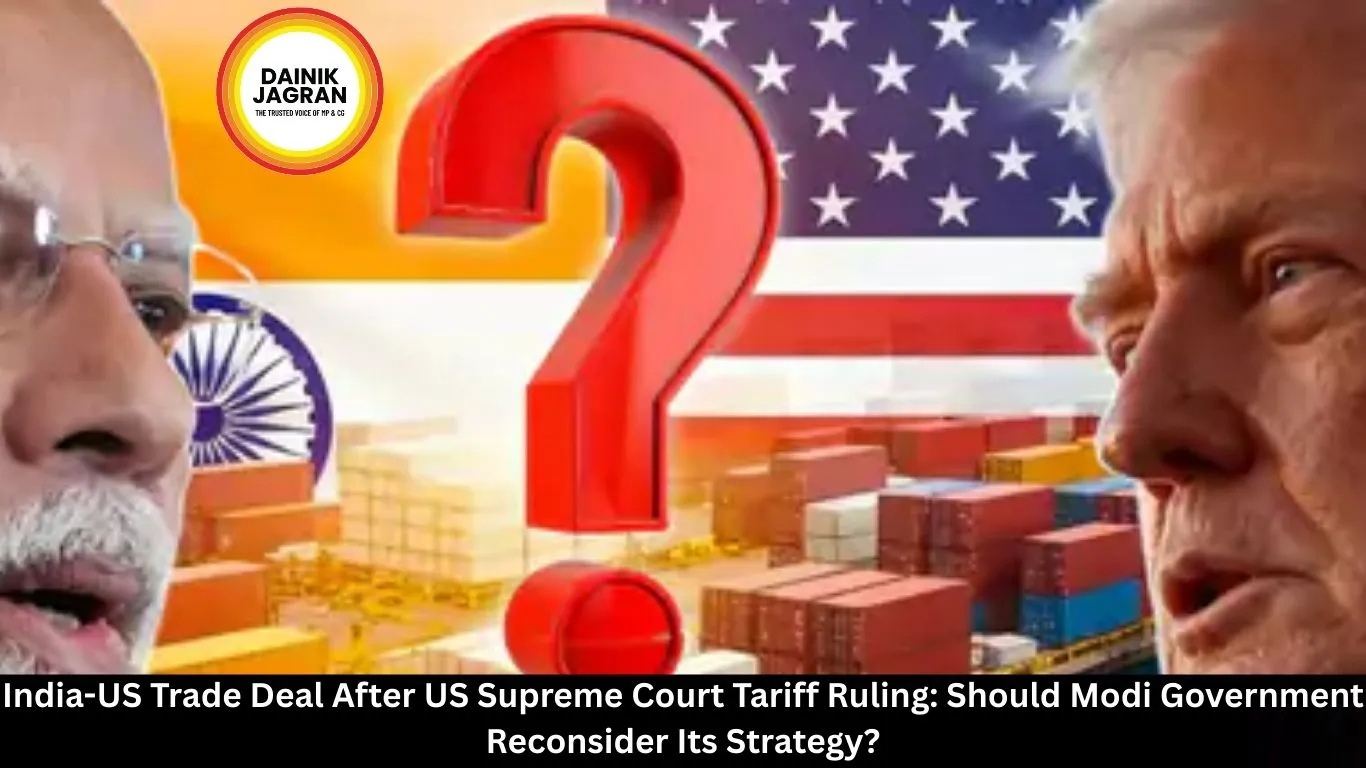
India-US Trade Deal After US Supreme Court Tariff Ruling: Should Modi Government Reconsider Its Strategy?
Digital Desk
India-US Trade Deal After US Supreme Court Tariff Ruling: Should Modi Government Reconsider Its Strategy?
In a major development that has shaken global trade equations, the US Supreme Court tariff ruling has curtailed former President Donald Trump’s authority to impose sweeping tariffs without Congressional approval. The verdict, delivered on February 20, 2026, has significant implications for the ongoing India-US trade deal negotiations and global economic partnerships.
The ruling directly challenged the use of the International Emergency Economic Powers Act (IEEPA) of 1977, stating that it does not grant the president blanket powers over trade. Chief Justice John Roberts, writing for the majority, emphasized that trade policy remains primarily under Congressional authority.
Quick Shift: Trump’s 15% Tariff Move
Within hours of the verdict, the US administration introduced a temporary 10% tariff—later increased to 15%—on most imports. This move, justified under the Section 122 Trade Act, is set to remain effective for 150 days starting February 24, 2026.
Trade experts, including Ajay Srivastava from the Global Trade Research Initiative (GTRI), argue that this signals Washington’s attempt to retain negotiating leverage. However, legal experts suggest the new tariff could face fresh judicial scrutiny since Section 122 has rarely been invoked in modern trade practice.
What Does This Mean for the India-US Trade Deal?
The latest developments have placed the India-US trade deal under renewed review. Here’s why it matters:
1. Relief for Indian Exports
The removal of “reciprocal tariffs” frees nearly 55% of Indian exports from a previously proposed 18–25% duty. These goods will now revert to standard Most Favored Nation (MFN) tariff rates.
2. Tariffs That Continue
Some duties remain intact, including:
50% tariff on steel and aluminum under Section 232
25% tariff on select auto components
3. Key Exemptions
Nearly 40% of India’s export basket—including smartphones, petroleum products, and medicines—remains exempt from US tariffs.
Why India Must Reassess Now
India had reportedly offered multiple concessions during trade talks, including:
Lowering MFN tariffs
Easing regulations for US goods
Aligning economic policies with American interests
Indicating large-scale purchases of US products
These concessions were negotiated in exchange for a reduced 18% reciprocal tariff rate. However, with a uniform 15% tariff now imposed broadly, the value of those concessions has diminished.
A joint India-US statement dated February 6, 2026, reportedly allows either country to revise commitments if tariff structures change. Experts suggest New Delhi should leverage this clause strategically.
India’s Strategic Options
According to trade analysts, India now has three primary options:
Pause negotiations until legal clarity emerges in the US
Seek revised terms ensuring equitable treatment
Exit talks temporarily to reassess global trade alignments
Given the unpredictability of US trade policy, recalibration appears necessary.
Broader Global Impact
The ruling has also cast doubt over trade agreements with countries such as the UK, Japan, and EU members. Many had negotiated terms to avoid steep US tariffs. Now, with a blanket 15% duty, the benefits of those agreements are under scrutiny.
The move reasserts Congressional control over trade but injects uncertainty into global markets.
Conclusion: Time for Strategic Reset?
The India-US trade deal now stands at a crossroads. While tariff relief offers short-term gains, the broader uncertainty surrounding US trade policy demands cautious optimism. For the Modi government, this is a moment to reassess negotiating leverage, protect domestic industry, and ensure that India’s long-term economic interests remain secure.
As global trade dynamics evolve rapidly in 2026, strategic recalibration—not hurried compromise—may be India’s strongest response.

.jpg)




