

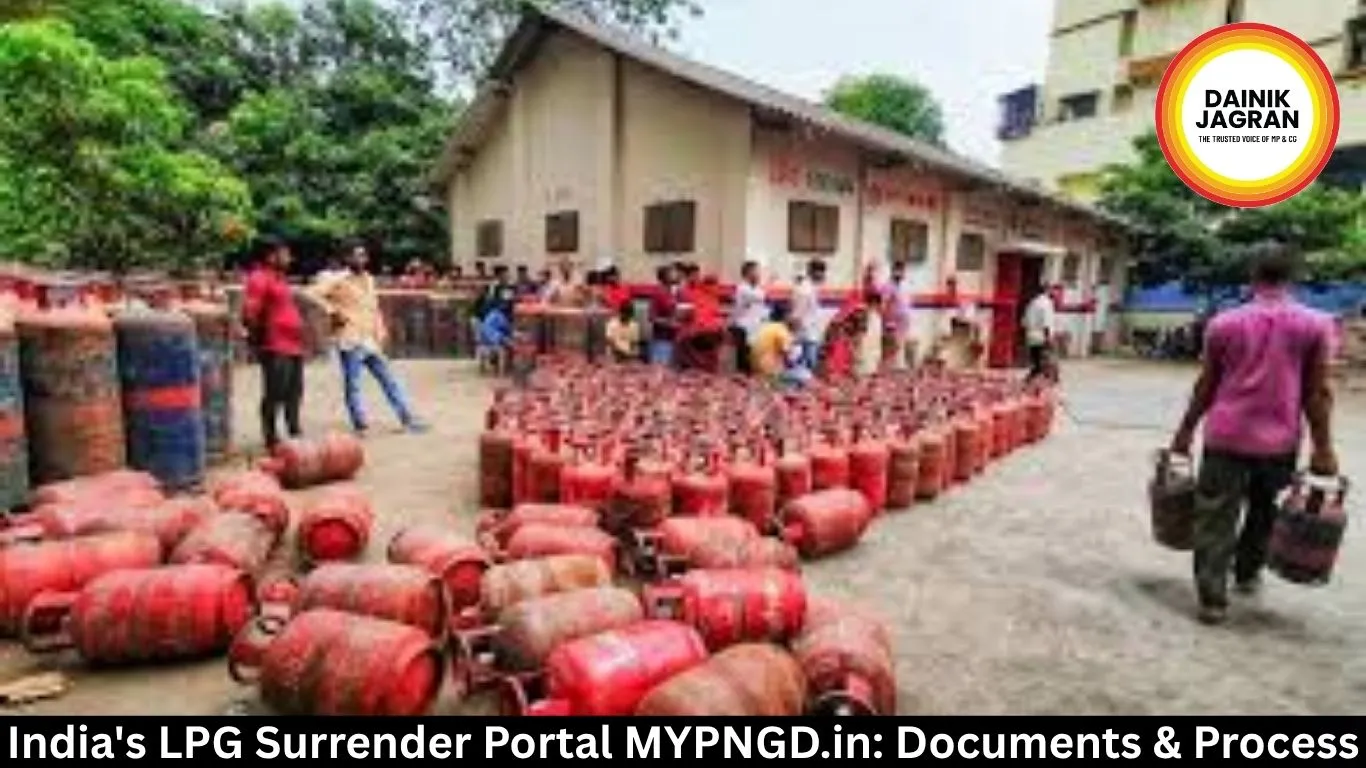
India's LPG Surrender Portal MYPNGD.in: Documents & Process
Digital Desk
India's new MYPNGD.in portal simplifies LPG connection surrender for PNG users. Know the step-by-step process, required documents, and deadlines.
Over 1,800 LPG Connections Surrendered Daily as Govt Launches MYPNGD.in Portal
Centre makes LPG surrender mandatory for PNG users; new online portal simplifies the switch with step-by-step guidance and document requirements
A Mandate That Changes Kitchens Across India
In a decisive policy shift, the Indian government has made it compulsory for households with Piped Natural Gas connections to surrender their domestic LPG cylinders — and within just one day of the directive taking effect, more than 1,800 consumers had already initiated the process. To manage the anticipated surge in requests, the Ministry of Petroleum and Natural Gas has launched a dedicated online portal, MYPNGD.in, giving consumers a clear, structured pathway to complete the transition.
The Order Behind the Switch
The mandate stems from a gazette notification dated 14 March 2026, through which the Ministry amended the Liquefied Petroleum Gas (Regulation of Supply and Distribution) Order, 2000 — a move executed under the powers granted by the Essential Commodities Act. According to officials, the amendment leaves no ambiguity: if a household already receives gas through a pipeline, retaining an LPG cylinder connection is no longer permitted.
The policy targets a growing overlap between India's two parallel domestic fuel ecosystems. As per available data, the country currently has approximately 1.65 crore PNG subscribers alongside a much larger base of around 33 crore LPG users — a gap that the government appears determined to narrow.
What MYPNGD.in Offers
The newly launched MYPNGD.in portal serves as a one-stop resource for consumers navigating the surrender process. The platform hosts process guides, document checklists, and distributor coordination tools — all designed to reduce friction for first-time users unfamiliar with formal surrender procedures.
Step-by-Step: How to Surrender Online
Consumers can initiate the process directly on MYPNGD.in or through the web portals and mobile applications of their respective LPG distributors — whether Indane, HP Gas, or Bharat Gas. The steps are broadly similar across platforms. After logging in using the registered mobile number, the user navigates to the 'Surrender Connection' or 'Manage Connection' section and submits a formal request. Once confirmed, the distributor reaches out to schedule cylinder collection from the household. The pressure regulator is also picked up at the same time.
Documents You Will Need
Whether surrendering online or at a distributor's office, consumers are required to keep certain documents handy. These include a valid proof of identity — such as an Aadhaar card, PAN card, or Voter ID — along with a proof of address. Most critically, the original LPG Subscription Voucher, issued at the time of first connection, must be produced as part of the verification process.
Offline Route for Those Who Prefer It
For consumers who are either without internet access or simply prefer a face-to-face process, the offline route remains available. The cylinder should be emptied before the visit, and the pressure regulator disconnected. At the distributor's office, consumers are required to submit their Gas Consumer Card (commonly called the Blue Book) along with identity and address proof. Upon return of the equipment and documents, the distributor issues a Termination Voucher and processes a refund of the original security deposit.
PNG: The Case for Piped Gas
Beyond regulatory compliance, officials and energy sector analysts have pointed to genuine long-term benefits of switching to PNG. Piped natural gas is delivered continuously through an underground network, doing away with the recurring need for cylinder bookings and deliveries. Sources in the energy sector indicated that over time, PNG tends to be more cost-effective, and the absence of storage risk makes it a safer domestic fuel option.
What Comes Next
With 33 crore LPG connections nationwide and only a fraction of those held by PNG subscribers, the actual pool of people required to act remains a subset of the broader user base — limited, for now, to those who already have a working PNG line at home. However, as city gas distribution networks continue to expand across Tier-II and Tier-III cities, the circle of compliance is expected to widen. The Ministry, as per reports, is monitoring the rollout closely and may issue further operational guidance in the weeks ahead.
The launch of MYPNGD.in signals the Centre's intent to make LPG connection surrender not just mandatory, but manageable — nudging India's energy mix steadily toward cleaner, pipeline-delivered natural gas.
--------
๐จ Beat the News Rush – Join Now!
Get breaking alerts, hot exclusives, and game-changing stories instantly on your phone. No delays, no fluff – just the edge you need. โก
Tap to join:
๐ข WhatsApp Channel: Dainik Jagran MP CG
Crave more?
๐ Facebook: Dainik Jagran MP CG English
๐ ง Twitter (X): Dainik Jagran MP CG
๐ Instagram: Dainik Jagran MP CG
Share the fire – keep your crew ahead! ๐๏ธ๐ฅ
India's LPG Surrender Portal MYPNGD.in: Documents & Process
Digital Desk
Over 1,800 LPG Connections Surrendered Daily as Govt Launches MYPNGD.in Portal
Centre makes LPG surrender mandatory for PNG users; new online portal simplifies the switch with step-by-step guidance and document requirements
A Mandate That Changes Kitchens Across India
In a decisive policy shift, the Indian government has made it compulsory for households with Piped Natural Gas connections to surrender their domestic LPG cylinders — and within just one day of the directive taking effect, more than 1,800 consumers had already initiated the process. To manage the anticipated surge in requests, the Ministry of Petroleum and Natural Gas has launched a dedicated online portal, MYPNGD.in, giving consumers a clear, structured pathway to complete the transition.
The Order Behind the Switch
The mandate stems from a gazette notification dated 14 March 2026, through which the Ministry amended the Liquefied Petroleum Gas (Regulation of Supply and Distribution) Order, 2000 — a move executed under the powers granted by the Essential Commodities Act. According to officials, the amendment leaves no ambiguity: if a household already receives gas through a pipeline, retaining an LPG cylinder connection is no longer permitted.
The policy targets a growing overlap between India's two parallel domestic fuel ecosystems. As per available data, the country currently has approximately 1.65 crore PNG subscribers alongside a much larger base of around 33 crore LPG users — a gap that the government appears determined to narrow.
What MYPNGD.in Offers
The newly launched MYPNGD.in portal serves as a one-stop resource for consumers navigating the surrender process. The platform hosts process guides, document checklists, and distributor coordination tools — all designed to reduce friction for first-time users unfamiliar with formal surrender procedures.
Step-by-Step: How to Surrender Online
Consumers can initiate the process directly on MYPNGD.in or through the web portals and mobile applications of their respective LPG distributors — whether Indane, HP Gas, or Bharat Gas. The steps are broadly similar across platforms. After logging in using the registered mobile number, the user navigates to the 'Surrender Connection' or 'Manage Connection' section and submits a formal request. Once confirmed, the distributor reaches out to schedule cylinder collection from the household. The pressure regulator is also picked up at the same time.
Documents You Will Need
Whether surrendering online or at a distributor's office, consumers are required to keep certain documents handy. These include a valid proof of identity — such as an Aadhaar card, PAN card, or Voter ID — along with a proof of address. Most critically, the original LPG Subscription Voucher, issued at the time of first connection, must be produced as part of the verification process.
Offline Route for Those Who Prefer It
For consumers who are either without internet access or simply prefer a face-to-face process, the offline route remains available. The cylinder should be emptied before the visit, and the pressure regulator disconnected. At the distributor's office, consumers are required to submit their Gas Consumer Card (commonly called the Blue Book) along with identity and address proof. Upon return of the equipment and documents, the distributor issues a Termination Voucher and processes a refund of the original security deposit.
PNG: The Case for Piped Gas
Beyond regulatory compliance, officials and energy sector analysts have pointed to genuine long-term benefits of switching to PNG. Piped natural gas is delivered continuously through an underground network, doing away with the recurring need for cylinder bookings and deliveries. Sources in the energy sector indicated that over time, PNG tends to be more cost-effective, and the absence of storage risk makes it a safer domestic fuel option.
What Comes Next
With 33 crore LPG connections nationwide and only a fraction of those held by PNG subscribers, the actual pool of people required to act remains a subset of the broader user base — limited, for now, to those who already have a working PNG line at home. However, as city gas distribution networks continue to expand across Tier-II and Tier-III cities, the circle of compliance is expected to widen. The Ministry, as per reports, is monitoring the rollout closely and may issue further operational guidance in the weeks ahead.
The launch of MYPNGD.in signals the Centre's intent to make LPG connection surrender not just mandatory, but manageable — nudging India's energy mix steadily toward cleaner, pipeline-delivered natural gas.


