


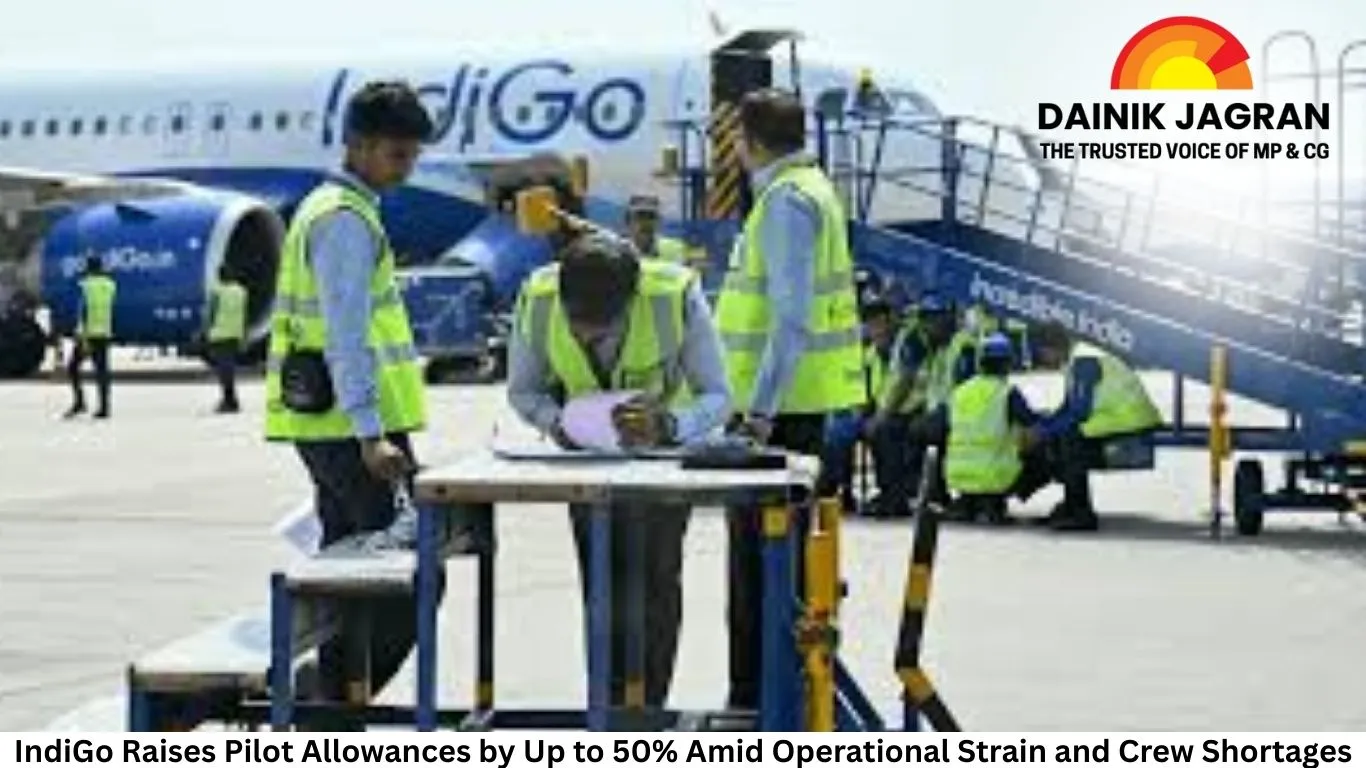
IndiGo Raises Pilot Allowances by Up to 50% Amid Operational Strain and Crew Shortages
Digital Desk
According to information shared with pilot representatives and reported by PTI, layover allowances for captains have been increased from ₹2,000 to ₹3,000, while first officers will now receive ₹1,500, up from ₹1,000. Allowances for deadheading duties—when pilots travel as passengers for operational requirements—have also been revised. Captains will receive ₹4,000 per trip instead of ₹3,000, while first officers’ allowances have been raised from ₹1,500 to ₹2,000.
The decision follows weeks of disruption that saw IndiGo cancel more than 4,500 flights, largely due to roster misalignment and crew availability issues. Multiple meetings were held between airline management and pilot groups after crew members flagged concerns over fatigue, unpredictable schedules and compliance with new flight duty norms.
Operational stress escalated in November and December after the Directorate General of Civil Aviation (DGCA) implemented revised Flight Duty Time Limit (FDTL) regulations, mandating longer rest periods for pilots. IndiGo struggled to realign its scheduling under the new framework, leading to widespread delays and cancellations between late November and early December.
The situation prompted regulatory intervention, with the DGCA directing IndiGo to cut its winter schedule by 10 per cent to restore operational stability. A committee appointed by the regulator has since submitted a confidential report to the civil aviation ministry, reportedly pointing to planning gaps and management lapses.
IndiGo is also facing intensifying competition for skilled cockpit crew, as foreign airlines continue to recruit Indian pilots with more attractive pay packages and work-life balance conditions. Industry sources say the revised allowance structure is aimed at reducing attrition and discouraging pilots from moving overseas. Separately, the central government is considering a code of conduct to regulate international pilot recruitment.
Despite airline-specific challenges, India’s aviation market continues to expand. Domestic passenger traffic rose to 15.3 million in November, up nearly 7 per cent year-on-year. Between January and November 2025, more than 152 million passengers flew domestically, reflecting sustained demand.
However, passenger complaints have also increased, with flight delays, cancellations and refunds accounting for a majority of grievances. Ratings agency Moody’s has cautioned that prolonged disruptions could affect IndiGo’s profitability through revenue losses, refunds and potential regulatory penalties.
While IndiGo retains a dominant 63 per cent market share, the allowance hike signals mounting pressure on the airline to balance rapid growth with crew welfare and operational discipline.
.jpg)




