


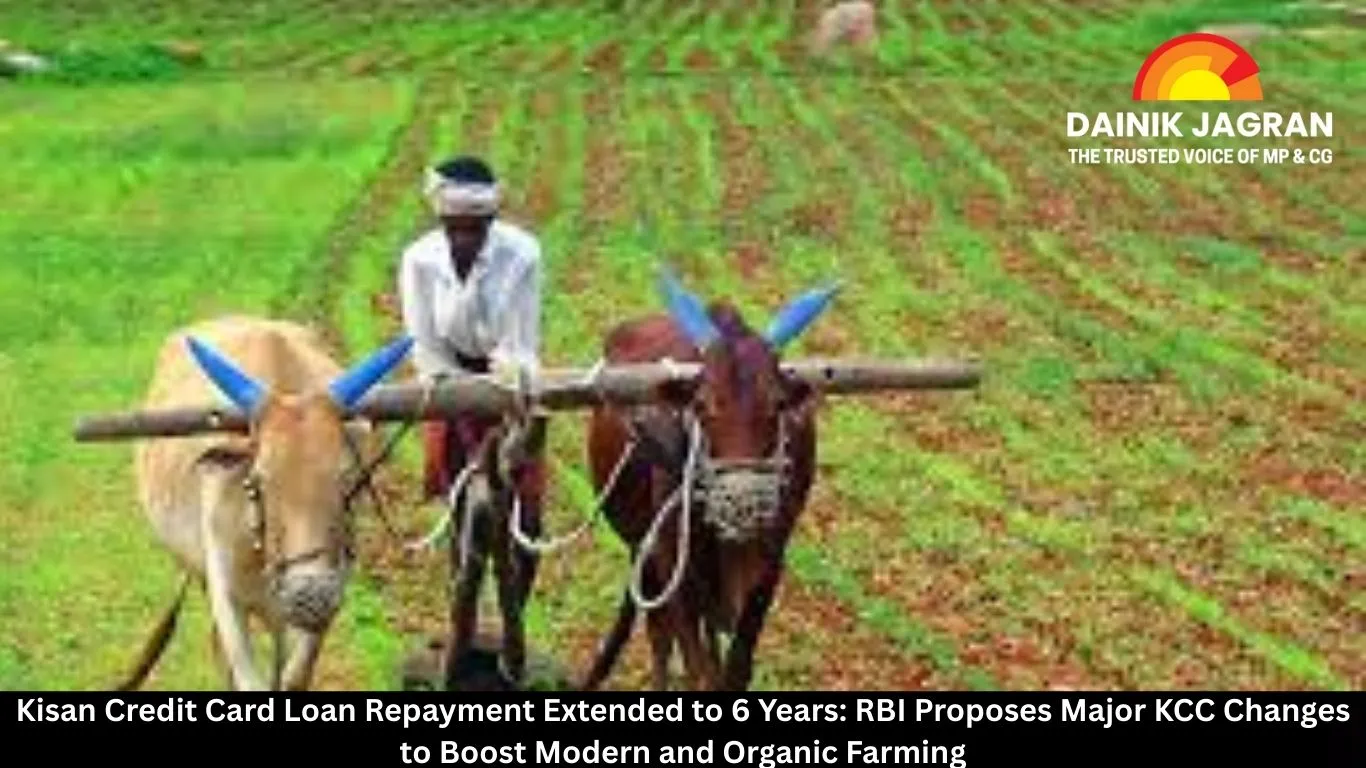
Kisan Credit Card Loan Repayment Extended to 6 Years: RBI Proposes Major KCC Changes to Boost Modern and Organic Farming
Digital Desk
Kisan Credit Card Loan Repayment Extended to 6 Years: RBI Draft Guidelines Aim to Transform Agricultural Credit
In a major relief for farmers, the Kisan Credit Card (KCC) loan repayment period has been extended to six years under new draft guidelines released by the Reserve Bank of India. The move is aimed at making agricultural credit more flexible, modern, and aligned with current farming practices.
The RBI has invited public feedback on the proposed changes until March 6, 2026. If implemented, the revised Kisan Credit Card framework could significantly ease repayment pressure while promoting modern and organic farming methods across India.
What Is the Kisan Credit Card Scheme?
The Kisan Credit Card scheme was launched to ensure farmers get timely and affordable credit for agricultural and allied activities. Over the years, it has become a crucial financial tool for rural India.
Under the scheme, farmers can avail loans for:
Crop cultivation (short-term and long-term)
Post-harvest expenses
Marketing of produce
Maintenance of farm assets
Domestic and allied activities
In 2019, the scheme was expanded to include Animal Husbandry, Dairy, and Fisheries sectors, widening its scope and impact.
Key Changes Proposed in RBI KCC Guidelines
The draft guidelines introduce several important reforms to strengthen agricultural credit delivery.
1. KCC Loan Repayment Extended to 6 Years
The most significant change is the extension of the KCC loan repayment tenure to six years. Earlier, repayment timelines were shorter, creating pressure—especially for long-duration crops. The new structure offers farmers more breathing space and financial stability.
2. Standardized Crop Season Duration
12 months for short-duration crops
18 months for long-duration crops
This standardization will ensure uniform loan sanction and repayment cycles across Commercial Banks, Small Finance Banks, Regional Rural Banks, and Rural Co-operative Banks.
3. Credit Limit Linked to Actual Cost of Cultivation
The drawing limit will now align with the “scale of finance” — the real cost of cultivation for each crop. This ensures farmers receive adequate credit without shortfalls.
4. Separate Support for Modern Agricultural Practices
The existing 20% additional provision for repair and maintenance of farm assets will now include:
Soil testing
Real-time weather forecasting
Certification for organic farming
Good Agricultural Practices (GAP) compliance
This marks a major shift towards technology-driven and sustainable farming.
Why This Matters Now
With rising input costs, climate uncertainty, and growing demand for organic produce, Indian agriculture is undergoing rapid transformation. The RBI’s proposed reforms come at a time when farmers need:
Longer repayment flexibility
Support for climate-resilient farming
Access to scientific and sustainable practices
Agriculture experts believe the inclusion of soil testing and organic certification expenses will accelerate India’s push towards sustainable agriculture.
A senior rural banking consultant noted, “Extending the KCC loan repayment period and aligning credit with real cultivation costs can reduce farmers’ dependency on informal moneylenders.”
Benefits for Farmers
If implemented, the revised Kisan Credit Card rules will:
Reduce financial stress due to longer tenure
Provide adequate and realistic credit limits
Promote adoption of modern and organic farming
Lower dependence on high-interest informal loans
Overall, the reforms aim to make agricultural financing more practical, farmer-centric, and future-ready.
How to Submit Feedback
The RBI has invited feedback from stakeholders and the public until March 6, 2026. Individuals can share suggestions via email or through the official RBI website. Final guidelines will be issued after reviewing responses.
The extension of the Kisan Credit Card loan repayment to six years signals a progressive shift in agricultural credit policy. By supporting soil testing, weather forecasting, and organic certification, the RBI’s draft guidelines are not just easing repayment pressure — they are laying the foundation for modern, sustainable Indian farming.

.jpg)




