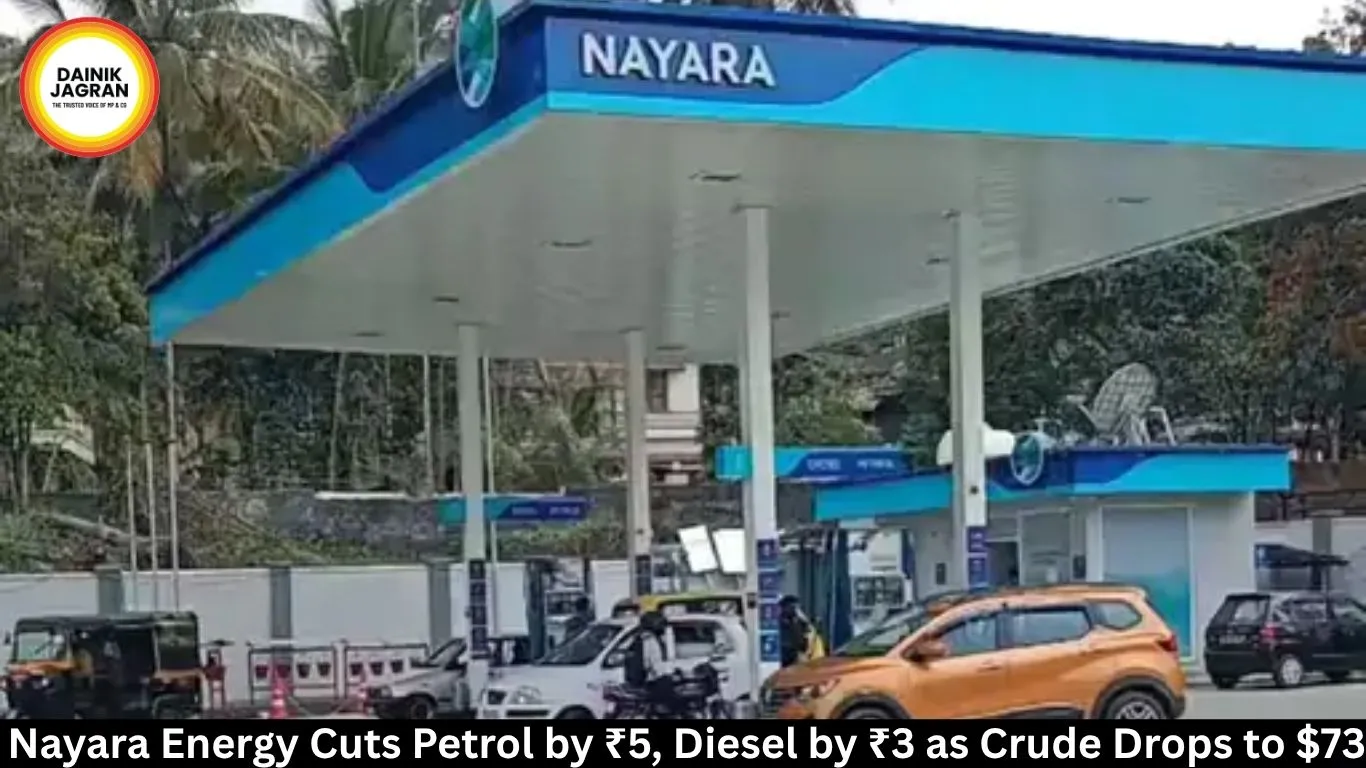
Nayara Energy slashes retail fuel prices: Petrol down by ₹5, Diesel by ₹3 across 7,000 stations nationwide
Digital Desk
Private fuel retailer Nayara Energy slashes petrol and diesel prices in India on July 1, 2026. Bhopal rates drop to ₹119.79 for petrol, while state OMCs keep prices frozen.
In a surprising market move on July 1, 2026, India's largest private fuel retailer, Nayara Energy, announced a substantial price rollback at its pumps. The company has slashed petrol prices by ₹5 per litre and diesel by ₹3 per litre nationwide.
Following the price revision, retail prices at Nayara pumps in Bhopal have dropped cleanly: petrol now stands at ₹119.79 per litre (down from ₹125), while diesel is priced at ₹102.57 per litre (down from ₹106). This marks the country's first retail fuel price reduction by any oil marketing company (OMC) in more than two years.
Easing of US-Iran War Tensions Pushes Global Crude Back to $73
The domestic price cut is a direct consequence of shifting geopolitics. Global crude benchmarks, which had previously spiked past the $100-to-$126 mark due to the military escalation in West Asia and the sub-sequential closure of the critical Strait of Hormuz maritime corridor, have cooled significantly.
Following the signing of the historic US-Iran Memorandum of Understanding (MoU) on June 17, shipping channels reopened, easing international supply bottlenecks. On Tuesday, Brent crude futures slid to around $72.51 to $73 per barrel, providing private refiners the financial headroom to pass on discount benefits directly to Indian motorists.
State-Owned Refiners Tighten Grip, Keeping Prices Unchanged
Despite Nayara's aggressive pricing strategy, state-owned energy giants have chosen to remain completely passive.
Domestic Fuel Retailing Space Market Share: ├── State-Run OMCs (IOCL, BPCL, HPCL) : 93% (Prices frozen at current rates) └── Private Retailer (Nayara Energy) : 7% (Prices slashed on July 1) The three state-run giants, which operate over 90,000 outlets across India, have yet to announce a corresponding rollback. To recall, these public sector firms aggressively raised fuel prices by a cumulative ₹7.50 per litre in staggered increments back in May, citing import costs from the peak of the global crude crisis. Motorists will only see the ₹5 and ₹3 price reliefs if they fill up explicitly at Nayara-branded stations.
Nayara's Growing Energy Infrastructure Footprint
Formerly known as Essar Oil, Nayara Energy is heavily backed by Russian energy giant Rosneft. The company operates India's second-largest single-site refinery at Vadinar, Gujarat, which pumps out roughly 20 million tonnes per annum—accounting for a vital 8% of India's total domestic refining capacity.
Having just completed a month-long scheduled refinery turnaround and maintenance cycle in late spring, company officials confirmed they are fully geared to meet fresh demand. The private giant is also stepping up its green transition, setting up massive ethanol plants and solar-powering over 1,000 of its retail fuel stations.
Wider Financial Reconfigurations Effective July 1, 2026
Nayara's retail price cut lands alongside several sweeping structural and regulatory policy revisions implemented by the government on the turn of the month:
-
Commercial LPG Slid: Public sector OMCs slashed the price of 19-kg commercial LPG cylinders by an average of ₹180. In New Delhi, a commercial cylinder now retails at ₹2,930, though domestic 14.2-kg cylinders remain unchanged.
-
Fuel Rationing Lifted: The Ministry of Petroleum has officially withdrawn the emergency daily 200-litre rationing limit per vehicle for diesel sales, which was introduced during the peak of the West Asian transit halt.
-
Passport Fees Hiked: Processing a fresh passport or requesting a reissue has become substantially costlier. Standard passport application fees have scaled from ₹1,500 up to ₹2,500.
-
Railway Penalties Doubled: Indian Railways has implemented strict anti-ticketless travel bylaws; commuters caught without a valid ticket or transit pass face doubled baseline fines starting today.
--------
🚨 Beat the News Rush – Join Now!
Get breaking alerts, hot exclusives, and game-changing stories instantly on your phone. No delays, no fluff – just the edge you need. ⚡
Tap to join:
🟢 WhatsApp Channel: Dainik Jagran MP CG
Crave more?
🅕 Facebook: Dainik Jagran MP CG English
🅧 Twitter (X): Dainik Jagran MP CG
🅘 Instagram: Dainik Jagran MP CG
Share the fire – keep your crew ahead! 🗞️🔥
Nayara Energy slashes retail fuel prices: Petrol down by ₹5, Diesel by ₹3 across 7,000 stations nationwide
Digital Desk
In a surprising market move on July 1, 2026, India's largest private fuel retailer, Nayara Energy, announced a substantial price rollback at its pumps. The company has slashed petrol prices by ₹5 per litre and diesel by ₹3 per litre nationwide.
Following the price revision, retail prices at Nayara pumps in Bhopal have dropped cleanly: petrol now stands at ₹119.79 per litre (down from ₹125), while diesel is priced at ₹102.57 per litre (down from ₹106). This marks the country's first retail fuel price reduction by any oil marketing company (OMC) in more than two years.
Easing of US-Iran War Tensions Pushes Global Crude Back to $73
The domestic price cut is a direct consequence of shifting geopolitics. Global crude benchmarks, which had previously spiked past the $100-to-$126 mark due to the military escalation in West Asia and the sub-sequential closure of the critical Strait of Hormuz maritime corridor, have cooled significantly.
Following the signing of the historic US-Iran Memorandum of Understanding (MoU) on June 17, shipping channels reopened, easing international supply bottlenecks. On Tuesday, Brent crude futures slid to around $72.51 to $73 per barrel, providing private refiners the financial headroom to pass on discount benefits directly to Indian motorists.
State-Owned Refiners Tighten Grip, Keeping Prices Unchanged
Despite Nayara's aggressive pricing strategy, state-owned energy giants have chosen to remain completely passive.
Domestic Fuel Retailing Space Market Share: ├── State-Run OMCs (IOCL, BPCL, HPCL) : 93% (Prices frozen at current rates) └── Private Retailer (Nayara Energy) : 7% (Prices slashed on July 1) The three state-run giants, which operate over 90,000 outlets across India, have yet to announce a corresponding rollback. To recall, these public sector firms aggressively raised fuel prices by a cumulative ₹7.50 per litre in staggered increments back in May, citing import costs from the peak of the global crude crisis. Motorists will only see the ₹5 and ₹3 price reliefs if they fill up explicitly at Nayara-branded stations.
Nayara's Growing Energy Infrastructure Footprint
Formerly known as Essar Oil, Nayara Energy is heavily backed by Russian energy giant Rosneft. The company operates India's second-largest single-site refinery at Vadinar, Gujarat, which pumps out roughly 20 million tonnes per annum—accounting for a vital 8% of India's total domestic refining capacity.
Having just completed a month-long scheduled refinery turnaround and maintenance cycle in late spring, company officials confirmed they are fully geared to meet fresh demand. The private giant is also stepping up its green transition, setting up massive ethanol plants and solar-powering over 1,000 of its retail fuel stations.
Wider Financial Reconfigurations Effective July 1, 2026
Nayara's retail price cut lands alongside several sweeping structural and regulatory policy revisions implemented by the government on the turn of the month:
-
Commercial LPG Slid: Public sector OMCs slashed the price of 19-kg commercial LPG cylinders by an average of ₹180. In New Delhi, a commercial cylinder now retails at ₹2,930, though domestic 14.2-kg cylinders remain unchanged.
-
Fuel Rationing Lifted: The Ministry of Petroleum has officially withdrawn the emergency daily 200-litre rationing limit per vehicle for diesel sales, which was introduced during the peak of the West Asian transit halt.
-
Passport Fees Hiked: Processing a fresh passport or requesting a reissue has become substantially costlier. Standard passport application fees have scaled from ₹1,500 up to ₹2,500.
-
Railway Penalties Doubled: Indian Railways has implemented strict anti-ticketless travel bylaws; commuters caught without a valid ticket or transit pass face doubled baseline fines starting today.