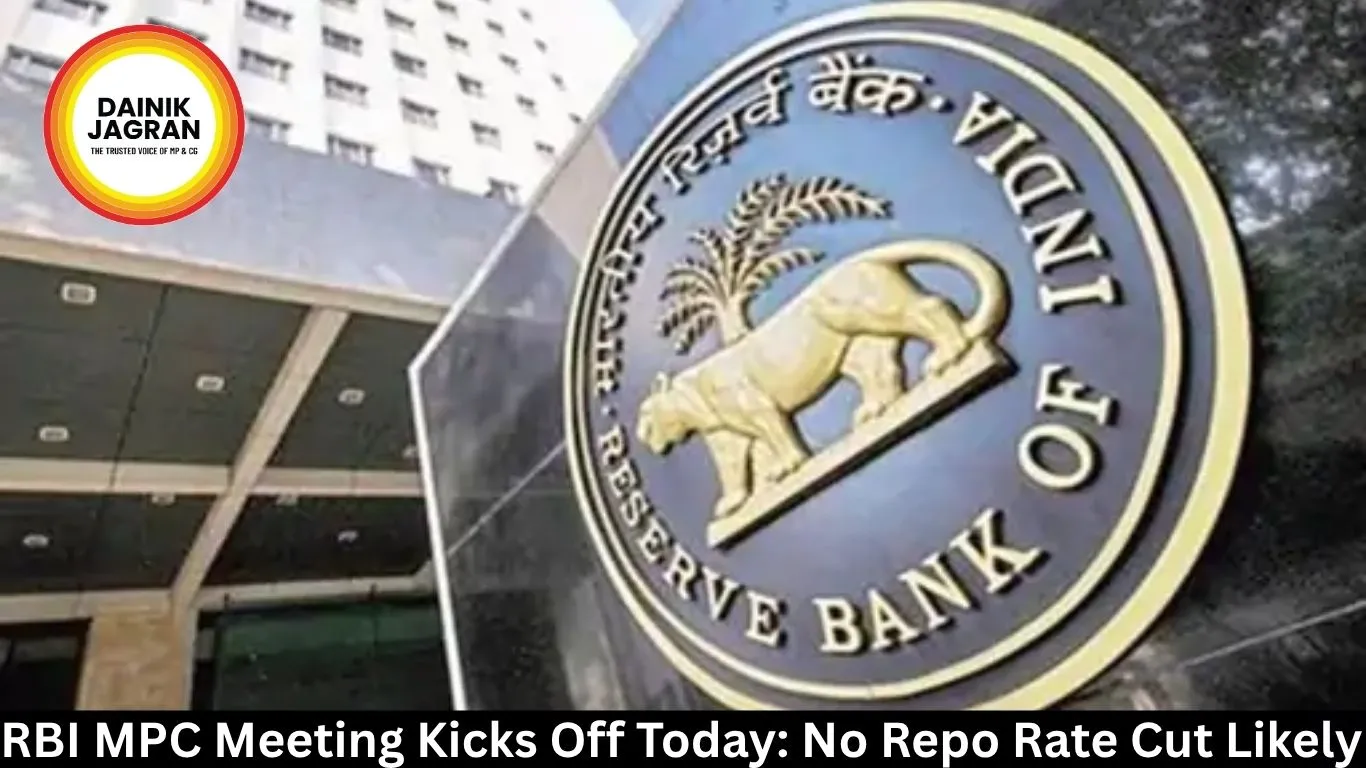
RBI MPC Meeting June 2026: No Repo Rate Cut Expected
Digital Desk
RBI Monetary Policy Committee meeting begins today in New Delhi. Economists see no change in repo rate, which currently stands at 5.25%. Full details on 2025 rate cuts and policy outlook.
The Reserve Bank of India’s Monetary Policy Committee (MPC) began its three-day deliberations on Wednesday, with expectations firmly pinned on status quo on interest rates amid steady economic indicators.
The meeting, which runs from June 3 to June 5, is likely to see the central bank maintain the repo rate at 5.25 per cent, according to most economists and market watchers. This would mark a pause after a series of rate cuts implemented throughout 2025.
Policy Continuity Expected
In the April 2025 review, the MPC had last trimmed the benchmark rate by 25 basis points. With inflation remaining within the comfort zone and growth holding steady, experts believe the central bank may prefer to hold rates steady for now to assess the impact of previous easing.
“While the door remains open for future cuts, current data does not strongly support an immediate reduction,” said a senior banker who did not wish to be named.
2025: Year of Rate Easing
The RBI had undertaken a meaningful shift in its policy stance this year. In February 2025, the committee cut the repo rate by 25 basis points to 6.25 per cent — the first reduction in nearly five years. Subsequent reviews saw further easing: another 25 basis points in April, a larger 50 basis points cut in June, and a final 25 basis points reduction in December, bringing the repo rate down to the current 5.25 per cent.
These moves, totaling 125 basis points through the year, were aimed at supporting economic recovery while keeping inflation in check.
Why RBI Adjusts Repo Rates
The repo rate remains the central bank’s primary tool to manage liquidity and inflation. When prices rise sharply, the RBI hikes the rate to make borrowing costlier for banks, which in turn pass on higher rates to customers. This slows down demand and helps cool inflation.
Conversely, during periods of slower growth, rate cuts make loans cheaper, encouraging consumption, investment, and overall economic activity. Banks can borrow from the RBI at lower costs and extend affordable credit to businesses and households.
Biannual Schedule and MPC Composition
The MPC meets every two months to review monetary policy. The six-member panel includes three RBI officials and three external members nominated by the central government. Decisions are taken by majority vote, with the RBI Governor holding a casting vote in case of a tie.
The central bank had earlier released the schedule for FY2026-27, with six meetings planned. Wednesday’s gathering is the second of the financial year.
Market and Industry Expectations
Bankers and industry bodies are closely watching the outcome. While lower rates generally support sectors like real estate, automobiles, and MSMEs, analysts caution that premature cuts could risk re-igniting inflationary pressures, especially with global uncertainties around commodity prices and geopolitical tensions.
Retail borrowers, particularly those with home and personal loans, have already benefited from the 2025 rate cuts, with lending rates easing across major banks.
Looking Ahead
The MPC’s decision on June 5 will be accompanied by an updated macroeconomic projection, including growth and inflation forecasts for the coming quarters. Any signals on the future policy path — whether accommodative, neutral, or otherwise — will be keenly analysed by markets.
For now, the consensus remains that the RBI will prefer caution, keeping powder dry for potential action later in the year if needed.
As India’s economy navigates a complex global environment, the central bank’s balancing act between growth and price stability remains crucial for millions of borrowers and savers across the country.

--------
π¨ Beat the News Rush β Join Now!
Get breaking alerts, hot exclusives, and game-changing stories instantly on your phone. No delays, no fluff β just the edge you need. β‘
Tap to join:Β
π’ WhatsApp Channel: Dainik Jagran MP CG
Crave more?
π Facebook: Dainik Jagran MP CG English
π § Twitter (X): Dainik Jagran MP CG
π Instagram: Dainik Jagran MP CG
Share the fire β keep your crew ahead! ποΈπ₯
RBI MPC Meeting June 2026: No Repo Rate Cut Expected
Digital Desk
The Reserve Bank of India’s Monetary Policy Committee (MPC) began its three-day deliberations on Wednesday, with expectations firmly pinned on status quo on interest rates amid steady economic indicators.
The meeting, which runs from June 3 to June 5, is likely to see the central bank maintain the repo rate at 5.25 per cent, according to most economists and market watchers. This would mark a pause after a series of rate cuts implemented throughout 2025.
Policy Continuity Expected
In the April 2025 review, the MPC had last trimmed the benchmark rate by 25 basis points. With inflation remaining within the comfort zone and growth holding steady, experts believe the central bank may prefer to hold rates steady for now to assess the impact of previous easing.
“While the door remains open for future cuts, current data does not strongly support an immediate reduction,” said a senior banker who did not wish to be named.
2025: Year of Rate Easing
The RBI had undertaken a meaningful shift in its policy stance this year. In February 2025, the committee cut the repo rate by 25 basis points to 6.25 per cent — the first reduction in nearly five years. Subsequent reviews saw further easing: another 25 basis points in April, a larger 50 basis points cut in June, and a final 25 basis points reduction in December, bringing the repo rate down to the current 5.25 per cent.
These moves, totaling 125 basis points through the year, were aimed at supporting economic recovery while keeping inflation in check.
Why RBI Adjusts Repo Rates
The repo rate remains the central bank’s primary tool to manage liquidity and inflation. When prices rise sharply, the RBI hikes the rate to make borrowing costlier for banks, which in turn pass on higher rates to customers. This slows down demand and helps cool inflation.
Conversely, during periods of slower growth, rate cuts make loans cheaper, encouraging consumption, investment, and overall economic activity. Banks can borrow from the RBI at lower costs and extend affordable credit to businesses and households.
Biannual Schedule and MPC Composition
The MPC meets every two months to review monetary policy. The six-member panel includes three RBI officials and three external members nominated by the central government. Decisions are taken by majority vote, with the RBI Governor holding a casting vote in case of a tie.
The central bank had earlier released the schedule for FY2026-27, with six meetings planned. Wednesday’s gathering is the second of the financial year.
Market and Industry Expectations
Bankers and industry bodies are closely watching the outcome. While lower rates generally support sectors like real estate, automobiles, and MSMEs, analysts caution that premature cuts could risk re-igniting inflationary pressures, especially with global uncertainties around commodity prices and geopolitical tensions.
Retail borrowers, particularly those with home and personal loans, have already benefited from the 2025 rate cuts, with lending rates easing across major banks.
Looking Ahead
The MPC’s decision on June 5 will be accompanied by an updated macroeconomic projection, including growth and inflation forecasts for the coming quarters. Any signals on the future policy path — whether accommodative, neutral, or otherwise — will be keenly analysed by markets.
For now, the consensus remains that the RBI will prefer caution, keeping powder dry for potential action later in the year if needed.
As India’s economy navigates a complex global environment, the central bank’s balancing act between growth and price stability remains crucial for millions of borrowers and savers across the country.