


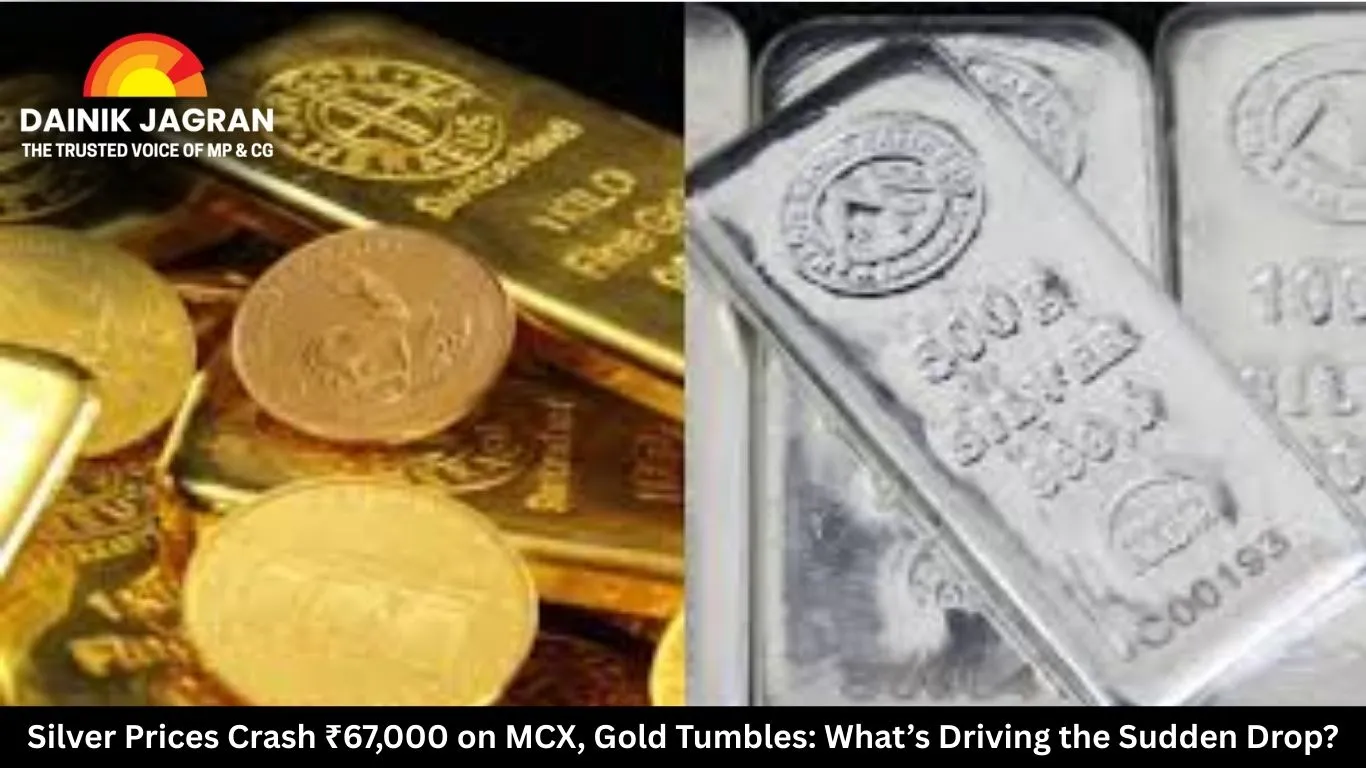
Silver Prices Crash ₹67,000 on MCX, Gold Tumbles: What’s Driving the Sudden Drop?
Digital Desk
Silver Prices Crash ₹67,000 on MCX, Gold Tumbles: What’s Driving the Sudden Drop?
In a dramatic reversal, the prices of gold and silver nosedived on Thursday, snapping a four-day record-breaking rally. Investors rushed to book profits, leading to one of the sharpest single-day declines in recent memory, with silver futures on the Multi Commodity Exchange (MCX) witnessing a staggering crash of ₹67,000 per kilogram.
The white metal plummeted to ₹3.32 lakh per kg, while gold prices tanked by ₹15,000 to settle near ₹1.54 lakh for 10 grams on the MCX. This sharp correction has left many investors wondering if the bull run is taking a pause or signaling a larger shift.
Why the Sudden Crash? Experts Point to Profit Booking
After a relentless surge throughout January, market analysts were anticipating a correction. The primary catalyst for today’s silver prices crash is widespread profit booking.
"Markets don't go up in a straight line forever. The scale of the recent rally, especially in silver, invited a sharp, healthy correction," explained a senior commodity analyst. "Investors who entered earlier are cashing in gains, leading to this significant pullback. This is a typical market adjustment after such a steep climb."
A Look Back at the Record January Rally
To understand the scale of today’s drop, one must look at the explosive gains made this month. In just 29 trading days of January:
Gold became costlier by ₹35,280 per 10 grams.
Silver prices soared by an astonishing ₹1.27 lakh per kilogram.
The recent peak on January 29 saw gold touch ₹1.75 lakh and silver approach ₹3.8 lakh/kg, making today’s decline a sharp but expected consolidation for many traders.
Gold & Silver Rates: Why City Prices Differ
It’s important to note that the benchmark rates from bodies like the India Bullion and Jewellers Association (IBJA) do not include making charges, GST (3%), or the jeweller’s margin. This is why retail prices vary across cities. These benchmark rates are crucial, however, as the Reserve Bank of India (RBI) uses them to determine Sovereign Gold Bond (SGB) rates, and many banks reference them for gold loans.
Smart Buying Tips in a Volatile Market
For consumers looking to buy physical gold or silver, experts advise caution and due diligence during volatile phases:
For Gold Buyers:
1. Always Buy Hallmarked: Insist on BIS (Bureau of Indian Standards) hallmarked jewellery. The hallmark includes a unique code and clearly states the caratage (e.g., 22K916).
2. Cross-Check Rigorously: Verify the day's live rate for 24K, 22K, and 18K gold from trusted sources like the IBJA website before making a purchase. Always double-check the weight.
How to Identify Real Silver:
Magnet Test: Real silver is not magnetic.
Ice Test: Silver has the highest thermal conductivity among metals. Ice melts unusually quickly on it.
Smell Test: Pure silver has no distinct smell. A metallic or coppery odor indicates a fake.
Cloth Test: Rub the item with a clean white cloth. Real silver will leave slight black marks due to oxidation.
A Healthy Correction or a Trend Reversal?
Today’s silver prices crash and gold dip reflect the natural ebb and flow of financial markets. While the long-term outlook for precious metals remains tied to global economic factors, today’s event is a stark reminder of the volatility inherent in commodity trading. For investors, it underscores the importance of strategic entry points and profit-taking. For buyers, it may present a waiting game or a slightly better price window, emphasizing that informed purchasing, backed by certification and verification, is always the safest bet.



.jpg)




