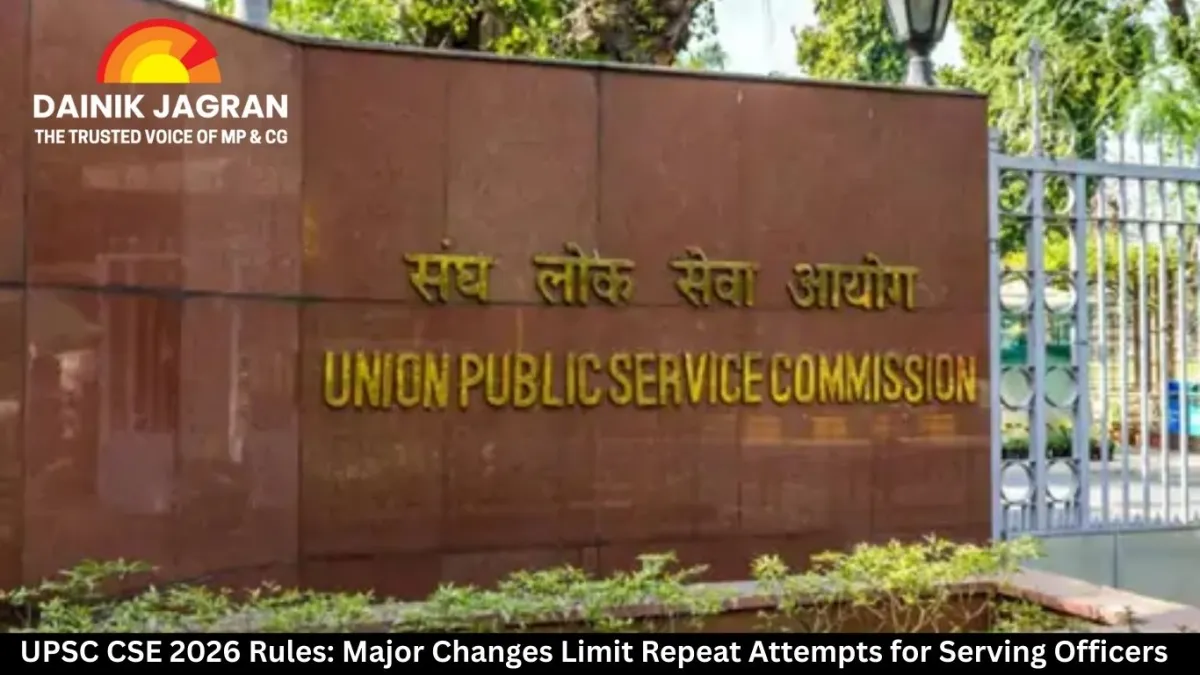
In a significant overhaul aimed at streamlining the recruitment process, the Union Public Service Commission (UPSC) has introduced new rules for the Civil Services Examination (CSE) 2026.
Released on February 4, 2026, the notification for 933 posts emphasizes efficiency and fairness, closing loopholes that allowed serving officers to repeatedly attempt the exam while in service. This comes amid growing competition, with over 10 lakh aspirants applying annually, making UPSC CSE 2026 rules a hot topic for millions eyeing government careers.
The changes are timely as India's job market evolves, with a focus on retaining talent in allocated services rather than perpetual reattempts. As the exam attracts record applicants—over 13 lakh in recent years—these reforms aim to reduce backlog and encourage commitment to initial postings.
Key Changes in UPSC Attempts Limit
Under the updated UPSC CSE 2026 rules, serving officers face stricter eligibility criteria. Previously, selected candidates could retake the exam multiple times without resigning, often leading to rank improvements while holding positions.
- One-Time Improvement Opportunity: If selected for Group-A services or IPS in CSE 2026, candidates get only one chance to improve their rank in CSE 2027. This requires a one-time exemption from the Foundation Course training.
- Exemption and Cancellation Risks: Aspirants must either join training or secure the exemption; failure to do so cancels allocations from both exams.
- Resignation for Further Attempts: To appear in CSE 2028 or later, resignation from service is mandatory, ending the cycle of endless reattempts.
- Restrictions on Reallocation: Existing IPS officers cannot secure IPS again via CSE 2026. If promoted to IAS or IFS between Prelims and Mains, they won't be allowed to write Mains.
These UPSC attempts limit adjustments prevent "existing IPS from becoming IPS again," as per the notification, promoting stability in civil services.
Impact on Aspirants and Eligibility
The UPSC CSE 2026 rules maintain old provisions for IAS and IFS but tighten overall access. Entry now requires face authentication at exam centers, enhancing security amid rising digital fraud concerns.
For the over 10 lakh annual applicants—where only about 1,000 secure posts—these Civil Services Exam changes mean strategic planning is crucial. In 2025, 14,161 cleared Prelims, but just 979 were selected, highlighting the exam's rigor.
Simulated expert insight from a former UPSC chairperson: "These reforms discourage 'perpetual aspirants' in service, ensuring fresh talent flows in. It's a step toward merit-based stability." Career coaches advise focusing on one strong attempt rather than relying on backups.
Other Updates and Broader Contex
The notification also addresses regional concerns. In Lok Sabha, queries arose about exempting Ladakh candidates from the Indian language paper (Paper-A), similar to exemptions for six northeastern states. Minister Jitendra Singh noted ongoing reforms for equal opportunities, but no final decision yet.
With applications closing February 24, 2026, aspirants should review eligibility promptly. These UPSC CSE 2026 rules reflect the government's push for efficient bureaucracy in a post-pandemic era, where agile governance is key.
In conclusion, while challenging for some, these changes foster dedication and fairness. Aspiring civil servants: Prepare thoroughly for your shot—opportunities are now more precious than ever. For more on IAS IPS eligibility, check official UPSC notifications.