


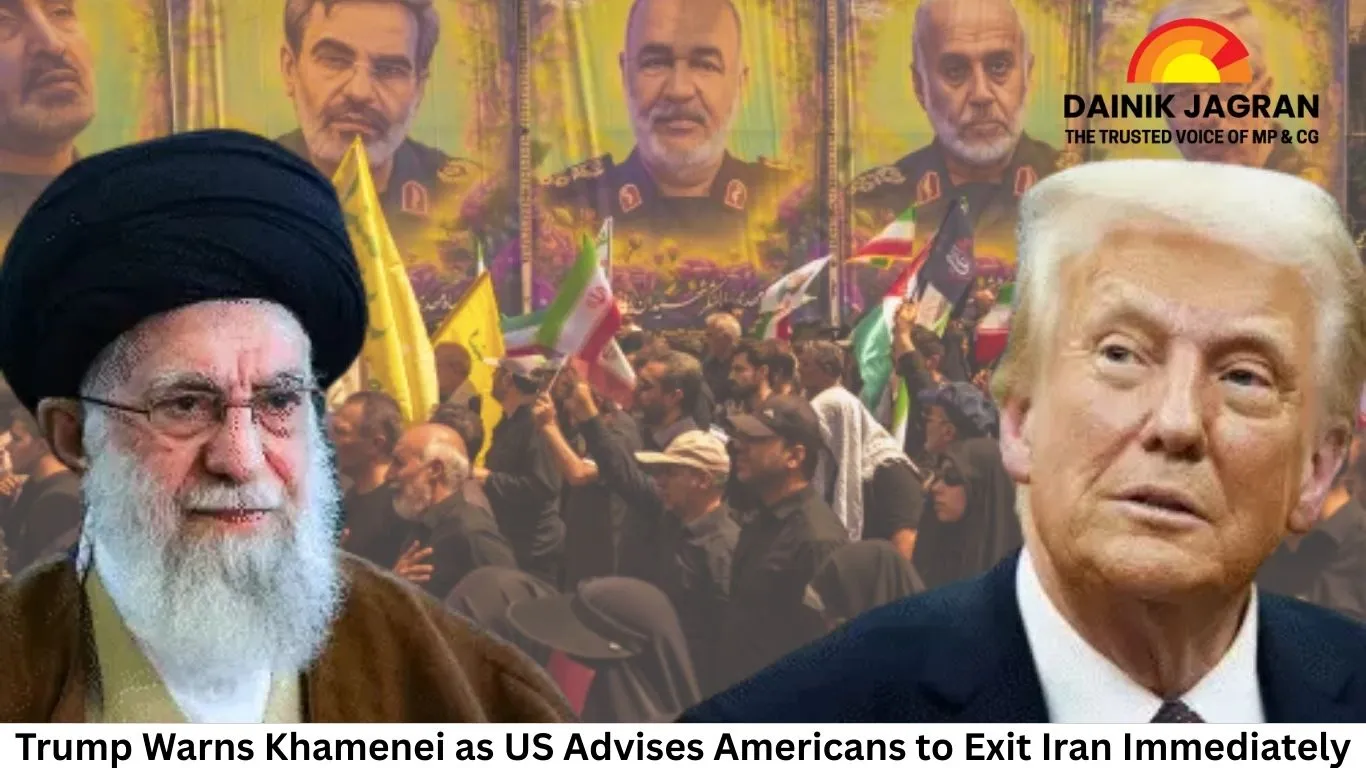
Trump Warns Khamenei as US Advises Americans to Exit Iran Immediately
Digital Desk
The U.S. State Department, through its Virtual Embassy in Iran, reiterated the Level 4 "Do Not Travel" advisory on February 5-6, 2026, warning that Americans face significant threats from terrorism, civil unrest, and government actions. Dual U.S.-Iranian nationals are particularly vulnerable, as Tehran does not recognize dual citizenship and treats them solely as Iranian citizens. Displaying a U.S. passport or any American ties can trigger detention.
"U.S. nationals are at significant risk of questioning, arrest, and detention in Iran," the alert states. The advisory notes ongoing internet outages, road closures, public transport disruptions, and airline cancellations or reductions, urging citizens to plan departures independently—preferably overland to Armenia or Türkiye—without relying on U.S. government assistance, given the lack of an embassy or consular presence in the country.
The warning comes as indirect U.S.-Iran talks on Tehran's nuclear program began Friday in Oman, mediated by Muscat. Iran's Foreign Minister Abbas Araghchi confirmed the negotiations, which follow weeks of strained diplomacy, nationwide protests in Iran, and military posturing.
President Donald Trump, in an NBC News interview, cautioned that Iran's Supreme Leader Ayatollah Ali Khamenei "should be very worried," hinting at potential military options if no deal emerges. Secretary of State Marco Rubio emphasized that Washington seeks discussions beyond the nuclear issue, including Iran's ballistic missiles, support for regional proxies, and domestic human rights record. Vice President JD Vance stressed that Iran must not develop a nuclear weapon, warning of regional fallout.
Iran insists the talks focus narrowly on its nuclear program and sanctions relief, creating uncertainty over the agenda.
The advisory predates the latest Oman meetings but gained fresh attention amid the diplomatic push and Iran's internal unrest. U.S. officials have maintained the "leave now" guidance since January 2026, linked to protests and security crackdowns.
For Americans still in Iran, the State Department recommends monitoring official updates closely and preparing for communication blackouts. The situation underscores fragile U.S.-Iran relations, with implications for Middle East stability, global energy supplies, and broader security.
.jpg)




