


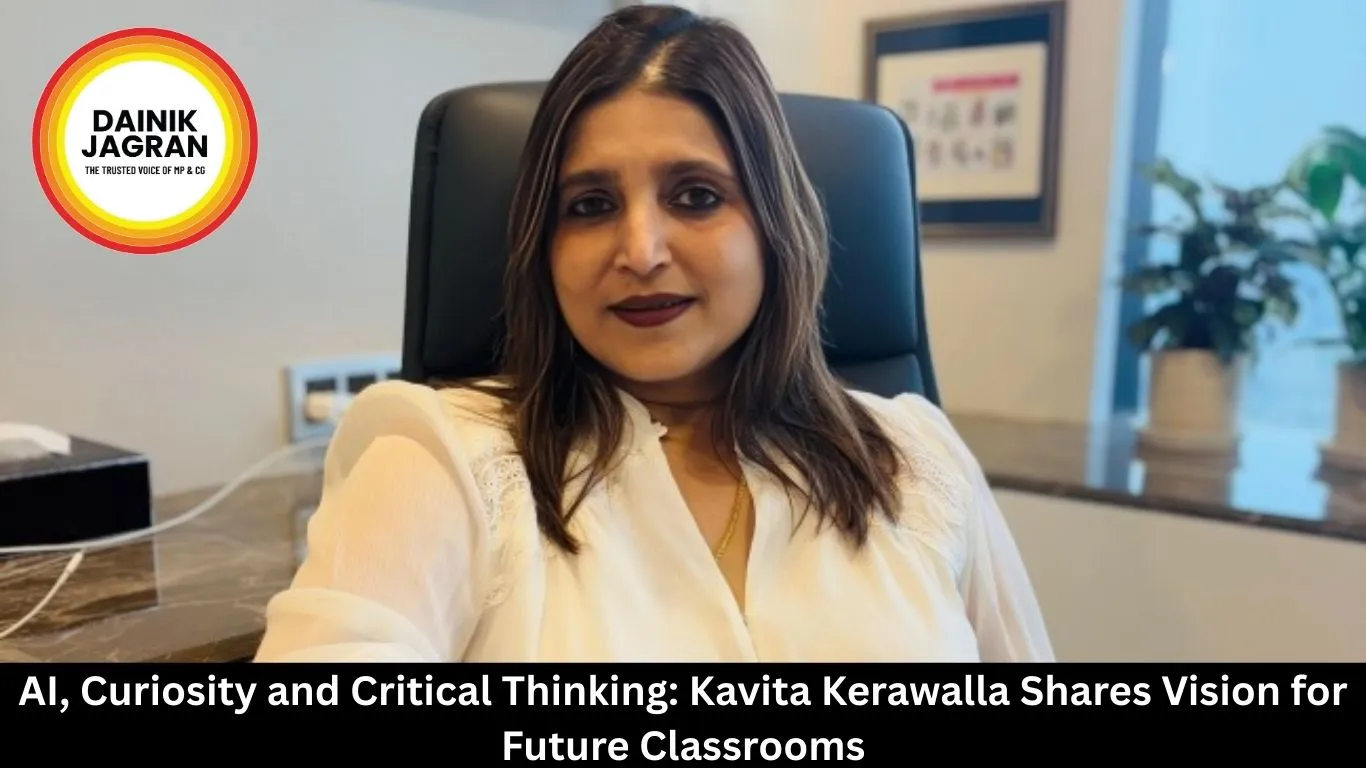
AI, Curiosity and Critical Thinking: Kavita Kerawalla Shares Vision for Future Classrooms
Spokesperson: Kavita Kerawalla, Vice Chairperson, VIBGYOR Group of Schools
1. Over the past decade, how have you seen the idea of a "learner" evolve?
Over the past decade, the idea of a “learner” has shifted from absorbing information to actively engaging with it. Students today approach learning with greater curiosity and agency, questioning ideas and connecting classroom concepts with real-world contexts rather than focusing only on memorisation. Access to digital resources means many learners enter classrooms already aware of global developments, making discussions more participatory and collaborative.
Project-based learning, research assignments, and interdisciplinary activities have therefore gained importance. Students also increasingly value skills such as communication, creativity, leadership, and critical thinking. As a result, modern learners are more self-aware, technologically fluent, and comfortable working in teams.
2. With technology and AI entering classrooms rapidly, what should schools focus on?
The rapid expansion of technology and AI in classrooms calls for a balanced approach. While these tools can support learning, the focus should remain on how they enhance understanding rather than how often they are used.
Digital and AI literacy is therefore essential, as students increasingly rely on AI-powered tools for research and problem-solving. Schools must help them verify information and use technology responsibly. At the same time, preserving depth in learning and ensuring teacher preparedness is critical through experiences and assessments that emphasise interpretation, reasoning, and application.
3. There's a lot of talk about academic pressure. How can schools rethink this?
Academic pressure often arises when learning is measured mainly through test performance and rigid expectations. Schools can address this by broadening how success is defined. While academic achievement remains important, teaching methods should prioritise understanding, curiosity, and skill development rather than constant comparison. Balanced assessments such as projects, presentations, and research tasks allow students to demonstrate learning in different ways and reduce stress from high-stakes exams.
Strong academic support through feedback, mentoring, and early identification of learning gaps, along with a balanced environment that values co-curricular activities and wellbeing, helps students build confidence and resilience.
4. How do you work with parents to create a supportive environment for learning?
Creating a supportive learning environment requires a strong partnership between schools and parents. At VIBGYOR Group of Schools, the focus is on consistent communication so parents remain involved in their child’s learning journey.
Regular parent-teacher interactions play an important role. These discussions go beyond academic scores and focus on a student’s development, learning habits, strengths, and areas that require support. By sharing classroom observations and understanding the student’s home environment, teachers and parents can guide the child more effectively. Schools also involve parents through sessions, workshops, and events that help them understand learning methods, student wellbeing, and responsible technology use, ensuring expectations at home and school remain aligned.
When students participate in initiatives such as VIBGYOR Viva, VIBGYOR Model United Nations, and V-Embark, parents often engage closely with the process, encouraging preparation, creativity, and confidence.
5. The phrase "Infinite Possibilities" is often used about education. What does it mean to you?
“Infinite possibilities” in education reflects the belief that every learner has the potential to explore multiple pathways and shape their own future. When students are encouraged to ask questions, pursue their interests, and engage with new ideas, learning becomes an opportunity to discover strengths and build confidence.
At VIBGYOR Group of Schools, this perspective is reflected across a network of nearly 40 schools, where the focus is on nurturing the academic growth and holistic development of 60000 learners. The aim is to create environments where students are encouraged to think independently, collaborate with peers, and engage with learning beyond textbooks.
When learners are exposed to varied experiences and supported by mentors who guide them along the way, they begin to see education as a platform for discovery, growth, and lifelong learning.
6. What gives you optimism about the future of education in India?
What gives me optimism about the future of education in India is the structural change taking shape across schools and learning systems. The direction set by the National Education Policy 2020 is encouraging because it shifts the focus from rote learning toward conceptual understanding, multidisciplinary exposure, student wellbeing, creativity and flexibility in students’ academic journeys.
The policy’s emphasis on experiential learning, skill development, and critical thinking is influencing how classrooms function. Schools are introducing project-based learning, research assignments, innovation labs, and interdisciplinary programmes that allow students to apply knowledge rather than memorise it. Another positive shift is the integration of technology. Adaptive learning tools, digital content platforms, and data-driven assessments help educators identify learning gaps earlier and personalise instruction for different learning needs.
.jpg)




