

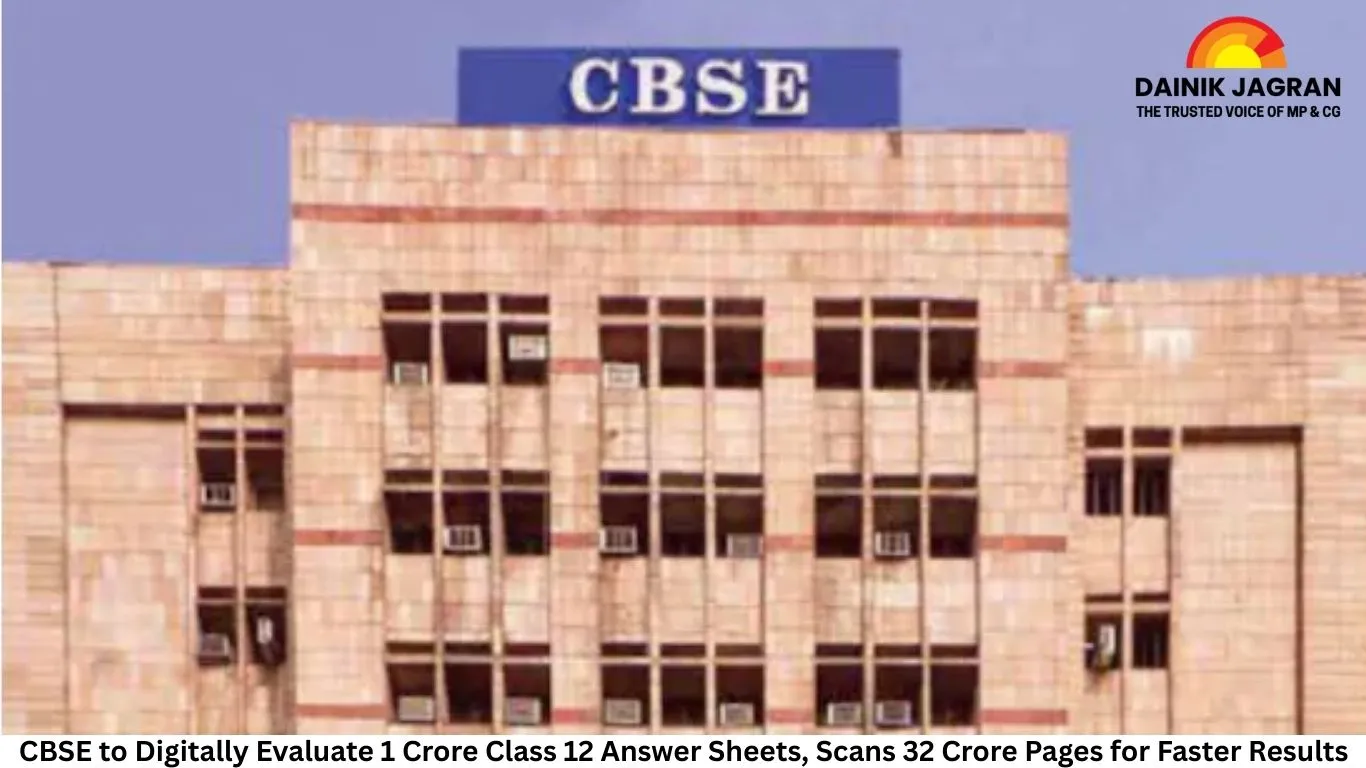
CBSE to Digitally Evaluate 1 Crore Class 12 Answer Sheets, Scans 32 Crore Pages for Faster Results
Digital Desk
In a major move to modernize assessment, the Central Board of Secondary Education (CBSE) will digitally evaluate over 1 crore Class 12 answer sheets in the upcoming board examinations scheduled from February 17 to April 10. Approximately 32 crore pages will be scanned and uploaded from around 32,000 schools across India for on-screen marking.
This shift to digital evaluation aims to reduce human errors in totaling, speed up the marking process, and enhance transparency. CBSE Controller of Examinations Sanyam Bhardwaj stated, “Teachers will be able to evaluate answer sheets while remaining in their schools, ensuring minimal disruption to students’ regular studies. Marks will be automatically counted, and the process will be faster and more reliable.”
Under the new system, answer sheets will continue to be written offline at examination centers. Each page will be scanned at high-security facilities within schools, and unique codes will be assigned to each sheet to blind the evaluator to student identity, eliminating any bias. Teachers will log in using their Oasis IDs to access the On-Screen Marking (OSM) portal, check assigned sheets, and enter marks question-wise. Totalling will be automated, and selected sheets may undergo moderation by senior examiners.
The board emphasized that this initiative applies only to Class 12 examinations; Class 10 papers will be checked manually as in previous years. All schools must ensure functional computer labs, stable internet of at least 2 Mbps, uninterrupted power supply, and necessary software for the scanning and evaluation process.
To support teachers, CBSE has scheduled multiple dry runs, training sessions, and instructional video releases. Call centers are also being established to resolve technical issues. “This method will allow results to be declared on schedule with minimal discrepancies and disputes,” said Bhardwaj.
The digital evaluation system is expected to significantly reduce logistical challenges associated with transporting physical answer sheets and improve the efficiency of board assessments nationwide. CBSE officials believe the transition will enhance accuracy, prevent delays, and build greater confidence among students, teachers, and parents in the evaluation process.
This adoption of technology reflects CBSE’s ongoing efforts to integrate digital solutions into the education ecosystem, aligning assessment practices with contemporary standards.
--------
🚨 Beat the News Rush – Join Now!
Get breaking alerts, hot exclusives, and game-changing stories instantly on your phone. No delays, no fluff – just the edge you need. ⚡
Tap to join:
🟢 WhatsApp Channel: Dainik Jagran MP CG
Crave more?
🅕 Facebook: Dainik Jagran MP CG English
🅧 Twitter (X): Dainik Jagran MP CG
🅘 Instagram: Dainik Jagran MP CG
Share the fire – keep your crew ahead! 🗞️🔥
CBSE to Digitally Evaluate 1 Crore Class 12 Answer Sheets, Scans 32 Crore Pages for Faster Results
Digital Desk
This shift to digital evaluation aims to reduce human errors in totaling, speed up the marking process, and enhance transparency. CBSE Controller of Examinations Sanyam Bhardwaj stated, “Teachers will be able to evaluate answer sheets while remaining in their schools, ensuring minimal disruption to students’ regular studies. Marks will be automatically counted, and the process will be faster and more reliable.”
Under the new system, answer sheets will continue to be written offline at examination centers. Each page will be scanned at high-security facilities within schools, and unique codes will be assigned to each sheet to blind the evaluator to student identity, eliminating any bias. Teachers will log in using their Oasis IDs to access the On-Screen Marking (OSM) portal, check assigned sheets, and enter marks question-wise. Totalling will be automated, and selected sheets may undergo moderation by senior examiners.
The board emphasized that this initiative applies only to Class 12 examinations; Class 10 papers will be checked manually as in previous years. All schools must ensure functional computer labs, stable internet of at least 2 Mbps, uninterrupted power supply, and necessary software for the scanning and evaluation process.
To support teachers, CBSE has scheduled multiple dry runs, training sessions, and instructional video releases. Call centers are also being established to resolve technical issues. “This method will allow results to be declared on schedule with minimal discrepancies and disputes,” said Bhardwaj.
The digital evaluation system is expected to significantly reduce logistical challenges associated with transporting physical answer sheets and improve the efficiency of board assessments nationwide. CBSE officials believe the transition will enhance accuracy, prevent delays, and build greater confidence among students, teachers, and parents in the evaluation process.
This adoption of technology reflects CBSE’s ongoing efforts to integrate digital solutions into the education ecosystem, aligning assessment practices with contemporary standards.


