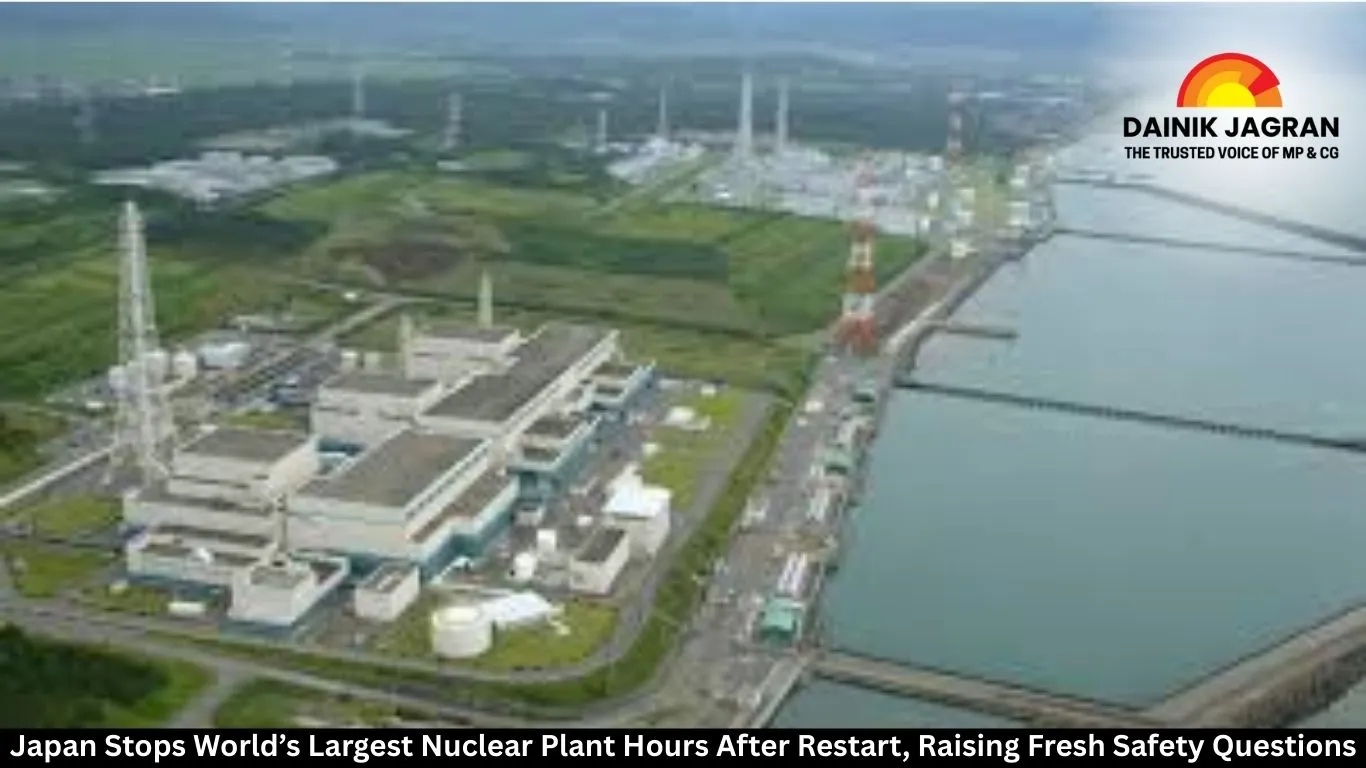
Japan Stops World’s Largest Nuclear Plant Hours After Restart, Raising Fresh Safety Questions
Digital Desk
Japan Stops World’s Largest Nuclear Plant Hours After Restart
Japan has once again put the brakes on its nuclear revival after authorities halted the restart of the Kashiwazaki-Kariwa nuclear plant, the world’s largest nuclear power station, just hours after operations resumed. The sudden suspension, confirmed by plant operator Tokyo Electric Power Company Holdings (TEPCO), has reignited public debate over nuclear safety more than a decade after the Fukushima disaster.
The restart attempt, which began on Wednesday, marked a symbolic moment. It was the first time a TEPCO-operated reactor was moving toward operation since the 2011 Fukushima Daiichi nuclear meltdown. However, optimism was short-lived.
What Triggered the Shutdown?
According to TEPCO, the process was halted after engineers detected a malfunction in electrical equipment connected to the reactor’s control rods. These rods play a critical role in regulating nuclear reactions.
Why control rods matter:
They control the speed of nuclear fission
Any fault can pose serious safety risks
Even minor issues require immediate shutdown
TEPCO spokesperson Takashi Kobayashi said the reactor was returned to a full shutdown state to allow for detailed inspections, adding that the reactor remained stable and there was no radioactive impact outside the plant.
Kashiwazaki-Kariwa and the Fukushima Shadow
The Kashiwazaki-Kariwa nuclear plant, located in Niigata prefecture, has been offline since the Fukushima disaster prompted Japan to shut down most of its nuclear fleet. With seven reactors, it is the world’s largest nuclear facility by capacity.
Only Unit No. 6 was being prepared for restart. If fully operational, it could generate around 1.35 million kilowatts, enough electricity to power more than one million homes in the Tokyo region.
This makes the incident significant not just technically, but politically and socially.
Local Opposition Remains Strong
Despite government backing, local resistance has not faded. Niigata prefecture lies in an earthquake-prone zone, and memories of past seismic damage remain fresh.
A recent survey shows:
60% of residents oppose restarting the plant
37% support the move
During a protest, 73-year-old resident Yumiko Abe questioned why local communities should bear the risk for electricity consumed in Tokyo. Anti-nuclear groups have also submitted petitions citing earthquake risks and past damage to the plant during a 2007 quake.
Why Japan Is Pushing Nuclear Power Again
Japan lacks natural energy resources and remains heavily dependent on imported fossil fuels. The government views nuclear power as a key tool to:
Cut carbon emissions
Meet its 2050 climate goals
Support rising power demand from data centers and AI services
So far, 14 reactors nationwide have been restarted under stricter safety regulations, but this incident shows how fragile public trust remains.
What Happens Next?
For now, Japan stops the world’s largest nuclear plant once again as TEPCO investigates the malfunction. While officials insist there is no immediate danger, the episode highlights how complex and sensitive Japan’s nuclear comeback remains.
Key takeaway: Even small technical issues can derail nuclear restarts, especially when public confidence is still shaped by the Fukushima legacy.