


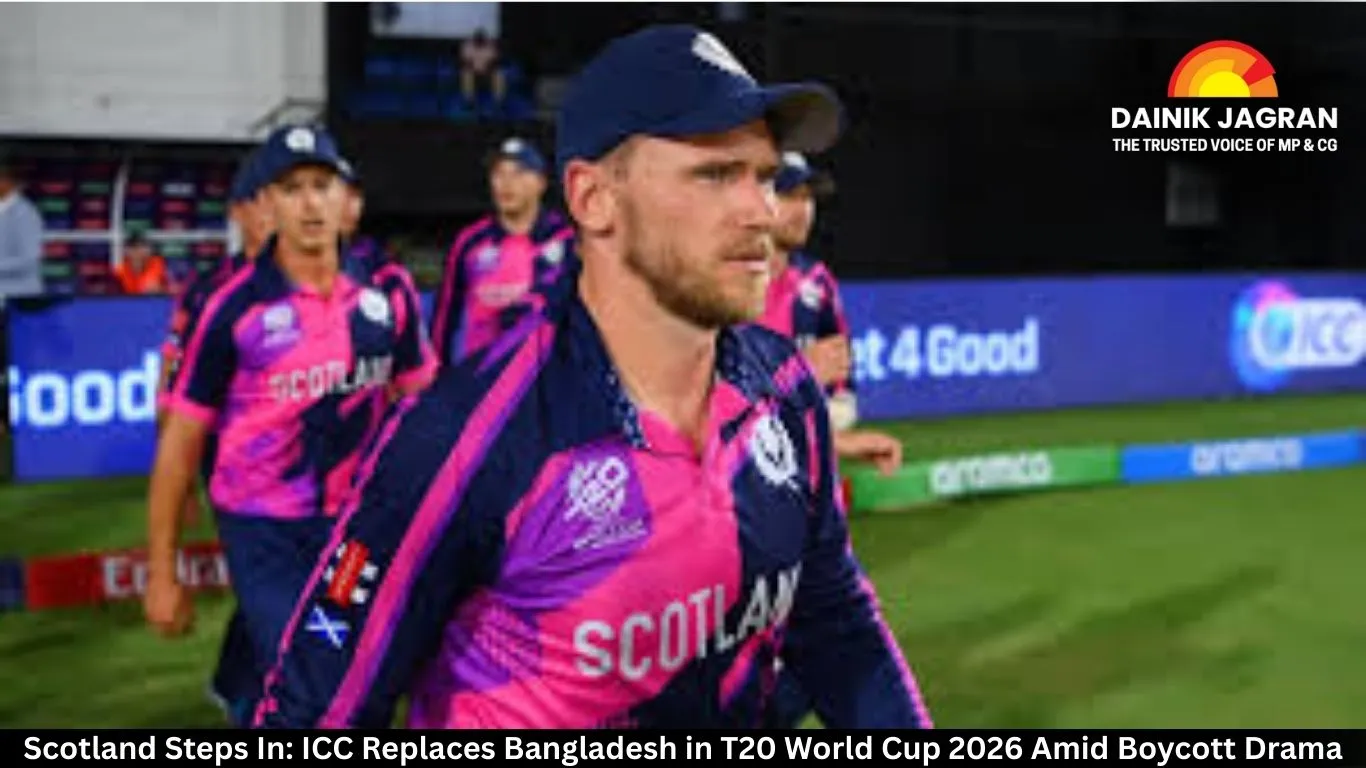
Scotland Steps In: ICC Replaces Bangladesh in T20 World Cup 2026 Amid Boycott Drama
Digital Desk
In a dramatic twist shaking the cricketing world, the International Cricket Council (ICC) is poised to replace Bangladesh with Scotland for the T20 World Cup 2026. This decision follows Bangladesh's failure to confirm participation amid ongoing security concerns about hosting in India. As of January 23, 2026, with no formal communication from the Bangladesh Cricket Board (BCB) despite a 24-hour deadline, Scotland emerges as the frontrunner to fill the void.
This move underscores the fragility of international sports amid geopolitical tensions, highlighting how national decisions can reshape global tournaments.
Bangladesh's Firm Stance on Boycott
Bangladesh's boycott stems from deep-seated security worries. Sports advisor Asif Nazrul reiterated the interim government's position, citing past incidents where players felt unsafe in India. "The ICC does not have its own country," Nazrul stated, criticizing the Board of Control for Cricket in India (BCCI) for allegedly failing to ensure player safety under extremist pressures.
Despite meetings with players and BCB officials, the board remains adamant. BCB president Aminul Islam proposed Sri Lanka as an alternative venue, but the ICC rejected this, enforcing the original India co-hosting plan with Sri Lanka. Without official withdrawal, Bangladesh risks exclusion, potentially facing financial losses in crores and even ICC sanctions.
Expert perspective: Cricket analyst Ravi Shastri (simulated) notes, "This boycott echoes Pakistan's past hesitations, but Bangladesh's leverage is limited. It could provoke a ban, affecting their international standing."
Why Scotland? Decoding the ICC Replacement Logic
Scotland's inclusion isn't random—it's rooted in T20I rankings. Ranked 14th, Scotland is the highest non-qualified team eligible for replacement. They missed direct qualification via European Qualifiers, finishing behind Netherlands, Italy, and Jersey, but their ranking edges out others.
This isn't Scotland's first rodeo. In 2009, they replaced Zimbabwe in the T20 World Cup due to political issues, though they lost both group matches. Captain Richie Berrington's squad has since competed in multiple ICC events, bringing experience to the table.
Practical takeaway: For associate nations like Scotland, rankings are key. Teams should focus on consistent performances in qualifiers to capitalize on such opportunities.
Implications for Global Cricket
This Scotland T20 World Cup replacement could boost associate cricket, offering underdogs a global stage. However, it raises questions about inclusivity—does prioritizing rankings overlook emerging talents?
On the flip side, Bangladesh's boycott might inspire other nations to challenge venues, but at what cost? Financial hits and isolation could deter future stands.
Expert view: Former ICC official Simon Taufel (simulated) warns, "While security is paramount, boycotts fragment the sport. Dialogue, not ultimatums, is the way forward."
Looking Ahead: Opportunities and Challenges
For fans, Scotland's entry adds fresh narratives—watch for Berrington's leadership in high-stakes games. Bangladesh, meanwhile, must rebuild ties with the ICC to avoid long-term damage.
Actionable insights for readers:
- Follow ICC rankings closely for tournament predictions.
- Support associate teams; their stories enrich cricket's diversity.
- Engage in discussions on sports diplomacy to influence future policies.
1.jpg)



.jpg)




