

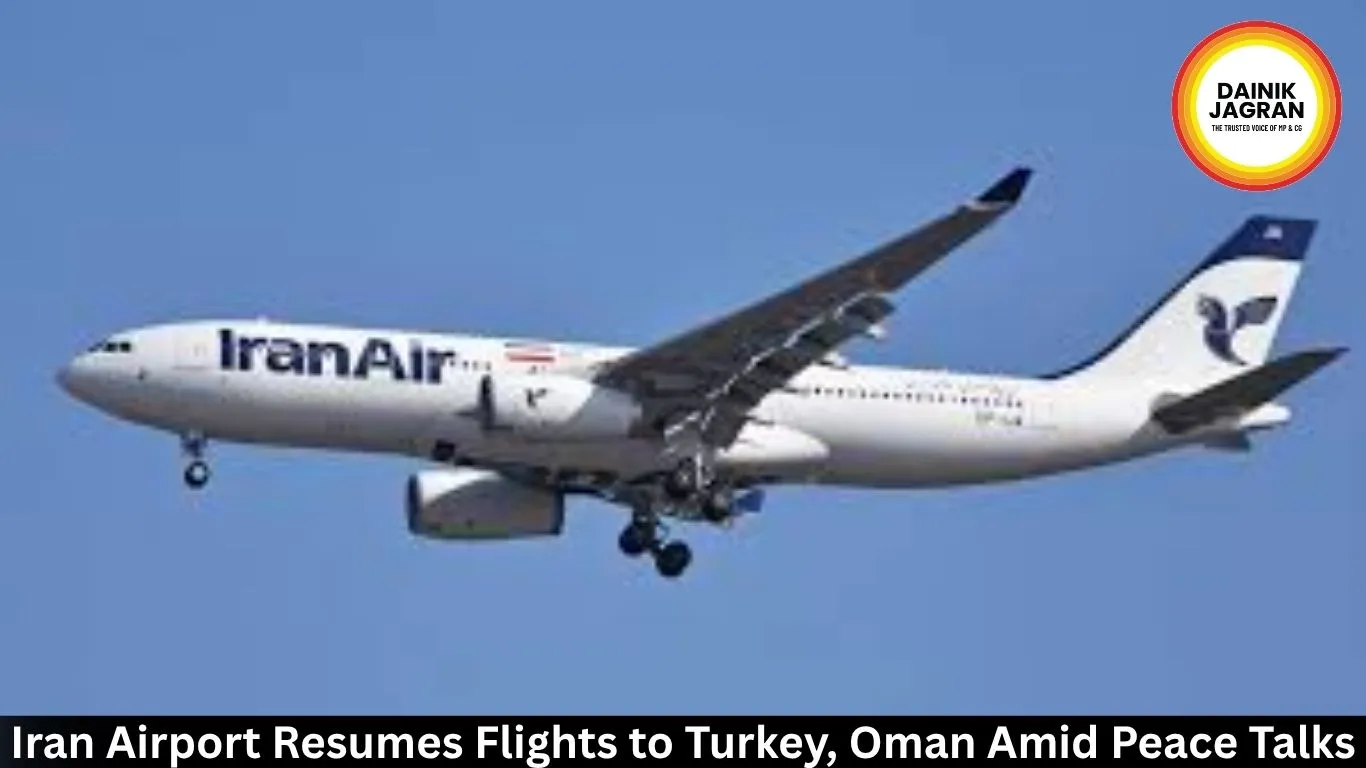
Iran Airport Resumes Flights to Turkey, Oman Amid Peace Talks

Digital Desk

 Iran Airport Resumes Flights to Turkey, Oman Amid Peace Talks

 Imam Khomeini Airport reopens international flights after 2-month closure. Iran resumes services to Turkey and Oman as fresh peace negotiations begin following US-Iran ceasefire agreement.


Imam Khomeini Airport Resumes International Flights Amid Fresh Iran Peace Talks

Tehran Restores Air Links to Turkey, Oman as Diplomatic Efforts Gain Momentum

Iran's airspace reopened for commercial operations on Saturday as Imam Khomeini International Airport resumed international flights following a nearly two-month suspension triggered by regional tensions. The development signals a cautious thaw in escalating hostilities and comes as fresh peace negotiations are expected to begin between Tehran and international stakeholders.

Airport Operations Resume After 7-Week Closure

Imam Khomeini International Airport, serving as Iran's primary hub for international connectivity, cleared its first batch of departing flights on April 25, marking a significant shift in the region's volatile political landscape. Aircraft headed to Muscat, Istanbul, and Medina commenced operations following weeks of airspace restrictions that had crippled passenger travel across the nation.

The Mehr news agency confirmed the resumption, noting that the move represents the first substantial restoration of civil aviation services since mid-February when regional hostilities forced authorities to ground international flights indefinitely.

Two-Month Flight Suspension Ends

Iran's aviation sector ground to a halt after February 28 when escalating military confrontations between Tehran and Western powers, particularly involving Israel and the United States, prompted immediate closure of national airspace to civilian traffic. The suspension dealt a severe blow to tourism, trade, and thousands of stranded passengers seeking to leave the country.

For nearly 60 days, international airlines suspended all scheduled services to and from Iranian airports, redirecting routes and cancelling bookings as uncertainty gripped the region. Families were separated, business operations disrupted, and the nation's already fragile economy faced additional pressure from the aviation sector's paralysis.

Ceasefire Framework Paves Way Forward

A conditional ceasefire agreement brokered through Pakistani mediation provided the foundation for resuming flight operations. On April 8, Pakistan announced that Washington and Tehran had accepted a two-week ceasefire arrangement with specific terms and conditions attached. The temporary truce created space for diplomatic maneuvering and allowed authorities to assess ground-level security before reopening civilian infrastructure.

President Donald Trump publicly endorsed the ceasefire extension on April 21, committing to maintain the arrangement while awaiting Tehran's formal proposal for comprehensive peace negotiations. This American backing lent legitimacy to the arrangement and signalled genuine intent from major powers to de-escalate tensions that had threatened broader regional destabilisation.

Fresh Negotiations Expected to Begin

The airport reopening carries symbolic weight beyond logistical restoration. It demonstrates both sides' willingness to create conditions for sustained dialogue and indicates that preliminary confidence-building measures are progressing. Officials expect formal peace talks to commence shortly, though exact timelines and participating parties remain under wraps.

Diplomatic sources suggest that the phased approach—ceasefire first, then confidence measures, followed by substantive negotiations—reflects lessons learned from previous failed attempts at regional reconciliation. Reopening civil aviation serves dual purposes: it provides economic relief and creates tangible proof of de-escalation for domestic populations.

Regional Implications and Economic Relief

The resumption benefits multiple stakeholders. For ordinary Iranians, it restores mobility and reconnects separated families. For Turkey and Gulf states, it signals normalisation of trade and travel relationships. International airlines can resume profitable routes, and tourism operators can restart bookings.

However, security concerns persist. Aviation authorities have implemented enhanced screening protocols, and flight schedules remain cautious, with limited frequencies compared to pre-conflict operations. Full normalisation will depend on how peace negotiations unfold over coming weeks.

What Happens Next

Success of ongoing talks will determine whether Saturday's airport reopening represents a temporary reprieve or the beginning of sustained peace. Observers are watching for Iran's formal peace proposal, which Trump indicated would be evaluated for acceptability by American and allied governments.

If negotiations advance positively, additional routes will likely be restored, more airlines will resume services, and airspace restrictions will be further lifted. Conversely, any escalation could trigger renewed closures, making the coming weeks pivotal for regional stability and aviation sector recovery.


--------

๐Ÿšจ Beat the News Rush โ€“ Join Now!

Get breaking alerts, hot exclusives, and game-changing stories instantly on your phone. No delays, no fluff โ€“ just the edge you need. โšก

Tap to join:ย 

๐ŸŸข WhatsApp Channel: Dainik Jagran MP CG

Crave more?

๐Ÿ…• Facebook: Dainik Jagran MP CG English

๐Ÿ…ง Twitter (X): Dainik Jagran MP CG

๐Ÿ…˜ Instagram: Dainik Jagran MP CG

Share the fire โ€“ keep your crew ahead! ๐Ÿ—ž๏ธ๐Ÿ”ฅ

english.dainikjagranmpcg.com
25 Apr 2026 By Abhishek Joshi

Iran Airport Resumes Flights to Turkey, Oman Amid Peace Talks

Digital Desk

Imam Khomeini Airport Resumes International Flights Amid Fresh Iran Peace Talks

Tehran Restores Air Links to Turkey, Oman as Diplomatic Efforts Gain Momentum

Iran's airspace reopened for commercial operations on Saturday as Imam Khomeini International Airport resumed international flights following a nearly two-month suspension triggered by regional tensions. The development signals a cautious thaw in escalating hostilities and comes as fresh peace negotiations are expected to begin between Tehran and international stakeholders.

Airport Operations Resume After 7-Week Closure

Imam Khomeini International Airport, serving as Iran's primary hub for international connectivity, cleared its first batch of departing flights on April 25, marking a significant shift in the region's volatile political landscape. Aircraft headed to Muscat, Istanbul, and Medina commenced operations following weeks of airspace restrictions that had crippled passenger travel across the nation.

The Mehr news agency confirmed the resumption, noting that the move represents the first substantial restoration of civil aviation services since mid-February when regional hostilities forced authorities to ground international flights indefinitely.

Two-Month Flight Suspension Ends

Iran's aviation sector ground to a halt after February 28 when escalating military confrontations between Tehran and Western powers, particularly involving Israel and the United States, prompted immediate closure of national airspace to civilian traffic. The suspension dealt a severe blow to tourism, trade, and thousands of stranded passengers seeking to leave the country.

For nearly 60 days, international airlines suspended all scheduled services to and from Iranian airports, redirecting routes and cancelling bookings as uncertainty gripped the region. Families were separated, business operations disrupted, and the nation's already fragile economy faced additional pressure from the aviation sector's paralysis.

Ceasefire Framework Paves Way Forward

A conditional ceasefire agreement brokered through Pakistani mediation provided the foundation for resuming flight operations. On April 8, Pakistan announced that Washington and Tehran had accepted a two-week ceasefire arrangement with specific terms and conditions attached. The temporary truce created space for diplomatic maneuvering and allowed authorities to assess ground-level security before reopening civilian infrastructure.

President Donald Trump publicly endorsed the ceasefire extension on April 21, committing to maintain the arrangement while awaiting Tehran's formal proposal for comprehensive peace negotiations. This American backing lent legitimacy to the arrangement and signalled genuine intent from major powers to de-escalate tensions that had threatened broader regional destabilisation.

Fresh Negotiations Expected to Begin

The airport reopening carries symbolic weight beyond logistical restoration. It demonstrates both sides' willingness to create conditions for sustained dialogue and indicates that preliminary confidence-building measures are progressing. Officials expect formal peace talks to commence shortly, though exact timelines and participating parties remain under wraps.

Diplomatic sources suggest that the phased approach—ceasefire first, then confidence measures, followed by substantive negotiations—reflects lessons learned from previous failed attempts at regional reconciliation. Reopening civil aviation serves dual purposes: it provides economic relief and creates tangible proof of de-escalation for domestic populations.

Regional Implications and Economic Relief

The resumption benefits multiple stakeholders. For ordinary Iranians, it restores mobility and reconnects separated families. For Turkey and Gulf states, it signals normalisation of trade and travel relationships. International airlines can resume profitable routes, and tourism operators can restart bookings.

However, security concerns persist. Aviation authorities have implemented enhanced screening protocols, and flight schedules remain cautious, with limited frequencies compared to pre-conflict operations. Full normalisation will depend on how peace negotiations unfold over coming weeks.

What Happens Next

Success of ongoing talks will determine whether Saturday's airport reopening represents a temporary reprieve or the beginning of sustained peace. Observers are watching for Iran's formal peace proposal, which Trump indicated would be evaluated for acceptability by American and allied governments.

If negotiations advance positively, additional routes will likely be restored, more airlines will resume services, and airspace restrictions will be further lifted. Conversely, any escalation could trigger renewed closures, making the coming weeks pivotal for regional stability and aviation sector recovery.


https://english.dainikjagranmpcg.com/international/-draft--add-your-title/article-17364

Related Posts

Latest News


