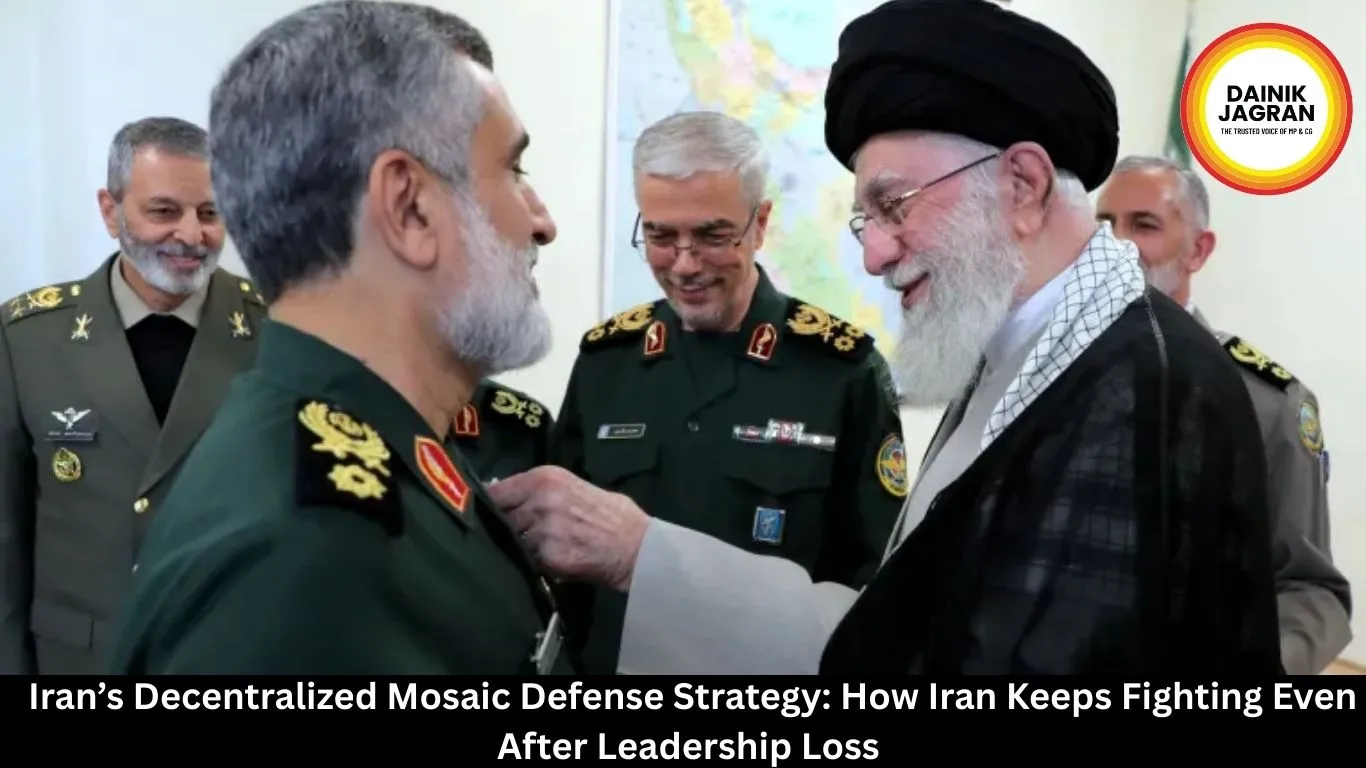
Iran’s Decentralized Mosaic Defense Strategy: How Iran Keeps Fighting Even After Leadership Loss
Digital Desk
Introduction: How Iran Keeps Fighting Even After Leadership Loss
Amid rising tensions in the Middle East, analysts are closely examining Iran’s Decentralized Mosaic Defense Strategy, a military doctrine designed to ensure the country can continue fighting even if its top leadership or central command is destroyed.
Recent remarks by Abbas Araghchi revealed that Iran spent nearly two decades studying American wars to develop a security system capable of surviving massive military strikes. The strategy aims to prevent the collapse of the country’s military structure even during severe attacks on its capital or command centers.
This approach is now gaining global attention as the region faces escalating conflict involving Iran, Israel, and the United States.
What Is Iran’s Decentralized Mosaic Defense Strategy?
The Iran Decentralized Mosaic Defense Strategyis a military system that divides command and operational authority into several independent layers. Instead of relying on a single centralized command, Iran distributes its military capabilities across multiple networks.
The concept of “mosaic” refers to small pieces forming a larger picture. Similarly, Iran’s military command is broken into seven independent layers, allowing each unit to operate autonomously if communication or leadership is lost.
Key features include:
Independent regional command structures
Distributed military units
Autonomous decision-making at local levels
Backup leadership for every major role
This system ensures that even if enemy forces eliminate top leadership, the rest of the military continues operating.
Seven-Layer Military Structure Behind the Strategy
Iran’s defense system is built around several interconnected organizations that function like a network.
1. Regular Army (Artesh)
The regular army absorbs the first wave of enemy attacks. Its armored and mechanized divisions slow down invading forces and stabilize battlefronts.
2. Air Defense Units
These units rely on concealment and dispersal tactics to prevent enemies from gaining air superiority.
3. Islamic Revolutionary Guard Corps (IRGC)
The backbone of the strategy is the Islamic Revolutionary Guard Corps. The IRGC leads decentralized operations such as ambushes, supply-line disruption, and guerrilla warfare.
4. Basij Militia
The Basij operates locally across 31 provinces, allowing communities to defend themselves even if central command fails.
5. Navy
Iran’s naval strategy focuses on anti-access warfarein the Persian Gulf and the Strait of Hormuz using mines, fast boats, and anti-ship missiles.
6. Missile ForceControlled by the IRGC,
Iran’s missile units provide long-range deterrence by targeting enemy infrastructure.
7. Regional Proxy Network
Iran also relies on allied groups across the Middle East, including Hezbollah and Houthis, to expand the battlefield beyond its borders.
Why Iran Adopted This Strategy
Iran began reshaping its military structure after studying American operations during the United States invasion of Afghanistan in 2001 and the United States invasion of Iraq in 2003.
Both wars showed how quickly centralized regimes collapsed when command centers were destroyed.
Learning from this, Iran avoided centralization and instead designed a distributed defense systemcapable of surviving leadership losses.
The country’s experience during the Iran-Iraq War (1980–1988) also reinforced the importance of endurance and long-term warfare.
“Fourth Successor” Rule: Leadership Backup Plan
Another unique feature of the Iran Decentralized Mosaic Defense Strategyis its leadership succession model.
Before his death, former Supreme Leader Ali Khamenei reportedly ordered that four successors be identified for every major positionin the military and government.
This means:
If a leader is killed, the next successor takes charge
If communication collapses, local commanders continue operations
Decision-making power remains active across multiple layers
The system prevents the military structure from collapsing after targeted assassinations.
Influence of Prolonged War Theory
Iran’s strategy also draws inspiration from the Prolonged War theorydeveloped by Mao Zedong.
The idea suggests that weaker nations do not need immediate victory. Instead, they can extend the conflict, increase the enemy’s costs, and gradually weaken their political will.
Iran applies this concept through low-cost weapons like drones, forcing adversaries to spend expensive interceptor missiles.
Conclusion: Why This Strategy Matters Today
As geopolitical tensions rise in the Middle East, Iran’s Decentralized Mosaic Defense Strategyis increasingly seen as a blueprint for survival against technologically superior adversaries.
By distributing command, preparing multiple successors, and focusing on prolonged warfare, Iran aims to ensure that no single attack can cripple its military system.
For global observers, the strategy highlights how modern conflicts are evolving—from quick decisive battles to long, endurance-based wars that test economic strength, political resolve, and organizational resilience.