

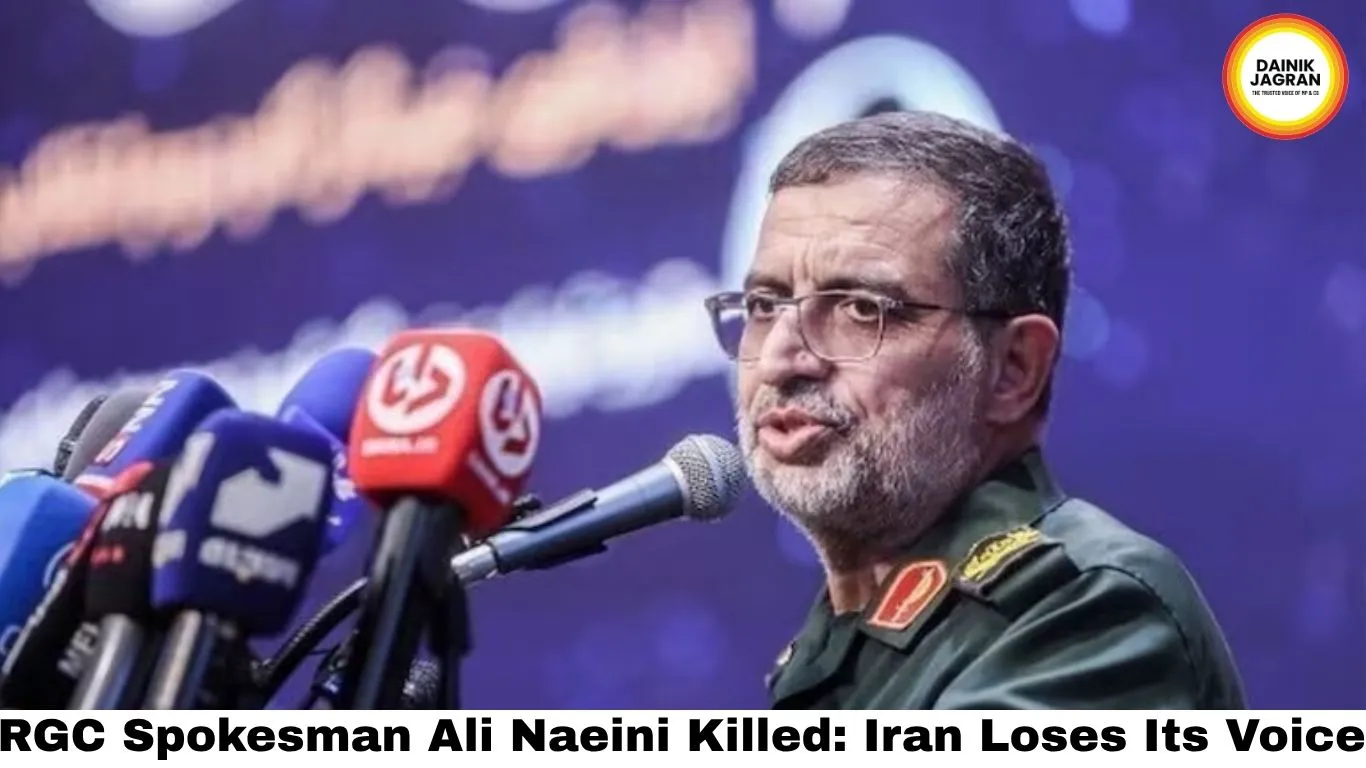
IRGC Spokesman Ali Mohammad Naeini Killed: Iran Loses Its Voice — Fourth Senior Leader Dead in One Week as US-Israel War Enters Day 21
Digital Desk
IRGC spokesman General Ali Mohammad Naeini killed in US-Israeli airstrike on March 20. Fourth senior Iranian leader killed in one week. Full story here.
He said Iran would keep fighting until the enemy was completely exhausted. Hours later — he was dead.
In the early hours of Friday, March 20, 2026 — the last day of the holy month of Ramadan — Brigadier General Ali Mohammad Naeini, the official spokesman and deputy head of public relations of Iran's Islamic Revolutionary Guard Corps, was killed in a joint US-Israeli airstrike targeting strategic command centres in Tehran and the Karaj region. The killing was confirmed simultaneously by Iranian state television, the IRGC's own Sepah News website, Tasnim News Agency, Mehr News Agency and Press TV. Israel's military also confirmed the strike through army spokesman Avichay Adraee, who said on X that the Air Force had eliminated Naeini, describing him as the head of the IRGC's propaganda system.
The Man Who Spoke for Iran — and What He Said Hours Before He Died
Ali Mohammad Naeini was born in 1957 in Kashan, Iran. He joined the IRGC in 1978 and served for nearly five decades — through the Iran-Iraq war, through Iran's nuclear standoff with the West and through the Mahsa Amini protests. He was appointed IRGC spokesman in July 2024. Over nearly five decades of service, he became one of the IRGC's foremost experts in psychological operations, soft power and what Iran calls cognitive warfare. He was not a battlefield commander. He was something arguably more powerful — the man who shaped how Iran's military talked to the world and to its own people.
Just hours before he was killed, Naeini appeared on Iranian state television and said — on the record — that even under wartime conditions Iran continues missile production and the war would go on until the enemy was completely exhausted. Three days before his death he had invoked the Persian Festival of Fire, warning of an imminent enemy-burning event. His final message was defiance. His next message never came.
The Fourth Major Blow in One Week
The killing of Naeini is not an isolated strike — it is the latest in a systematic and accelerating campaign to decapitate Iran's senior leadership. In the seven days leading up to March 20, US-Israeli strikes killed three other senior Iranian figures. On Monday, Ali Larijani — secretary of the Supreme National Security Council and one of the most powerful figures in Tehran — was killed in an airstrike. On Tuesday, Gholamreza Soleimani — head of the Basij paramilitary force — was eliminated. On Thursday, Esmaeil Khatib — Iran's Minister of Intelligence — was killed in a targeted strike in Tehran. And on Friday morning — the IRGC's own voice was silenced.
All of this since February 28 — when US-Israeli strikes killed Supreme Leader Ayatollah Ali Khamenei himself and triggered the war now in its 21st day.
Iran's Response — And What Comes Next
The IRGC released a statement praising Naeini as a wise and diligent figure whose contributions to the history of jihad and sacrifice left a lasting mark. The corps vowed that its voice will never be silenced. Iran's Foreign Minister Abbas Araghchi stated that the presence or absence of a single individual does not affect the structure of the Iranian state — pointing to how the system continued functioning even after the loss of the supreme leader himself.
Iranian forces have continued launching daily missile and drone operations targeting Israeli-occupied territory and US military bases across the region. In a counterstrike on Friday, Iran hit Israel's Oil Refineries complex in Haifa, damaging essential infrastructure. Kuwait's Mina Al-Ahmadi refinery was also struck by Iranian drone attacks as Tehran targeted energy sites across Gulf countries. Israeli Defence Minister Israel Katz has vowed more surprises in the days ahead.
What This Means
The targeting of a military spokesman — not just a commander — signals that the US-Israeli campaign has extended into Iran's communications and psychological warfare infrastructure. Killing the men who fight is one strategy. Killing the man who tells the story of the fight — that is a different kind of warfare entirely. Total confirmed casualties from US-Israeli strikes on Iran now stand at 1,444 dead and 18,551 wounded according to Iranian sources. NIA custody of the seven foreign nationals arrested in the India covert network case runs until March 27. The war has no ceasefire date in sight.
Day 21. Four senior leaders in seven days. And Iran says it is not stopping.
IRGC Spokesman Ali Mohammad Naeini Killed: Iran Loses Its Voice — Fourth Senior Leader Dead in One Week as US-Israel War Enters Day 21
Digital Desk
He said Iran would keep fighting until the enemy was completely exhausted. Hours later — he was dead.
In the early hours of Friday, March 20, 2026 — the last day of the holy month of Ramadan — Brigadier General Ali Mohammad Naeini, the official spokesman and deputy head of public relations of Iran's Islamic Revolutionary Guard Corps, was killed in a joint US-Israeli airstrike targeting strategic command centres in Tehran and the Karaj region. The killing was confirmed simultaneously by Iranian state television, the IRGC's own Sepah News website, Tasnim News Agency, Mehr News Agency and Press TV. Israel's military also confirmed the strike through army spokesman Avichay Adraee, who said on X that the Air Force had eliminated Naeini, describing him as the head of the IRGC's propaganda system.
The Man Who Spoke for Iran — and What He Said Hours Before He Died
Ali Mohammad Naeini was born in 1957 in Kashan, Iran. He joined the IRGC in 1978 and served for nearly five decades — through the Iran-Iraq war, through Iran's nuclear standoff with the West and through the Mahsa Amini protests. He was appointed IRGC spokesman in July 2024. Over nearly five decades of service, he became one of the IRGC's foremost experts in psychological operations, soft power and what Iran calls cognitive warfare. He was not a battlefield commander. He was something arguably more powerful — the man who shaped how Iran's military talked to the world and to its own people.
Just hours before he was killed, Naeini appeared on Iranian state television and said — on the record — that even under wartime conditions Iran continues missile production and the war would go on until the enemy was completely exhausted. Three days before his death he had invoked the Persian Festival of Fire, warning of an imminent enemy-burning event. His final message was defiance. His next message never came.
The Fourth Major Blow in One Week
The killing of Naeini is not an isolated strike — it is the latest in a systematic and accelerating campaign to decapitate Iran's senior leadership. In the seven days leading up to March 20, US-Israeli strikes killed three other senior Iranian figures. On Monday, Ali Larijani — secretary of the Supreme National Security Council and one of the most powerful figures in Tehran — was killed in an airstrike. On Tuesday, Gholamreza Soleimani — head of the Basij paramilitary force — was eliminated. On Thursday, Esmaeil Khatib — Iran's Minister of Intelligence — was killed in a targeted strike in Tehran. And on Friday morning — the IRGC's own voice was silenced.
All of this since February 28 — when US-Israeli strikes killed Supreme Leader Ayatollah Ali Khamenei himself and triggered the war now in its 21st day.
Iran's Response — And What Comes Next
The IRGC released a statement praising Naeini as a wise and diligent figure whose contributions to the history of jihad and sacrifice left a lasting mark. The corps vowed that its voice will never be silenced. Iran's Foreign Minister Abbas Araghchi stated that the presence or absence of a single individual does not affect the structure of the Iranian state — pointing to how the system continued functioning even after the loss of the supreme leader himself.
Iranian forces have continued launching daily missile and drone operations targeting Israeli-occupied territory and US military bases across the region. In a counterstrike on Friday, Iran hit Israel's Oil Refineries complex in Haifa, damaging essential infrastructure. Kuwait's Mina Al-Ahmadi refinery was also struck by Iranian drone attacks as Tehran targeted energy sites across Gulf countries. Israeli Defence Minister Israel Katz has vowed more surprises in the days ahead.
What This Means
The targeting of a military spokesman — not just a commander — signals that the US-Israeli campaign has extended into Iran's communications and psychological warfare infrastructure. Killing the men who fight is one strategy. Killing the man who tells the story of the fight — that is a different kind of warfare entirely. Total confirmed casualties from US-Israeli strikes on Iran now stand at 1,444 dead and 18,551 wounded according to Iranian sources. NIA custody of the seven foreign nationals arrested in the India covert network case runs until March 27. The war has no ceasefire date in sight.
Day 21. Four senior leaders in seven days. And Iran says it is not stopping.


