

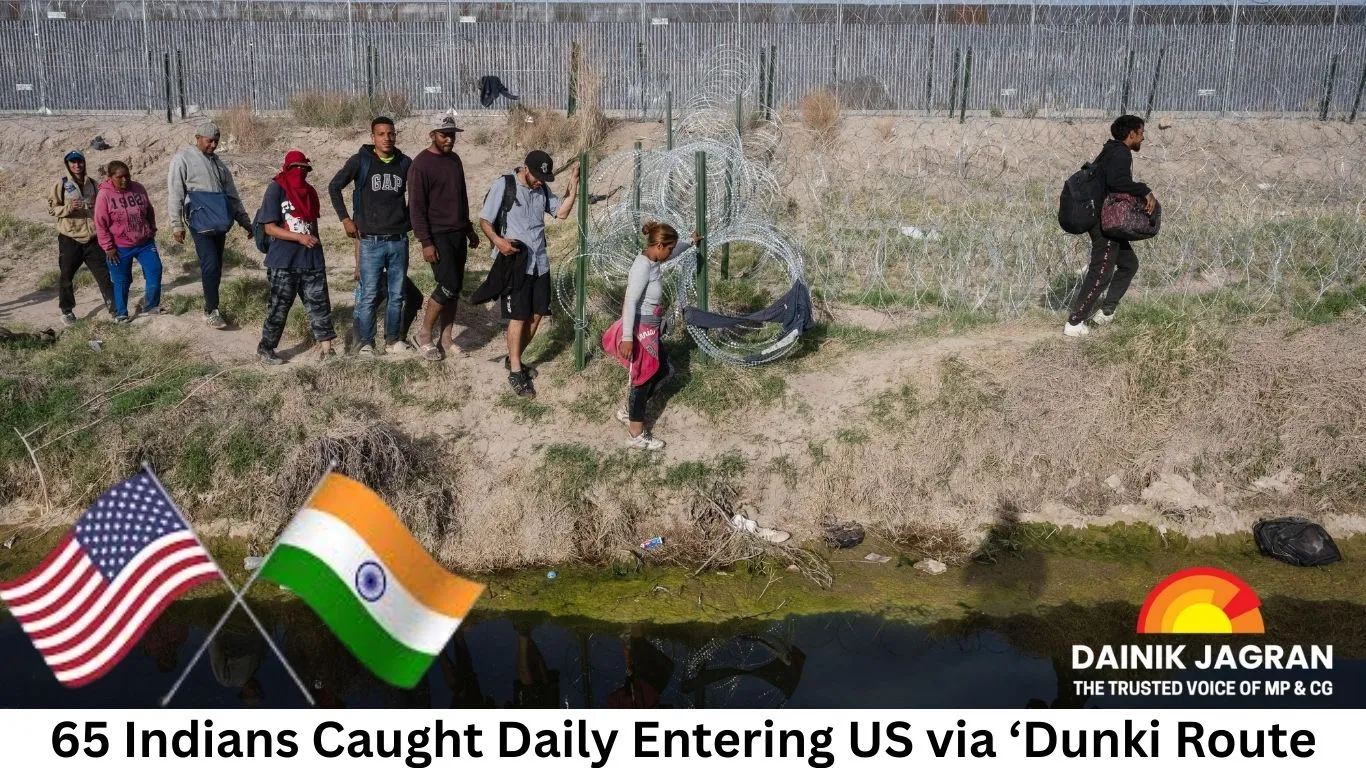
65 Indians Caught Daily Entering US via ‘Dunki Route’; Turkey–Dubai Path on Rise

Digital Desk

65 Indians Caught Daily Entering US via ‘Dunki Route’; Turkey–Dubai Path on Rise

Illegal entry of Indians into the United States remains a significant concern, with US authorities reporting 23,830 arrests between January and December 2025—an average of 65 apprehensions per day. The figure, while lower than the 85,119 arrests recorded in 2024, underscores the persistence of irregular migration through the so-called ‘Dunki Route’.

The US Border and Customs Department noted a marked shift in migration patterns. Unlike 2024, when approximately 20,000 Indians attempted entry with families, all 2025 cases involved solo travelers. Authorities also highlighted a change in routes. While the Canada and Mexico borders were traditionally used, an increasing number of migrants are entering via Turkey and Dubai on tourist visas before overstaying.

Border-wise Breakdown

  • Canada border: 6,968 Indians

  • Mexico border: 1,543 Indians

  • Other US cities: 15,319 Indians

Deportations have also risen sharply. In 2025, the US deported 3,254 Indians—the highest annual figure since 2009. Over the past 16 years, a total of 18,882 Indians have been deported.

Dangerous Migration Routes
Authorities identify three primary ‘Dunki Route’ paths:

  1. Canada to US in extreme cold: Migrants legally enter Canada on tourist visas, travel to Manitoba, and cross the Emerson village border on foot through knee-deep snow in temperatures dropping to -40°C.

  2. South America via jungles and deserts: Migrants navigate dense jungles, rivers, mountains, and deserts, often facing hunger, dehydration, and deadly terrain. Deportees report encountering dead bodies along the route.

  3. River and boat routes: Migrants cross a 150-km river from Colombia and travel through Nicaragua, Mexico, and Guatemala, which serves as a key hub for human trafficking.

Reasons Behind Risky Migration
Experts cite limited legal migration avenues, economic pressure, and lack of education as primary drivers. Human traffickers exploit these vulnerabilities, promising prosperity and permanent settlement in the US. Many migrants voluntarily surrender to authorities upon entry, often securing temporary work permits and eventual legalisation. Some may obtain Green Cards within 8–10 years, followed by US citizenship over 10–15 years through periodic legalisation programs.

Persistent Challenge for Authorities
US immigration officials warn that despite stricter enforcement and surveillance, illegal migration networks continue to operate actively. The emergence of alternative routes such as Turkey–Dubai illustrates the evolving challenge of curbing unauthorized entry from India. Authorities emphasize ongoing vigilance, technology-enabled tracking, and international cooperation to disrupt human trafficking networks.

--------

🚨 Beat the News Rush – Join Now!

Get breaking alerts, hot exclusives, and game-changing stories instantly on your phone. No delays, no fluff – just the edge you need. ⚡

Tap to join: 

🟢 WhatsApp Channel: Dainik Jagran MP CG

Crave more?

🅕 Facebook: Dainik Jagran MP CG English

🅧 Twitter (X): Dainik Jagran MP CG

🅘 Instagram: Dainik Jagran MP CG

Share the fire – keep your crew ahead! 🗞️🔥

english.dainikjagranmpcg.com
31 Jan 2026 By Nitin Trivedi

65 Indians Caught Daily Entering US via ‘Dunki Route’; Turkey–Dubai Path on Rise

Digital Desk

The US Border and Customs Department noted a marked shift in migration patterns. Unlike 2024, when approximately 20,000 Indians attempted entry with families, all 2025 cases involved solo travelers. Authorities also highlighted a change in routes. While the Canada and Mexico borders were traditionally used, an increasing number of migrants are entering via Turkey and Dubai on tourist visas before overstaying.

Border-wise Breakdown

  • Canada border: 6,968 Indians

  • Mexico border: 1,543 Indians

  • Other US cities: 15,319 Indians

Deportations have also risen sharply. In 2025, the US deported 3,254 Indians—the highest annual figure since 2009. Over the past 16 years, a total of 18,882 Indians have been deported.

Dangerous Migration Routes
Authorities identify three primary ‘Dunki Route’ paths:

  1. Canada to US in extreme cold: Migrants legally enter Canada on tourist visas, travel to Manitoba, and cross the Emerson village border on foot through knee-deep snow in temperatures dropping to -40°C.

  2. South America via jungles and deserts: Migrants navigate dense jungles, rivers, mountains, and deserts, often facing hunger, dehydration, and deadly terrain. Deportees report encountering dead bodies along the route.

  3. River and boat routes: Migrants cross a 150-km river from Colombia and travel through Nicaragua, Mexico, and Guatemala, which serves as a key hub for human trafficking.

Reasons Behind Risky Migration
Experts cite limited legal migration avenues, economic pressure, and lack of education as primary drivers. Human traffickers exploit these vulnerabilities, promising prosperity and permanent settlement in the US. Many migrants voluntarily surrender to authorities upon entry, often securing temporary work permits and eventual legalisation. Some may obtain Green Cards within 8–10 years, followed by US citizenship over 10–15 years through periodic legalisation programs.

Persistent Challenge for Authorities
US immigration officials warn that despite stricter enforcement and surveillance, illegal migration networks continue to operate actively. The emergence of alternative routes such as Turkey–Dubai illustrates the evolving challenge of curbing unauthorized entry from India. Authorities emphasize ongoing vigilance, technology-enabled tracking, and international cooperation to disrupt human trafficking networks.

https://english.dainikjagranmpcg.com/international/65-indians-caught-daily-entering-us-via-%E2%80%98dunki-route%E2%80%99-turkey%E2%80%93dubai/article-13408

Related Posts

Trending News


