


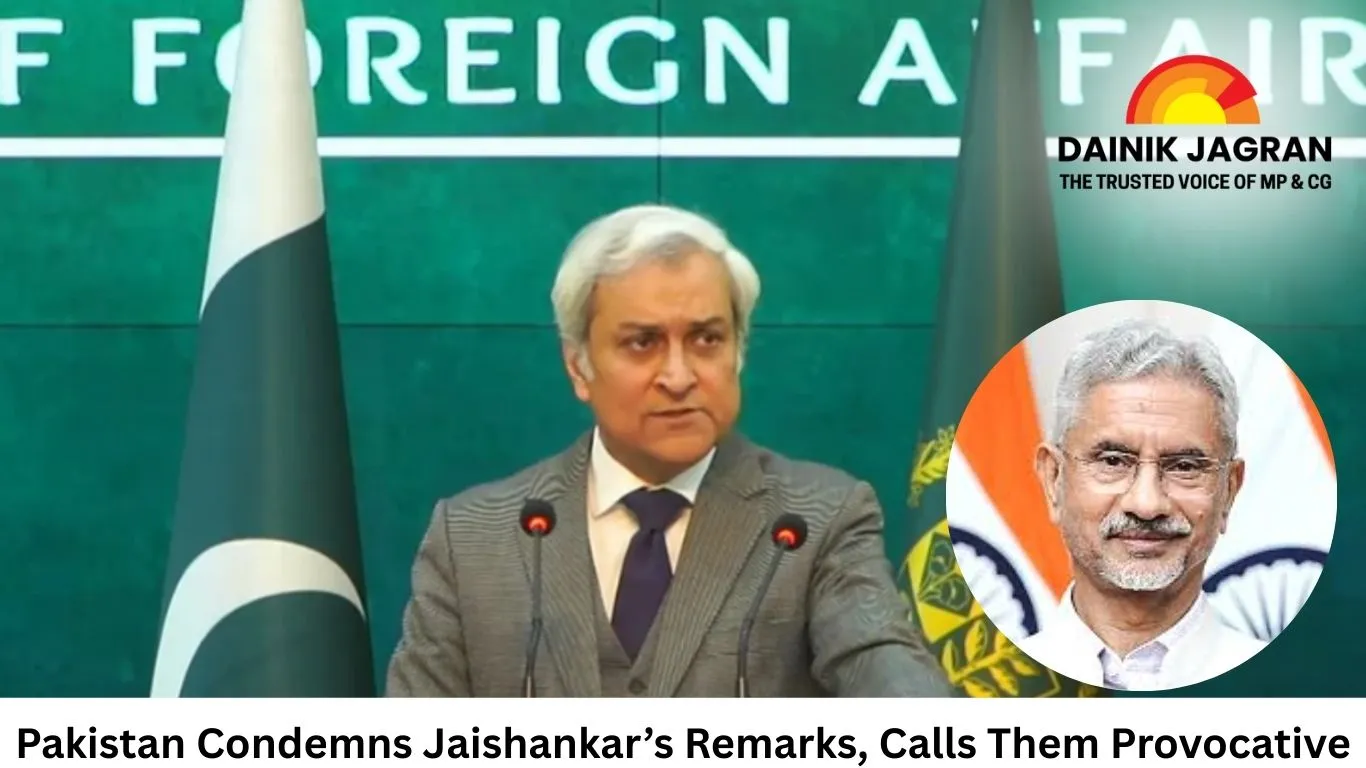
Pakistan Condemns Jaishankar’s Remarks, Calls Them Provocative
Digital Desk
Jaishankar made the comments at the Hindustan Times Leadership Summit in New Delhi on Saturday, stating that Pakistan’s policies have long been influenced by its military. “What is happening in Pakistan today is the result of its 80-year history. The Pakistani Army has continued to hold power, sometimes openly, sometimes from behind the scenes,” he said.
Responding, Pakistan Foreign Office spokesperson Tahira Andrabi rejected Jaishankar’s claims, describing them as “provocative, baseless and irresponsible.” She said the Pakistani Army remains a “strong pillar of national security” and is fully capable of responding to any aggression. Andrabi also referenced the May 2025 India-Pakistan confrontation, stating that the Army had effectively demonstrated the country’s defensive capabilities during that period.
Pakistan further accused India of attempting to use such statements as a “propaganda campaign” aimed at discrediting Pakistani institutions and leadership. The Foreign Office claimed that Jaishankar’s comments were intended to divert attention from India-backed activities in Pakistan, including alleged cross-border terrorism.
On a related note, Pakistan reiterated its support for China’s claims over Arunachal Pradesh. Addressing questions about the Chinese Foreign Ministry’s statements, Andrabi said on December 5 that Pakistan “fully and consistently supports China on all issues related to its sovereignty and territorial integrity.” This follows statements by Chinese spokesperson Mao Ning on November 25, asserting that Zangnan (Arunachal Pradesh) is part of China.
The remarks by Jaishankar and the subsequent Pakistani response underline rising diplomatic tensions between the two South Asian neighbours, with cross-border military and territorial issues continuing to shape bilateral relations. Analysts say such exchanges are likely to influence ongoing discussions on regional security, India-Pakistan dialogue, and China’s role in South Asian geopolitics.

.jpg)




