


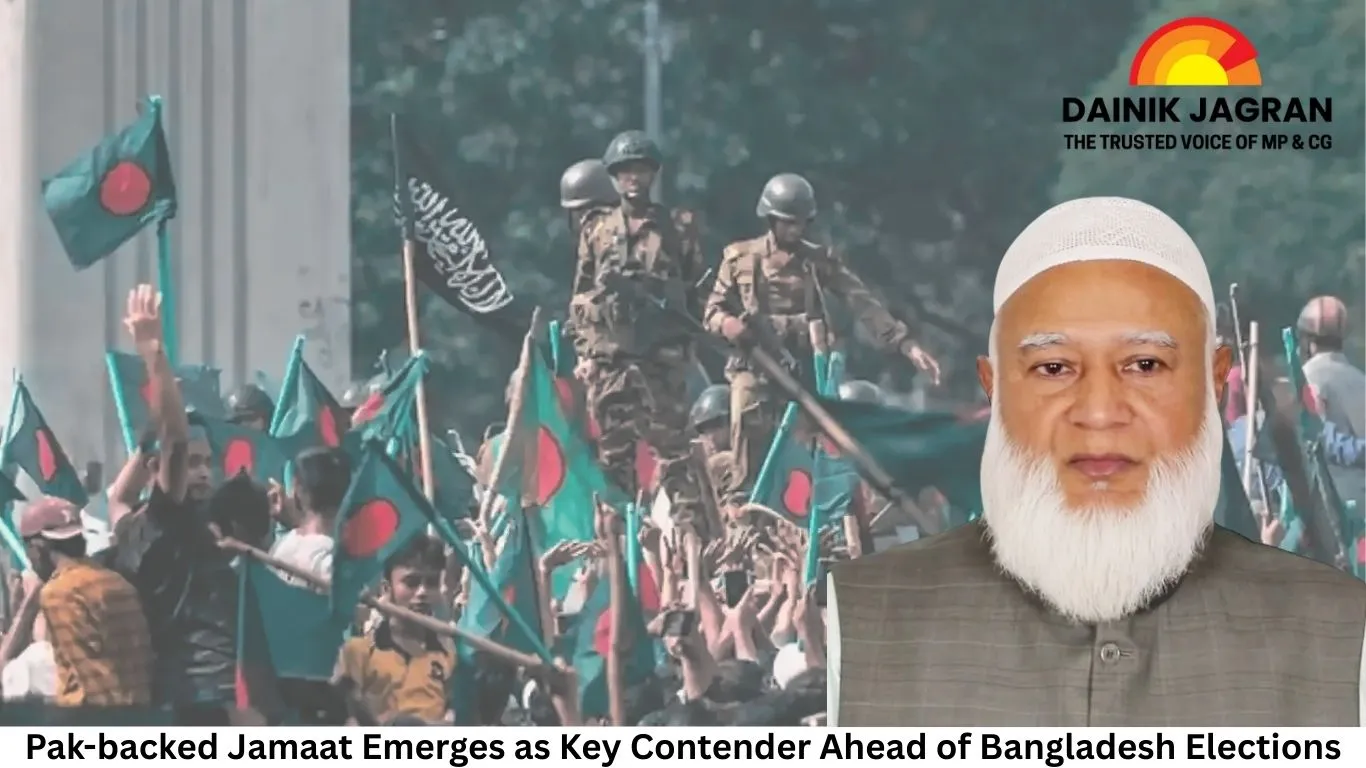
Pak-backed Jamaat Emerges as Key Contender Ahead of Bangladesh Elections
Digital Desk
Two independent surveys indicate a razor-thin margin between the leading parties. A December poll by the International Republican Institute placed BNP at 33% support, with Jamaat at 29%. A subsequent January survey by Narrative, Projection BD, the International Institute of Law and Diplomacy, and Jagoron Foundation showed BNP marginally ahead at 34.7%, with Jamaat close behind at 33.6%. The narrow gap has fuelled speculation that Jamaat could play a decisive role in government formation.
The elections will be held for 300 directly elected seats in the Jatiya Sangsad, with an additional 50 seats reserved for women. Jamaat has announced plans to contest 179 constituencies, its most extensive electoral push to date.
Political analysts attribute Jamaat’s resurgence to a vacuum created after the collapse of Prime Minister Sheikh Hasina’s government in August 2024 following a student-led movement. The Awami League was subsequently banned, reshaping the political landscape. Nobel laureate Muhammad Yunus currently heads the interim administration overseeing the transition to elections.
Jamaat chief Shafiqur Rahman has said the party has moved away from confrontational politics, focusing instead on welfare initiatives such as medical camps, flood relief, and assistance to families affected by political violence. The party is campaigning on an anti-corruption plank under the slogan “Islam is the solution,” while expanding its outreach through social media, particularly targeting young voters.
However, Jamaat’s historical opposition to Bangladesh’s independence in 1971 and allegations of collaboration with the Pakistani army during the liberation war remain major liabilities. Several of its former leaders were accused of war-time atrocities, a legacy that continues to evoke strong public sentiment.
The BNP, now led by Tarique Rahman following the death of Khaleda Zia, remains slightly ahead in polls. Rahman has returned to Bangladesh after 17 years in exile, adding momentum to the party’s campaign.
The evolving political equation is being closely watched by India and other regional stakeholders. Analysts warn that a Jamaat-led government could recalibrate Dhaka’s foreign policy, though the party has maintained it seeks balanced relations.
With opinion polls indicating a margin of just 2–4 percentage points, the February election is expected to be a tight contest with far-reaching political and regional implications.
.jpg)




