

PM Modi Lok Sabha Speech March 23: Full Statement on Iran War

Digital Desk

PM Modi Lok Sabha Speech March 23: Full Statement on Iran War

PM Modi's full Lok Sabha statement on West Asia war — 53 lakh MT petroleum reserve, 92,000 MT LPG ships cross Hormuz, 3.75 lakh Indians safe, solar at 140 GW, Parliament unity appeal.

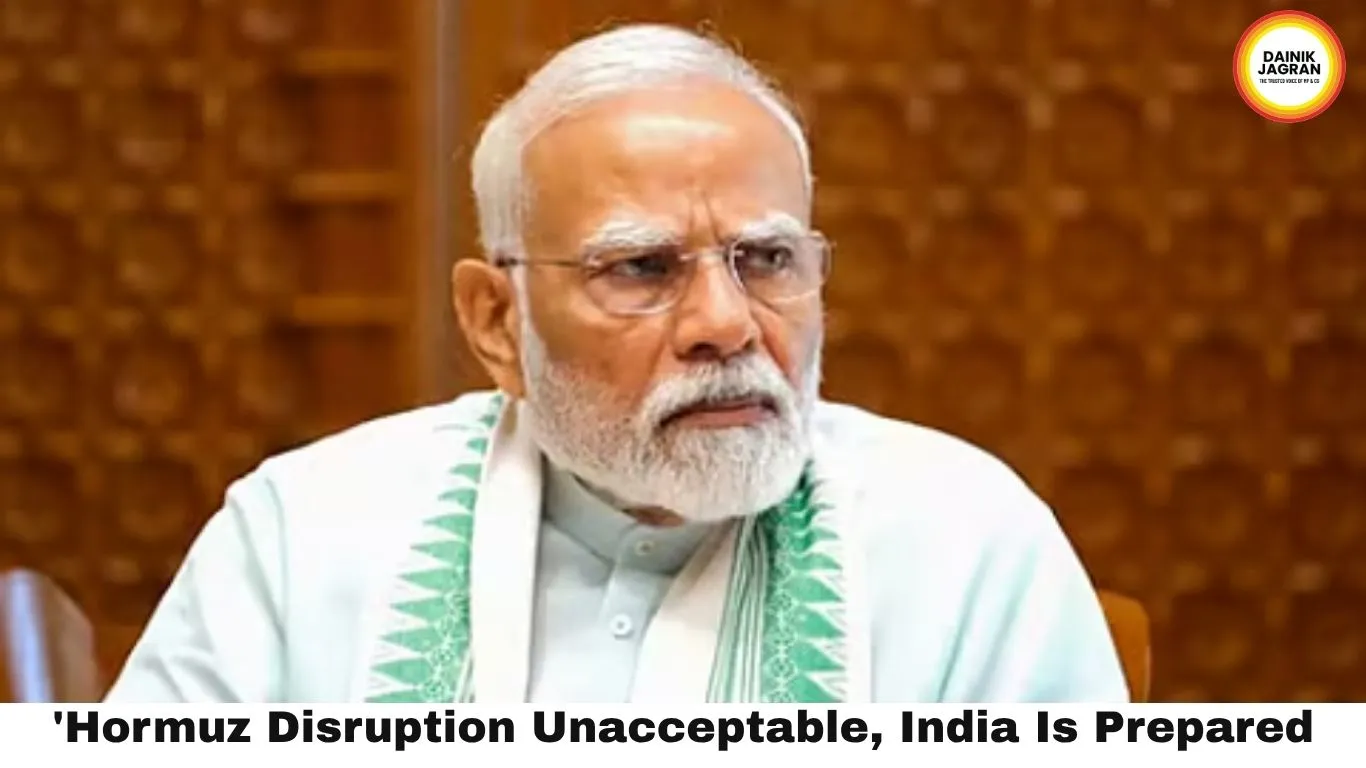
'Hormuz Disruption Unacceptable, India Is Prepared': PM Modi's Full Lok Sabha Statement on West Asia War

In a comprehensive parliamentary address on March 23, PM Modi reveals India holds 53 lakh MT strategic petroleum reserves, two LPG ships with 92,000 MT crossed Hormuz safely, solar capacity hit 140 GW — and calls for Parliament to speak in one unified voice to the world.


Parliament Hears India's War Preparedness Plan

Prime Minister Narendra Modi addressed the Lok Sabha at 2 PM on Monday, March 23 — Day 24 of the US-Israel-Iran war — delivering the government's most detailed and comprehensive public statement since hostilities began on February 28. The address followed a Sunday Cabinet Committee on Security meeting attended by the Defence, Home, Agriculture, External Affairs, Finance, Health, Commerce and Railways ministers — India's full war-preparedness cabinet assembled in one room. What Modi told Parliament covered every dimension of India's exposure to the West Asia crisis — and every step the government has taken in response.


The War Has No End in Sight — India's Concern Is Greater Than Most

Modi opened with a frank assessment of where the conflict stands. The West Asia crisis has entered its fourth week with no resolution in sight, he said — and the entire world is in touch with all stakeholders to bring it to an end. He noted that India has extensive trade relations with countries at war and with countries affected by the conflict. The region where the conflict is taking place is also an important route for India's trade with other countries around the world. These twin exposures — as a trading partner and as a transit-dependent energy importer — mean India's concern is greater than that of most other countries.


Every Indian's Safety Is Non-Negotiable

Modi addressed the humanitarian dimension of the crisis with clarity and personal commitment. One crore Indians live and work in Gulf countries. In times of crisis, the safety of Indians inside India and abroad is the most important priority. All Indian missions in affected countries are continuously engaged in helping every Indian present there — whether workers or tourists — providing all possible assistance. Twenty-four-hour control rooms and emergency helplines have been established both in India and at Indian missions abroad.


3.75 Lakh Indians Home Safely — 1,000 From Iran Including 700 Medical Students

Since the war began, more than 3.75 lakh Indians have safely reached India. From Iran alone — a country under sustained bombardment — nearly 1,000 Indians have returned, of whom over 700 are medical students enrolled at Iranian universities. Modi also confirmed that CBSE has cancelled Class 10 and Class 12 board examinations for students in Gulf country schools — and that the government is taking necessary steps to ensure their education continues without disruption.


Hormuz Disruption Is Unacceptable — Two Indian LPG Ships Have Crossed Safely

Modi's most direct statement on the Strait of Hormuz — the 33-kilometre waterway Iran has effectively disrupted since February 28 — was unambiguous. Attacks on commercial ships and disruptions to international waterways like the Strait of Hormuz cannot be accepted by India. Through diplomacy, India is continuously working to ensure safe passage for Indian ships even in this war atmosphere.

In a significant operational disclosure, Modi confirmed that two Indian-flagged LPG carriers — Shivalik and Nanda Devi — have successfully crossed the Strait of Hormuz and are now headed to India, carrying approximately 46,000 metric tonnes each — together accounting for over 92,000 metric tonnes of cooking gas. The safe passage of these vessels, secured through diplomatic engagement, represents a direct and tangible win for India's Hormuz diplomacy.


Domestic Gas Supply Is Priority — LPG Production Being Increased

India imports 60 percent of its LPG requirement. The government has declared domestic household consumers the top priority for gas allocation — a policy that has meant commercial supply to hotels and restaurants has been rationed. Modi assured Parliament that the government is making efforts to ensure petrol, diesel and gas supplies are not severely impacted. Ethanol blending in petrol has reached 20 percent. Domestic LPG production is being actively increased to reduce import dependence. LPG is also being sourced from the United States — the arrival of the cargo vessel Pixis Pioneer at New Mangalore Port from Texas being the most recent example.


Strategic Petroleum Reserve of 53 Lakh Metric Tonnes — Food Stocks Sufficient

Modi revealed a key national security data point: India currently holds a strategic petroleum reserve of 53 lakh metric tonnes — a buffer against sustained supply disruption. He assured Parliament that there are sufficient food grain stocks. During the COVID pandemic, when supply chains were hit, the government took steps to ensure farmers were protected — and the same approach will be applied in the current crisis. He told farmers directly: the government will continue to make every effort to help them. On power, he was unequivocal: India has enough coal stocks, and power supply will remain uninterrupted.


Energy Imports Diversified — From 27 to 41 Countries Over 11 Years

Over the past 11 years, Modi told Parliament, India has diversified its energy import base from 27 countries to 41. This long-term structural preparation means India is significantly less exposed to any single supply route disruption than it was a decade ago. He framed this as evidence of 11 years of deliberate preparation — not crisis management — for exactly the kind of external energy shock that has now arrived.


Solar at 140 GW, 40 Lakh Rooftop Panels, 200 Biogas Plants — The Renewable Buffer

Modi placed India's renewable energy achievements in the context of war preparedness — framing them as structural insulation against fossil fuel dependency. Solar power capacity has grown from approximately 3 GW to 140 GW over the past 11 years. Nearly 40 lakh rooftop solar panels were installed across India in the past year alone. Two hundred compressed biogas plants under the Gowardhan Yojana are operational. A Small Hydropower Development Scheme has just been approved — adding 1,500 MW of new hydroelectric capacity over the next five years.


Dedicated Ministers Group Created — Shipping Routes Under 24/7 Monitoring

The government is keeping a close eye on shipping routes in the Gulf to ensure that oil, gas and fertiliser ships reach India safely. A dedicated group of ministers and senior secretaries has been created specifically to manage the fallout of the West Asia conflict across all affected sectors — petroleum, crude oil, natural gas, power, fertilisers, agriculture, shipping, trade and MSMEs. The Prime Minister has personally spoken to leaders in two rounds of phone calls — covering Saudi Arabia, UAE, Qatar, Bahrain, Kuwait, Jordan, France, Malaysia, Israel and Iran — all of whom have assured him of the safety of Indian nationals.


Parliament Must Speak With One Voice — Modi's Closing Appeal

Modi closed with a call for national unity that elevated his speech from a government briefing into a constitutional moment. The difficult conditions created by this war are likely to have lasting effects for a long time — so India must be prepared and remain united. Just as India faced the COVID challenge with unity, this crisis must also be faced together. He cited Parliament's role in sending a unified signal to the world — and called on all parties to ensure that a single, clear, consensual Indian voice reaches the international community on the West Asia crisis.


๐Ÿ“‹ SEO METADATA

โœ… Meta Title: PM Modi Lok Sabha Speech March 23: Full Statement on Iran War

โœ… Meta Description: PM Modi's full Lok Sabha statement on West Asia war — 53 lakh MT petroleum reserve, 92,000 MT LPG ships cross Hormuz, 3.75 lakh Indians safe, solar at 140 GW, Parliament unity appeal.

โœ… Focus Keywords:

  1. PM Modi Lok Sabha speech West Asia war March 23 2026
  2. Modi Strait of Hormuz statement Parliament 2026
  3. India strategic petroleum reserve 53 lakh MT
  4. 3.75 lakh Indians returned safe Iran war
  5. India LPG ships Shivalik Nanda Devi Hormuz
  6. India oil imports 41 countries diversification
  7. Modi Parliament unity appeal West Asia 2026

โœ… Tags: PM Modi Lok Sabha March 23 West Asia War India Statement Strait of Hormuz India India LPG Crisis 2026 Strategic Petroleum Reserve India Indians Safe Gulf War India Solar 140 GW Modi Parliament Speech India Oil Diversification 41 Countries CBSE Gulf Exams Cancelled India Iran War Diplomacy Cabinet Committee Security India

english.dainikjagranmpcg.com
23 Mar 2026 By Jiya.S

PM Modi Lok Sabha Speech March 23: Full Statement on Iran War

Digital Desk

'Hormuz Disruption Unacceptable, India Is Prepared': PM Modi's Full Lok Sabha Statement on West Asia War

In a comprehensive parliamentary address on March 23, PM Modi reveals India holds 53 lakh MT strategic petroleum reserves, two LPG ships with 92,000 MT crossed Hormuz safely, solar capacity hit 140 GW — and calls for Parliament to speak in one unified voice to the world.


Parliament Hears India's War Preparedness Plan

Prime Minister Narendra Modi addressed the Lok Sabha at 2 PM on Monday, March 23 — Day 24 of the US-Israel-Iran war — delivering the government's most detailed and comprehensive public statement since hostilities began on February 28. The address followed a Sunday Cabinet Committee on Security meeting attended by the Defence, Home, Agriculture, External Affairs, Finance, Health, Commerce and Railways ministers — India's full war-preparedness cabinet assembled in one room. What Modi told Parliament covered every dimension of India's exposure to the West Asia crisis — and every step the government has taken in response.


The War Has No End in Sight — India's Concern Is Greater Than Most

Modi opened with a frank assessment of where the conflict stands. The West Asia crisis has entered its fourth week with no resolution in sight, he said — and the entire world is in touch with all stakeholders to bring it to an end. He noted that India has extensive trade relations with countries at war and with countries affected by the conflict. The region where the conflict is taking place is also an important route for India's trade with other countries around the world. These twin exposures — as a trading partner and as a transit-dependent energy importer — mean India's concern is greater than that of most other countries.


Every Indian's Safety Is Non-Negotiable

Modi addressed the humanitarian dimension of the crisis with clarity and personal commitment. One crore Indians live and work in Gulf countries. In times of crisis, the safety of Indians inside India and abroad is the most important priority. All Indian missions in affected countries are continuously engaged in helping every Indian present there — whether workers or tourists — providing all possible assistance. Twenty-four-hour control rooms and emergency helplines have been established both in India and at Indian missions abroad.


3.75 Lakh Indians Home Safely — 1,000 From Iran Including 700 Medical Students

Since the war began, more than 3.75 lakh Indians have safely reached India. From Iran alone — a country under sustained bombardment — nearly 1,000 Indians have returned, of whom over 700 are medical students enrolled at Iranian universities. Modi also confirmed that CBSE has cancelled Class 10 and Class 12 board examinations for students in Gulf country schools — and that the government is taking necessary steps to ensure their education continues without disruption.


Hormuz Disruption Is Unacceptable — Two Indian LPG Ships Have Crossed Safely

Modi's most direct statement on the Strait of Hormuz — the 33-kilometre waterway Iran has effectively disrupted since February 28 — was unambiguous. Attacks on commercial ships and disruptions to international waterways like the Strait of Hormuz cannot be accepted by India. Through diplomacy, India is continuously working to ensure safe passage for Indian ships even in this war atmosphere.

In a significant operational disclosure, Modi confirmed that two Indian-flagged LPG carriers — Shivalik and Nanda Devi — have successfully crossed the Strait of Hormuz and are now headed to India, carrying approximately 46,000 metric tonnes each — together accounting for over 92,000 metric tonnes of cooking gas. The safe passage of these vessels, secured through diplomatic engagement, represents a direct and tangible win for India's Hormuz diplomacy.


Domestic Gas Supply Is Priority — LPG Production Being Increased

India imports 60 percent of its LPG requirement. The government has declared domestic household consumers the top priority for gas allocation — a policy that has meant commercial supply to hotels and restaurants has been rationed. Modi assured Parliament that the government is making efforts to ensure petrol, diesel and gas supplies are not severely impacted. Ethanol blending in petrol has reached 20 percent. Domestic LPG production is being actively increased to reduce import dependence. LPG is also being sourced from the United States — the arrival of the cargo vessel Pixis Pioneer at New Mangalore Port from Texas being the most recent example.


Strategic Petroleum Reserve of 53 Lakh Metric Tonnes — Food Stocks Sufficient

Modi revealed a key national security data point: India currently holds a strategic petroleum reserve of 53 lakh metric tonnes — a buffer against sustained supply disruption. He assured Parliament that there are sufficient food grain stocks. During the COVID pandemic, when supply chains were hit, the government took steps to ensure farmers were protected — and the same approach will be applied in the current crisis. He told farmers directly: the government will continue to make every effort to help them. On power, he was unequivocal: India has enough coal stocks, and power supply will remain uninterrupted.


Energy Imports Diversified — From 27 to 41 Countries Over 11 Years

Over the past 11 years, Modi told Parliament, India has diversified its energy import base from 27 countries to 41. This long-term structural preparation means India is significantly less exposed to any single supply route disruption than it was a decade ago. He framed this as evidence of 11 years of deliberate preparation — not crisis management — for exactly the kind of external energy shock that has now arrived.


Solar at 140 GW, 40 Lakh Rooftop Panels, 200 Biogas Plants — The Renewable Buffer

Modi placed India's renewable energy achievements in the context of war preparedness — framing them as structural insulation against fossil fuel dependency. Solar power capacity has grown from approximately 3 GW to 140 GW over the past 11 years. Nearly 40 lakh rooftop solar panels were installed across India in the past year alone. Two hundred compressed biogas plants under the Gowardhan Yojana are operational. A Small Hydropower Development Scheme has just been approved — adding 1,500 MW of new hydroelectric capacity over the next five years.


Dedicated Ministers Group Created — Shipping Routes Under 24/7 Monitoring

The government is keeping a close eye on shipping routes in the Gulf to ensure that oil, gas and fertiliser ships reach India safely. A dedicated group of ministers and senior secretaries has been created specifically to manage the fallout of the West Asia conflict across all affected sectors — petroleum, crude oil, natural gas, power, fertilisers, agriculture, shipping, trade and MSMEs. The Prime Minister has personally spoken to leaders in two rounds of phone calls — covering Saudi Arabia, UAE, Qatar, Bahrain, Kuwait, Jordan, France, Malaysia, Israel and Iran — all of whom have assured him of the safety of Indian nationals.


Parliament Must Speak With One Voice — Modi's Closing Appeal

Modi closed with a call for national unity that elevated his speech from a government briefing into a constitutional moment. The difficult conditions created by this war are likely to have lasting effects for a long time — so India must be prepared and remain united. Just as India faced the COVID challenge with unity, this crisis must also be faced together. He cited Parliament's role in sending a unified signal to the world — and called on all parties to ensure that a single, clear, consensual Indian voice reaches the international community on the West Asia crisis.


๐Ÿ“‹ SEO METADATA

โœ… Meta Title: PM Modi Lok Sabha Speech March 23: Full Statement on Iran War

โœ… Meta Description: PM Modi's full Lok Sabha statement on West Asia war — 53 lakh MT petroleum reserve, 92,000 MT LPG ships cross Hormuz, 3.75 lakh Indians safe, solar at 140 GW, Parliament unity appeal.

โœ… Focus Keywords:

  1. PM Modi Lok Sabha speech West Asia war March 23 2026
  2. Modi Strait of Hormuz statement Parliament 2026
  3. India strategic petroleum reserve 53 lakh MT
  4. 3.75 lakh Indians returned safe Iran war
  5. India LPG ships Shivalik Nanda Devi Hormuz
  6. India oil imports 41 countries diversification
  7. Modi Parliament unity appeal West Asia 2026

โœ… Tags: PM Modi Lok Sabha March 23 West Asia War India Statement Strait of Hormuz India India LPG Crisis 2026 Strategic Petroleum Reserve India Indians Safe Gulf War India Solar 140 GW Modi Parliament Speech India Oil Diversification 41 Countries CBSE Gulf Exams Cancelled India Iran War Diplomacy Cabinet Committee Security India

https://english.dainikjagranmpcg.com/international/69c110c7c8c4d/article-15850

Related Posts

Advertisement

Latest News


