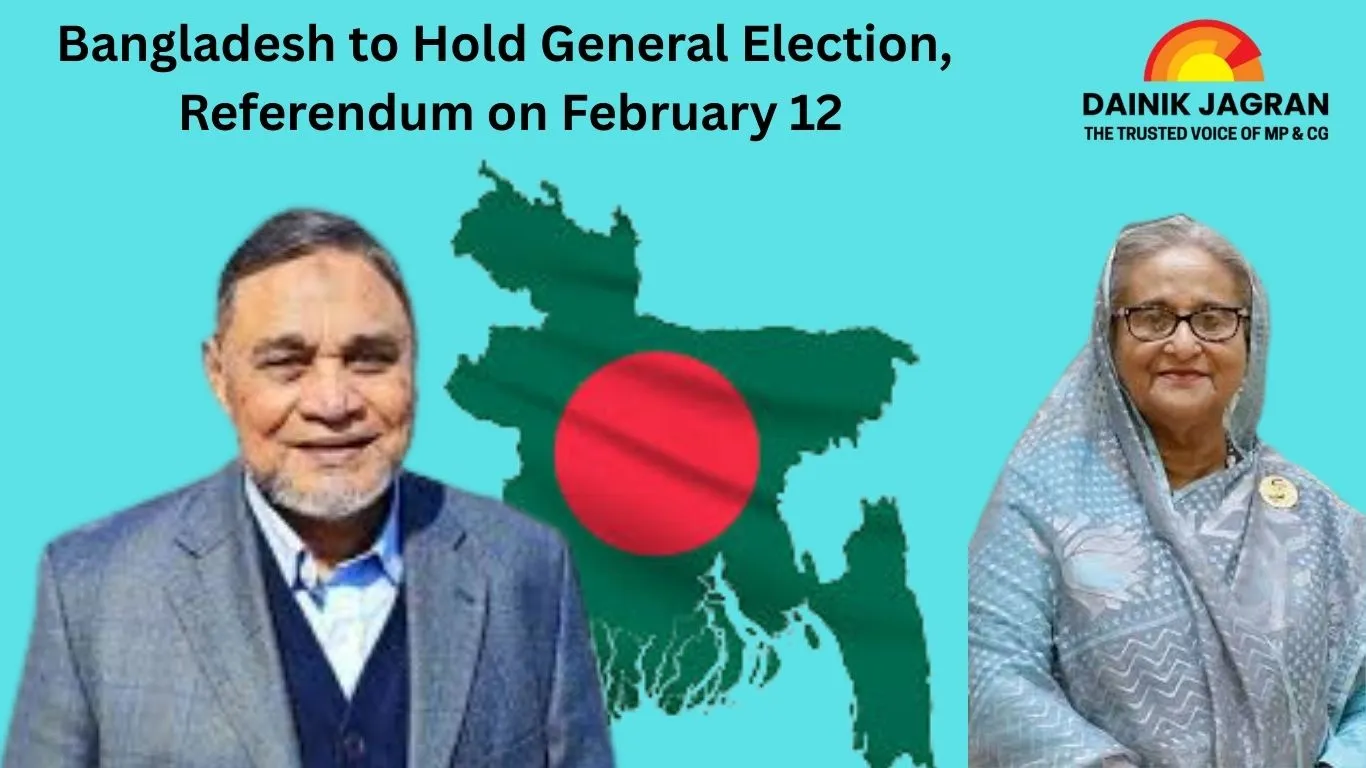
Bangladesh to Hold General Election, Referendum on February 12; Awami League Barred from Contesting

Digital Desk

Bangladesh to Hold General Election, Referendum on February 12; Awami League Barred from Contesting

Bangladesh will head to the polls on February 12, 2026, the Chief Election Commissioner AMM Nasiruddin announced in Dhaka on Thursday, setting the stage for the country’s first national election since the ouster of former Prime Minister Sheikh Hasina last year. The vote comes under the interim administration led by Nobel laureate Muhammad Yunus, which has governed since the August 5, 2024 coup.

The Election Commission confirmed that the Awami League Bangladesh’s largest political party and the dominant force in national politics for decades  will not be allowed to contest. The party’s registration was suspended in May 2025, and several senior leaders remain in custody. The interim government has additionally imposed a complete ban on its political activities, raising concerns that the upcoming contest may lack meaningful opposition.

The general election will be held alongside a national referendum on the July Charter, a broad reform blueprint drafted earlier this year by political groups and civil society representatives. The charter proposes changes across 26 areas, including curbing the Prime Minister’s tenure to 8–10 years, redefining the roles of the military and judiciary, strengthening anti-corruption laws, and deciding whether restrictions on Hasina should remain.

A significant proposal under consideration is the creation of a 100-member upper house, with proportional seat allocation aimed at easing political fragmentation.

Meanwhile, the newly formed National Citizen Party (NCP), which emerged from last year’s student-led anti-Hasina movement, has announced a broad electoral alliance  the Republican Sanskar Alliance  with the Amar Bangladesh Party and a splinter faction of Jamaat-e-Islami. The NCP released its first list of 125 candidates, including 14 women, with its convener Nahid Islam contesting from Dhaka-11.

Bangladesh follows a first-past-the-post electoral model similar to India’s Lok Sabha, electing 300 MPs directly, while 50 seats are reserved for women. The Prime Minister leads the government, with the President serving as a ceremonial head of state elected by Parliament.

The February election is expected to determine not only Bangladesh’s next government but also the trajectory of its political reforms in the post-Hasina era.

--------

🚨 Beat the News Rush – Join Now!

Get breaking alerts, hot exclusives, and game-changing stories instantly on your phone. No delays, no fluff – just the edge you need. ⚡

Tap to join: 

🟢 WhatsApp Channel: Dainik Jagran MP CG

Crave more?

🅕 Facebook: Dainik Jagran MP CG English

🅧 Twitter (X): Dainik Jagran MP CG

🅘 Instagram: Dainik Jagran MP CG

Share the fire – keep your crew ahead! 🗞️🔥

english.dainikjagranmpcg.com
12 Dec 2025 By Ananya Srivastava

Bangladesh to Hold General Election, Referendum on February 12; Awami League Barred from Contesting

Digital Desk

The Election Commission confirmed that the Awami League Bangladesh’s largest political party and the dominant force in national politics for decades  will not be allowed to contest. The party’s registration was suspended in May 2025, and several senior leaders remain in custody. The interim government has additionally imposed a complete ban on its political activities, raising concerns that the upcoming contest may lack meaningful opposition.

The general election will be held alongside a national referendum on the July Charter, a broad reform blueprint drafted earlier this year by political groups and civil society representatives. The charter proposes changes across 26 areas, including curbing the Prime Minister’s tenure to 8–10 years, redefining the roles of the military and judiciary, strengthening anti-corruption laws, and deciding whether restrictions on Hasina should remain.

A significant proposal under consideration is the creation of a 100-member upper house, with proportional seat allocation aimed at easing political fragmentation.

Meanwhile, the newly formed National Citizen Party (NCP), which emerged from last year’s student-led anti-Hasina movement, has announced a broad electoral alliance  the Republican Sanskar Alliance  with the Amar Bangladesh Party and a splinter faction of Jamaat-e-Islami. The NCP released its first list of 125 candidates, including 14 women, with its convener Nahid Islam contesting from Dhaka-11.

Bangladesh follows a first-past-the-post electoral model similar to India’s Lok Sabha, electing 300 MPs directly, while 50 seats are reserved for women. The Prime Minister leads the government, with the President serving as a ceremonial head of state elected by Parliament.

The February election is expected to determine not only Bangladesh’s next government but also the trajectory of its political reforms in the post-Hasina era.
https://english.dainikjagranmpcg.com/international/bangladesh-to-hold-general-election-referendum-on-february-12-awami/article-10114
Tags:

Latest News