US-Israel-Iran War Live: Strait of Hormuz Crisis Sends Brent Crude Past $106 β€” Trump Extends Bombing Pause as Global Economy Trembles

Digital Desk

US-Israel-Iran War Live: Strait of Hormuz Crisis Sends Brent Crude Past $106 β€” Trump Extends Bombing Pause as Global Economy Trembles

US-Israel-Iran war: Strait of Hormuz closure sends Brent crude past $106/barrel. Trump extends Iran energy strike pause to April 6. Global economy on edge.

US-Israel-Iran War: Strait of Hormuz Paralysis Triggers Worst Global Energy Crisis in History

The world is watching the most consequential energy crisis since the 1970s oil shocks unfold in real time. The ongoing US-Israel military campaign against Iran, which began on February 28, 2026, has effectively shut down the Strait of Hormuz — the narrow waterway through which approximately one-fifth of the world's entire oil supply passes every single day. With no end in sight to the conflict, global oil prices have surged more than 40% since the war began, financial markets are in turmoil, and the ripple effects are being felt from American gas stations to Indian household budgets.


Where Oil Prices Stand Right Now

The numbers tell the story starkly. Brent crude, the most important global oil benchmark, has risen from approximately $70 per barrel before the war began to topping $106 a barrel — with violent daily swings reflecting the war's rapidly shifting diplomatic and military developments.

The price trajectory over the past four weeks has been extraordinary:

  • March 2, 2026: Brent jumped 15% to $83/barrel as Iran announced Hormuz closure.
  • Early March: Prices surged past $119/barrel at peak fear.
  • March 22: Brent touched $114 after Trump threatened to "obliterate" Iranian power plants.
  • March 23: Prices plunged 11% to $99.94 after Trump announced "productive conversations" with Iran.
  • March 24–27: Brent climbed back above $104–$106 as ceasefire hopes faded and overnight strikes continued.

US gasoline prices, meanwhile, have climbed from around $2.93/gallon before the war to a national average approaching $3.72–$3.94 per gallon, with California already above $5 per gallon. Goldman Sachs has raised its oil price forecasts sharply, now expecting Brent to average $110 in March and April — and warning that if Hormuz flows remain at just 5% of normal for ten weeks, prices could exceed their all-time 2008 record of $147 per barrel.


The Strait of Hormuz: A World Chokepoint in Crisis

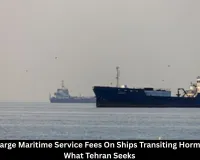
The Strait of Hormuz — the narrow passage between Iran and Oman linking the Persian Gulf to the open ocean — is the most strategically critical waterway on earth. Under normal conditions, approximately 138 ships transit the strait every single day, carrying crude oil from Saudi Arabia, the UAE, Kuwait, Iraq, and Qatar to markets in Asia, Europe, and beyond.

Since the war began, that number has collapsed to fewer than five ships per day. At least 16 commercial vessels have been attacked in the region. QatarEnergy, the world's largest LNG producer, has declared force majeure on all exports. Saudi Arabia's largest refinery and Qatar's export terminals have been hit by drone strikes.

The International Energy Agency has called this "the largest disruption to global energy supplies in history" — worse than both the 1973 and 1979 oil crises combined, and surpassing even the 2022 energy shock triggered by Russia's war on Ukraine.


Trump's Ultimatums, Pauses, and Talks

President Donald Trump has been at the centre of the diplomatic storm, oscillating dramatically between threats and overtures:

  • He threatened to "obliterate" Iranian power plants if Tehran did not reopen the strait by Monday evening.
  • Iran's IRGC responded by vowing to keep the strait closed indefinitely and to target US and Israeli energy infrastructure if attacked further.
  • Trump then announced "very good and productive conversations" with Iran and ordered a five-day pause on strikes against Iranian energy infrastructure.
  • He subsequently extended that pause by ten more days to April 6, 2026, saying talks are "going very well."
  • Iran has publicly denied that any direct talks with Washington are taking place.
  • Trump has also floated the idea of "taking over" the Strait of Hormuz — a proposal that legal experts say would likely constitute a violation of international maritime law under UNCLOS without Iranian and Omani consent.

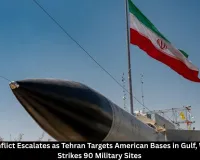
Meanwhile, the conflict on the ground continues. Israel struck more than 50 targets inside Iran overnight. Iranian missiles have hit Tel Aviv, East Jerusalem, and multiple Gulf states including the UAE, Bahrain, Kuwait, and Saudi Arabia. An Israeli soldier was killed in ground operations against Hezbollah in southern Lebanon.


The Global Economic Fallout

The economic consequences of the Hormuz closure extend far beyond oil prices:

Stock Markets: Global equity markets have suffered five consecutive losing weeks — the longest such streak in nearly four years. The S&P 500 has entered correction territory, falling more than 10% from its all-time high. Asian and European markets have posted similar declines.

Food Security: Gulf nations — which import over 80% of their caloric intake through the Strait — are facing a full-scale grocery supply emergency. Retailers are airlifting staples as 70% of the region's food imports are disrupted.

Natural Gas: LNG supply disruptions from Qatar are compounding the energy crisis, with natural gas prices surging alongside crude.

Emerging Economies: Countries like India, Ethiopia, and others heavily dependent on Gulf oil imports are experiencing severe price shocks in fuel and food, with limited buffers against a sustained supply disruption.

IEA Response: Member nations of the IEA have agreed to release a record 400 million barrels of oil from strategic stockpiles — the largest such release in the agency's history — in an attempt to moderate prices.


What Happens Next?

The next critical milestone is April 6, 2026 — the deadline Trump has set for Iran to demonstrate progress on negotiations before US strikes on Iranian energy infrastructure resume. Four scenarios are currently being tracked by markets and policymakers:

  • Diplomatic breakthrough: A ceasefire deal reopens the strait — oil prices could fall sharply.
  • Partial opening: Iran allows select vessels through under negotiated protocols — gradual price relief.
  • Status quo continuation: No deal by April 6 — strikes resume, prices push toward or beyond $120.
  • Full escalation: Attacks on Iranian power plants trigger IRGC retaliation — Goldman Sachs warns of prices surpassing the 2008 record.

What This Means for India

India, which imports approximately 85% of its crude oil requirements, is acutely exposed to this crisis. Rising crude prices translate directly into higher petrol and diesel prices, elevated LPG costs, rising inflation, and pressure on the rupee. The government is currently monitoring the situation closely, while assessing the pace at which domestic strategic petroleum reserves can be activated and alternative supply sources from Russia, the US, and West Africa can be scaled up.

The US-Israel-Iran war and the Strait of Hormuz crisis represent the most serious test of global energy security in a generation. With Brent crude hovering above $104, diplomatic signals oscillating by the hour, and the April 6 deadline fast approaching, the world is holding its breath. For ordinary citizens — from American motorists to Indian households — the cost of this geopolitical standoff is rising every single day. Resolution, when it comes, cannot come soon enough.
--------

🚨 Beat the News Rush – Join Now!

Get breaking alerts, hot exclusives, and game-changing stories instantly on your phone. No delays, no fluff – just the edge you need. ⚑

Tap to join: 

🟒 WhatsApp Channel: Dainik Jagran MP CG

Crave more?

πŸ…• Facebook: Dainik Jagran MP CG English

πŸ…§ Twitter (X): Dainik Jagran MP CG

πŸ…˜ Instagram: Dainik Jagran MP CG

Share the fire – keep your crew ahead! πŸ—žοΈπŸ”₯

english.dainikjagranmpcg.com
27 Mar 2026 By Jiya.S

US-Israel-Iran War Live: Strait of Hormuz Crisis Sends Brent Crude Past $106 β€” Trump Extends Bombing Pause as Global Economy Trembles

Digital Desk

US-Israel-Iran War: Strait of Hormuz Paralysis Triggers Worst Global Energy Crisis in History

The world is watching the most consequential energy crisis since the 1970s oil shocks unfold in real time. The ongoing US-Israel military campaign against Iran, which began on February 28, 2026, has effectively shut down the Strait of Hormuz — the narrow waterway through which approximately one-fifth of the world's entire oil supply passes every single day. With no end in sight to the conflict, global oil prices have surged more than 40% since the war began, financial markets are in turmoil, and the ripple effects are being felt from American gas stations to Indian household budgets.


Where Oil Prices Stand Right Now

The numbers tell the story starkly. Brent crude, the most important global oil benchmark, has risen from approximately $70 per barrel before the war began to topping $106 a barrel — with violent daily swings reflecting the war's rapidly shifting diplomatic and military developments.

The price trajectory over the past four weeks has been extraordinary:

  • March 2, 2026: Brent jumped 15% to $83/barrel as Iran announced Hormuz closure.
  • Early March: Prices surged past $119/barrel at peak fear.
  • March 22: Brent touched $114 after Trump threatened to "obliterate" Iranian power plants.
  • March 23: Prices plunged 11% to $99.94 after Trump announced "productive conversations" with Iran.
  • March 24–27: Brent climbed back above $104–$106 as ceasefire hopes faded and overnight strikes continued.

US gasoline prices, meanwhile, have climbed from around $2.93/gallon before the war to a national average approaching $3.72–$3.94 per gallon, with California already above $5 per gallon. Goldman Sachs has raised its oil price forecasts sharply, now expecting Brent to average $110 in March and April — and warning that if Hormuz flows remain at just 5% of normal for ten weeks, prices could exceed their all-time 2008 record of $147 per barrel.


The Strait of Hormuz: A World Chokepoint in Crisis

The Strait of Hormuz — the narrow passage between Iran and Oman linking the Persian Gulf to the open ocean — is the most strategically critical waterway on earth. Under normal conditions, approximately 138 ships transit the strait every single day, carrying crude oil from Saudi Arabia, the UAE, Kuwait, Iraq, and Qatar to markets in Asia, Europe, and beyond.

Since the war began, that number has collapsed to fewer than five ships per day. At least 16 commercial vessels have been attacked in the region. QatarEnergy, the world's largest LNG producer, has declared force majeure on all exports. Saudi Arabia's largest refinery and Qatar's export terminals have been hit by drone strikes.

The International Energy Agency has called this "the largest disruption to global energy supplies in history" — worse than both the 1973 and 1979 oil crises combined, and surpassing even the 2022 energy shock triggered by Russia's war on Ukraine.


Trump's Ultimatums, Pauses, and Talks

President Donald Trump has been at the centre of the diplomatic storm, oscillating dramatically between threats and overtures:

  • He threatened to "obliterate" Iranian power plants if Tehran did not reopen the strait by Monday evening.
  • Iran's IRGC responded by vowing to keep the strait closed indefinitely and to target US and Israeli energy infrastructure if attacked further.
  • Trump then announced "very good and productive conversations" with Iran and ordered a five-day pause on strikes against Iranian energy infrastructure.
  • He subsequently extended that pause by ten more days to April 6, 2026, saying talks are "going very well."
  • Iran has publicly denied that any direct talks with Washington are taking place.
  • Trump has also floated the idea of "taking over" the Strait of Hormuz — a proposal that legal experts say would likely constitute a violation of international maritime law under UNCLOS without Iranian and Omani consent.

Meanwhile, the conflict on the ground continues. Israel struck more than 50 targets inside Iran overnight. Iranian missiles have hit Tel Aviv, East Jerusalem, and multiple Gulf states including the UAE, Bahrain, Kuwait, and Saudi Arabia. An Israeli soldier was killed in ground operations against Hezbollah in southern Lebanon.


The Global Economic Fallout

The economic consequences of the Hormuz closure extend far beyond oil prices:

Stock Markets: Global equity markets have suffered five consecutive losing weeks — the longest such streak in nearly four years. The S&P 500 has entered correction territory, falling more than 10% from its all-time high. Asian and European markets have posted similar declines.

Food Security: Gulf nations — which import over 80% of their caloric intake through the Strait — are facing a full-scale grocery supply emergency. Retailers are airlifting staples as 70% of the region's food imports are disrupted.

Natural Gas: LNG supply disruptions from Qatar are compounding the energy crisis, with natural gas prices surging alongside crude.

Emerging Economies: Countries like India, Ethiopia, and others heavily dependent on Gulf oil imports are experiencing severe price shocks in fuel and food, with limited buffers against a sustained supply disruption.

IEA Response: Member nations of the IEA have agreed to release a record 400 million barrels of oil from strategic stockpiles — the largest such release in the agency's history — in an attempt to moderate prices.


What Happens Next?

The next critical milestone is April 6, 2026 — the deadline Trump has set for Iran to demonstrate progress on negotiations before US strikes on Iranian energy infrastructure resume. Four scenarios are currently being tracked by markets and policymakers:

  • Diplomatic breakthrough: A ceasefire deal reopens the strait — oil prices could fall sharply.
  • Partial opening: Iran allows select vessels through under negotiated protocols — gradual price relief.
  • Status quo continuation: No deal by April 6 — strikes resume, prices push toward or beyond $120.
  • Full escalation: Attacks on Iranian power plants trigger IRGC retaliation — Goldman Sachs warns of prices surpassing the 2008 record.

What This Means for India

India, which imports approximately 85% of its crude oil requirements, is acutely exposed to this crisis. Rising crude prices translate directly into higher petrol and diesel prices, elevated LPG costs, rising inflation, and pressure on the rupee. The government is currently monitoring the situation closely, while assessing the pace at which domestic strategic petroleum reserves can be activated and alternative supply sources from Russia, the US, and West Africa can be scaled up.

The US-Israel-Iran war and the Strait of Hormuz crisis represent the most serious test of global energy security in a generation. With Brent crude hovering above $104, diplomatic signals oscillating by the hour, and the April 6 deadline fast approaching, the world is holding its breath. For ordinary citizens — from American motorists to Indian households — the cost of this geopolitical standoff is rising every single day. Resolution, when it comes, cannot come soon enough.

https://english.dainikjagranmpcg.com/international/us-israel-iran-war-live-strait-of-hormuz-crisis-sends-brent-crude/article-16121

Advertisement

Latest News