.jpg)

.jpg)
Day 15: US Bombs Kharg Island — 90% of Iran's Oil Exports Just Became a Hostage. The World Is One Decision Away From an Energy Apocalypse
Digital Desk
The Island That Could End the World's Economy — Was Hit Last Night
For fourteen days, as US and Israeli warplanes methodically dismantled Iran's air defences, missile infrastructure, government buildings and military installations, one target remained conspicuously, almost mysteriously untouched. A five-mile stretch of land off Iran's southwestern coast that nobody outside the energy industry had ever heard of — and that the entire world economy depended on more completely than almost any other single piece of geography on Earth.
Kharg Island.
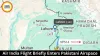
Kharg Island is a critical oil hub that serves as Iran's main oil export terminal, handling roughly 90% of Iran's crude exports. Business Standard
Last night, Donald Trump bombed it.
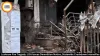
President Donald Trump said Friday night the US "totally obliterated every military target" on Kharg Island. He threatened to attack the island's oil infrastructure if Tehran continues blocking ships from traversing the Strait of Hormuz. Business Standard
Trump stated that US forces "totally obliterated" military targets there, including air defence facilities and a naval base, while sparing oil infrastructure for now. Twitter
He spared the oil infrastructure. For now. And in those two words — for now — lies the single most consequential geopolitical threat uttered by an American president since the Cuban Missile Crisis. Because what Trump has done is not merely bomb an island. He has created the most explicit, most public, most precisely calibrated act of energy infrastructure hostage-taking in modern history.
Stop blocking the Strait of Hormuz. Or the oil facilities burn next.
Iran's Response: You Touch Our Oil, We Touch Everyone's
Iran heard the threat. And Iran responded with a counter-threat that should be playing on every television screen, every trading terminal and every government emergency briefing room on the planet right now.
Iran warned it would hit regional oil facilities if its own energy infrastructure was attacked, according to state media. Iran has said any attack on its oil and energy infrastructure will lead to retaliatory strikes on facilities in the region owned by oil companies that have American shares or cooperate with the United States, citing Tehran's Khatam al-Anbiya military command headquarters. Business Standard
A retired US army official told CNN that if oil infrastructure on Kharg Island is targeted, Iran is going to attack the rest of the infrastructure in the Middle East — and at that point, the prices of oil will just "go out of control." Business Standard
Map the implications of that statement across every oil field, every refinery, every pipeline and every loading terminal between the Strait of Hormuz and the Suez Canal — Saudi Arabia's Abqaiq facility, the UAE's Ruwais refinery, Kuwait's Al-Ahmadi terminal, Qatar's LNG loading ports. All of them American-linked. All of them, under Iran's explicit counter-threat, legitimate targets the moment Trump gives the order to strike Kharg Island's oil infrastructure.
Iranian media reported on Saturday morning that oil infrastructure on Kharg Island was not damaged following US strikes. Fars news agency, citing sources on the ground, said there had been no damage to oil facilities after Trump said bombardment of the island had destroyed military targets. India TV News
Iran is claiming the oil facilities survived intact. Trump is claiming total obliteration of military targets. Both statements can be simultaneously true — but the gap between them is where the next phase of this war will be decided. If Iran continues blocking the Strait, Trump has now publicly committed to reconsidering the oil infrastructure. And if the oil infrastructure burns, Iran has committed to retaliating against every American-linked energy facility in the region.
This is not a chess game. This is two players simultaneously threatening to flip the board.
The Human Cost Keeping Pace With the Escalation
In the machinery of military briefings and presidential social media posts and oil market tick-by-tick analysis, the human cost of this war risks becoming abstracted into statistics. It must not be allowed to.
More than 2,000 people have been killed in Iran and Lebanon since the war began on February 28. Millions have been displaced. Wikipedia
Iran's Cultural Heritage and Tourism Ministry said at least 56 museums and historic sites across the country have been damaged as the war enters its 15th day. In Tehran, US-Israeli strikes damaged the UNESCO-listed Golestan Palace. The ministry said Tehran has recorded the highest number of damaged monuments, with 19 sites affected at varying levels. India TV News
Fifty-six museums and historic sites. Golestan Palace — a UNESCO World Heritage monument of the Qajar dynasty, a building that has stood for 400 years — damaged by a missile in a war that began 15 days ago.
An American KC-135 refuelling aircraft crashed in western Iraq on Thursday. All six crew members were killed. DNA India
Six Americans. Dead. Not in Iran — in Iraq, in a crash of their own aircraft, as the machinery of a war that was supposed to be precision-targeted generates its own lethal accidents at the margins. A missile also struck the US embassy compound in Baghdad. India TV News
And in Lebanon — pulled into this war by its geography and its history — Israeli strikes have killed over 100 children among hundreds of casualties. Israeli airstrikes have hit Beirut and across southern Lebanon. Wikipedia
One hundred children. In Lebanon. A country that was not a party to the decision to bomb Iran on February 28.
The New Supreme Leader: Wounded, Disfigured, and Defiant
Defence Secretary Pete Hegseth said Iran's new "not so supreme leader" Mojtaba Khamenei is "wounded and likely disfigured." Later, Vice President JD Vance told reporters: "We know that he's hurt. We don't know exactly how bad, but we know that he's hurt." DNA India
Hegseth said Mojtaba Khamenei is hiding underground "like rats." New Kerala
The language of the US defence establishment — "not so supreme leader," "like rats" — is designed to project contempt and project weakness onto Iran's new leadership. The strategic logic is clear: undermine Mojtaba Khamenei's legitimacy before it consolidates, make him appear to his own people as a diminished, hiding figure rather than a sovereign leader.
But Mojtaba Khamenei, wounded or not, is not performing weakness. He issued a fiery first public statement, vowing to keep blocking the vital Strait of Hormuz and attacking Gulf states. Zee News
The US State Department has announced a bounty of $10 million for intelligence leading to Iran's new Supreme Leader Mojtaba Khamenei, alongside several other high-ranking Iranian officials. The bounty was launched via the "Rewards for Justice" initiative — the same programme used to hunt terrorists. National Herald India
America is offering $10 million for information on the Supreme Leader of a sovereign nation. That is not a counterterrorism operation. That is an assassination programme dressed in the language of law enforcement. And it tells you everything you need to know about where this war is actually heading — not toward a negotiated settlement, but toward a total attempt to destroy not just Iran's military capability but its entire governmental structure.
The Hormuz Gambit: Yuan, Tankers and China's Shadow
In the midst of the military escalation, a diplomatic opening has appeared — in the most unexpected currency literally imaginable.
A senior Iranian official told CNN that Tehran is considering allowing a limited number of oil tankers to pass through the Strait of Hormuz, provided that the oil cargo is traded in Chinese yuan. International oil is almost entirely traded in dollars, apart from sanctioned Russian oil, which is traded in roubles or yuan. Social News XYZ
This is breathtaking in its geopolitical audacity. Iran is offering to reopen the world's most critical energy chokepoint — on the condition that the world abandons the petrodollar for the petroyuan. In one calculated move, Tehran is simultaneously addressing the humanitarian and economic catastrophe of the Hormuz closure, strengthening its alignment with China, and striking directly at the foundational architecture of American economic power — the dollar's status as the global reserve currency.
China's Foreign Ministry stepped up its criticism of attacks on commercial shipping. "China does not agree with the attacks on Gulf states and condemns all indiscriminate attacks on civilians and non-military targets," ministry spokesperson Guo Jiakun said — without calling out Iran by name. Wikipedia
China is simultaneously condemning attacks on Gulf states while not condemning Iran, backing Iran's sovereignty while not endorsing its Hormuz blockade, and watching with undisguised strategic interest as the world's oil trade inches toward a yuan-denominated arrangement. Beijing has not fired a single shot in this war. It may end up as its greatest beneficiary.
Qatar Evacuates. Fujairah Burns. The Gulf Is No Longer Safe.
The expanding geography of the conflict continues its relentless daily advance.
Qatar's interior ministry announced evacuations in several areas as a precautionary measure. Qatar intercepted two missile attacks overnight and again on Saturday morning. Locals received phone alerts to immediately evacuate Doha's central Musheireb district — where offices for Google and American Express are located. India TV News
Google. American Express. Evacuated. From the financial and corporate district of a Gulf state. The globalised, interconnected, business-as-usual architecture of the modern Middle East — with its international tech companies, its luxury malls, its Formula 1 circuits and its World Cup stadiums — is being dismantled, alert by alert, evacuation by evacuation, missile interception by missile interception.
Some oil loading operations at the port of Fujairah, outside the Strait of Hormuz, were suspended following a drone attack and fire. The Fujairah media office said the fire occurred after debris fell during interception of a drone. India TV News
Fujairah is critical precisely because it is outside the Strait of Hormuz — it was specifically developed as an alternative loading terminal to bypass Hormuz in exactly this kind of crisis scenario. Its partial disruption by drone debris is a signal that even the contingency plan has contingencies — and they are not holding perfectly.
Multiple explosions were reported across several Iranian cities on Saturday as the conflict widened. Residents reported blasts in Bandar Abbas, Tabriz, Urmia and Qeshm island, with witnesses also describing drone activity alongside air defence fire in Tehran. New Kerala
The Military Escalation: 15,000 Targets, 10,000 AI Drones and the Highest Volume Day Yet
The US and Israel have struck more than 15,000 "enemy targets" during the war. "That's well over 1,000 a day," Hegseth said. "No other combination of countries in the world can do that." He said the US was flying over Iran on Friday with "fighters and bombers, all day, picking targets as they choose." Zee News
The Army has deployed nearly 10,000 AI-powered drones to the Middle East since the war started. The drones, known as Merops, were developed by Perennial Autonomy, a defence venture backed by former Google CEO Eric Schmidt, and are designed to hunt and destroy enemy drones. Twitter
The volume of Iran's missile launches was down 90% on Thursday, and the frequency of its "one-way attack drones" was down 95%, according to Hegseth. Zee News
On the surface, those numbers suggest a war that is going decisively in America's direction. Iran's military capability is being systematically degraded. Its new Supreme Leader is wounded and hiding. Its air defences are destroyed. Its missile arsenal is depleted.
But a militarily weakened Iran is not a politically surrendered Iran. An Iranian lawmaker warned that Iran would carry out helicopter assaults on US bases in the region and capture American troops if the United States attempted to seize Kharg Island. New Kerala The IRGC has informed the UAE that US "hideouts" are "legitimate targets" after the Kharg Island strike. National Herald India
And NATO intercepted another Iranian missile entering Turkey's airspace — the third in ten days. Wikipedia Three missiles into a NATO member state's airspace. Three interceptions. Three near-triggers of Article 5. The tripwire is being tested again.
Trump's Language: From Commander-in-Chief to Combat Troll
No analysis of Day 15 is complete without confronting the extraordinary nature of the language with which the President of the United States is conducting his war communications.
President Donald Trump assailed Iran's leaders as "deranged scumbags" and urged people to "watch what happens" in the war. DNA India
Trump wrote that Iran is "totally defeated and wants a deal" but not one he "would accept." Zee News
Trump told Jake Paul on the fighter's podcast that the United States' mission in Iran is to "wipe out evil." DNA India
"Deranged scumbags." "Wipe out evil." Announcing the bombing of a sovereign nation's critical oil infrastructure on social media. Conducting war policy interviews on a boxer's podcast.
The vocabulary is not accidental. It is a calculated communications strategy designed to speak past traditional diplomatic channels directly to a domestic audience that responds to this register. But words have consequences in wars. When the President of the United States calls the leadership of a nation "deranged scumbags," he makes negotiated settlement — the only outcome that does not end in either prolonged attrition or civilisational catastrophe — correspondingly harder to reach. You cannot shake hands with a scumbag. You cannot sign a deal with evil. The language of annihilation forecloses the exits.
While Trump has said he will end the war "very soon," he has not offered specifics about any timeline for an end to the conflict. Zee News
"Very soon." Fourteen days ago, the war would be over in "days." Then "very soon." The timeline recedes. The strikes intensify. The oil price climbs. And the world waits.
The Number That Should Terrify Every Finance Minister on Earth
Global oil prices settled at their highest level on Friday since July 2022 as anxiety about the effective closure of the Strait of Hormuz continued across global markets. Social News XYZ
A UAE official said Iran's blockade amounts to economic warfare "not just against the region, but against the United States as well." "You will see that impact not only petrol prices, but you will see it impact grocery bills. You will see it impact the general cost of living around the world," Ambassador Lana Nusseibeh said. DNA India
About one-fifth of global oil supplies and one-third of fertilisers used around the world pass through the vital Strait of Hormuz. DNA India
One-third of global fertilisers. Through a strait that has been effectively closed for fifteen days. The food price inflation that will ripple from this war — not in weeks but in months, as planting seasons in developing nations are affected by fertiliser shortages — has not yet been calculated or reported. It is a crisis inside the crisis, slower and less visible than the missile strikes but ultimately more widely distributed in its human cost.
Conclusion: The Day the War Changed Its Character
Day 15 of the Iran War is the day the conflict changed its fundamental character. For fourteen days, both sides maintained an unspoken but operationally significant boundary: Iran's oil infrastructure was not targeted. Kharg Island — the facility that handles 90% of Iran's crude exports, the island whose destruction would permanently sever a major source of the Iranian state's revenue — was off-limits.
That boundary was crossed last night.
Not fully — the oil facilities themselves were spared, military targets only. But the line between "military strike" and "economic warfare against Iran's primary revenue source" is now a line that Trump has explicitly, publicly threatened to cross — and that Iran has explicitly, publicly threatened to retaliate against if crossed.
Trump said he holds "the cards" in the Iran war, and only Trump "will determine the pace, the tempo and the timing of this conflict." Zee News
One man. One decision. One island. One oil facility. And the price of every litre of fuel burned in every car, every factory, every kitchen, and every power station on the planet hangs in the balance of that decision.
The world has not faced a single point of energy vulnerability this extreme since the Arab oil embargo of 1973. And in 1973, nobody had 10,000 AI-powered drones, a Supreme Leader hiding underground "likely disfigured," a new nuclear-capable power offering to reopen the strait in yuan instead of dollars, and a US President announcing bombing raids on social media between podcast appearances.
Kharg Island's oil facilities survived last night.
Tonight is a different question entirely.