

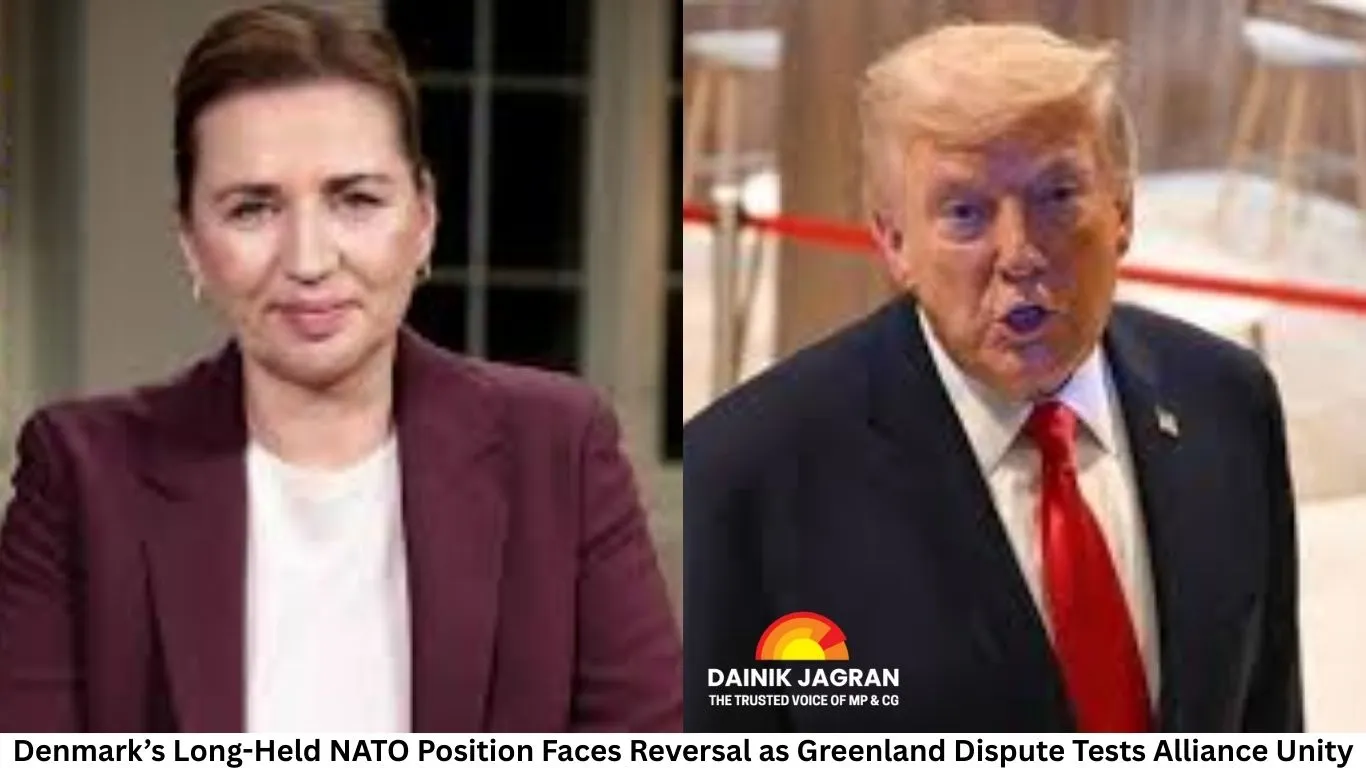
Denmark’s Long-Held NATO Position Faces Reversal as Greenland Dispute Tests Alliance Unity

Digital Desk

Denmark’s Long-Held NATO Position Faces Reversal as Greenland Dispute Tests Alliance Unity

Denmark is facing growing diplomatic and strategic pressure as repeated statements by US President Donald Trump about taking control of Greenland expose a critical gap in NATO’s framework, prompting experts to warn that the alliance may be unable—or unwilling—to intervene if tensions escalate.

Greenland, an autonomous territory within the Kingdom of Denmark, places Copenhagen in a rare position: confronting threats not from an external adversary, but from its closest ally and NATO’s most powerful member. Trump has argued that US control over Greenland is essential for American and global security, refusing to rule out coercive measures. The rhetoric has sparked unease across Europe and raised questions about NATO’s relevance in internal disputes.

NATO’s founding treaty, signed in 1949, centres on Article 5, which treats an attack on one member as an attack on all. However, the treaty is silent on conflicts between member states. Analysts say this ambiguity leaves Denmark exposed if pressure from Washington turns into action.

Former Greek finance minister Yanis Varoufakis highlighted the contradiction in public remarks, noting that NATO was designed to deter external threats, not to mediate or counter aggression from within. He pointed out that Denmark itself had once supported this interpretation during earlier intra-alliance crises.

The situation has revived comparisons with the 1974 Cyprus crisis, when Greece and Turkey—both NATO members—clashed militarily. NATO declined to intervene, citing its lack of mandate to act when both parties were alliance members. The result was the permanent division of Cyprus, widely viewed as NATO’s most serious internal failure. Denmark was among the countries that then argued the alliance could not be used against its own members.

Today, that position appears to be working against Copenhagen. While several European countries have expressed solidarity, support has largely been symbolic. Britain and Norway sent a handful of soldiers to Denmark, gestures intended to signal political backing rather than provide military deterrence.

Trump responded by announcing a 10% tariff on European countries supporting Denmark, reinforcing concerns that trade and security are being used as leverage. The move has further strained transatlantic ties and deepened European anxiety over US intentions.

Legal and security experts warn that any forced takeover of Greenland would undermine NATO’s core principles, particularly respect for sovereignty. Although Greenland enjoys extensive self-rule, defence and foreign policy remain Denmark’s responsibility, making any action against the territory a direct challenge to a NATO member state.

If such a scenario were to unfold, NATO would likely be paralysed. Alliance decisions require consensus, and collective action against the US would be virtually impossible. While this may not spell the immediate end of NATO, analysts say it would severely damage the alliance’s credibility.

What began as rhetoric over a strategic Arctic territory has become a defining test of NATO’s limits—and of whether an alliance built to counter external threats can withstand pressure from within.

--------

🚨 Beat the News Rush – Join Now!

Get breaking alerts, hot exclusives, and game-changing stories instantly on your phone. No delays, no fluff – just the edge you need. ⚡

Tap to join: 

🟢 WhatsApp Channel: Dainik Jagran MP CG

Crave more?

🅕 Facebook: Dainik Jagran MP CG English

🅧 Twitter (X): Dainik Jagran MP CG

🅘 Instagram: Dainik Jagran MP CG

Share the fire – keep your crew ahead! 🗞️🔥

english.dainikjagranmpcg.com
22 Jan 2026 By Nitin Trivedi

Denmark’s Long-Held NATO Position Faces Reversal as Greenland Dispute Tests Alliance Unity

Digital Desk

Greenland, an autonomous territory within the Kingdom of Denmark, places Copenhagen in a rare position: confronting threats not from an external adversary, but from its closest ally and NATO’s most powerful member. Trump has argued that US control over Greenland is essential for American and global security, refusing to rule out coercive measures. The rhetoric has sparked unease across Europe and raised questions about NATO’s relevance in internal disputes.

NATO’s founding treaty, signed in 1949, centres on Article 5, which treats an attack on one member as an attack on all. However, the treaty is silent on conflicts between member states. Analysts say this ambiguity leaves Denmark exposed if pressure from Washington turns into action.

Former Greek finance minister Yanis Varoufakis highlighted the contradiction in public remarks, noting that NATO was designed to deter external threats, not to mediate or counter aggression from within. He pointed out that Denmark itself had once supported this interpretation during earlier intra-alliance crises.

The situation has revived comparisons with the 1974 Cyprus crisis, when Greece and Turkey—both NATO members—clashed militarily. NATO declined to intervene, citing its lack of mandate to act when both parties were alliance members. The result was the permanent division of Cyprus, widely viewed as NATO’s most serious internal failure. Denmark was among the countries that then argued the alliance could not be used against its own members.

Today, that position appears to be working against Copenhagen. While several European countries have expressed solidarity, support has largely been symbolic. Britain and Norway sent a handful of soldiers to Denmark, gestures intended to signal political backing rather than provide military deterrence.

Trump responded by announcing a 10% tariff on European countries supporting Denmark, reinforcing concerns that trade and security are being used as leverage. The move has further strained transatlantic ties and deepened European anxiety over US intentions.

Legal and security experts warn that any forced takeover of Greenland would undermine NATO’s core principles, particularly respect for sovereignty. Although Greenland enjoys extensive self-rule, defence and foreign policy remain Denmark’s responsibility, making any action against the territory a direct challenge to a NATO member state.

If such a scenario were to unfold, NATO would likely be paralysed. Alliance decisions require consensus, and collective action against the US would be virtually impossible. While this may not spell the immediate end of NATO, analysts say it would severely damage the alliance’s credibility.

What began as rhetoric over a strategic Arctic territory has become a defining test of NATO’s limits—and of whether an alliance built to counter external threats can withstand pressure from within.

https://english.dainikjagranmpcg.com/international/denmark%E2%80%99s-long-held-nato-position-faces-reversal-as-greenland-dispute-tests/article-12835

Related Posts

Trending News


