

Europe Cannot Defend Itself Without US Support, NATO Chief Warns; Calls for Major Defence Spending Hike
Digital Desk
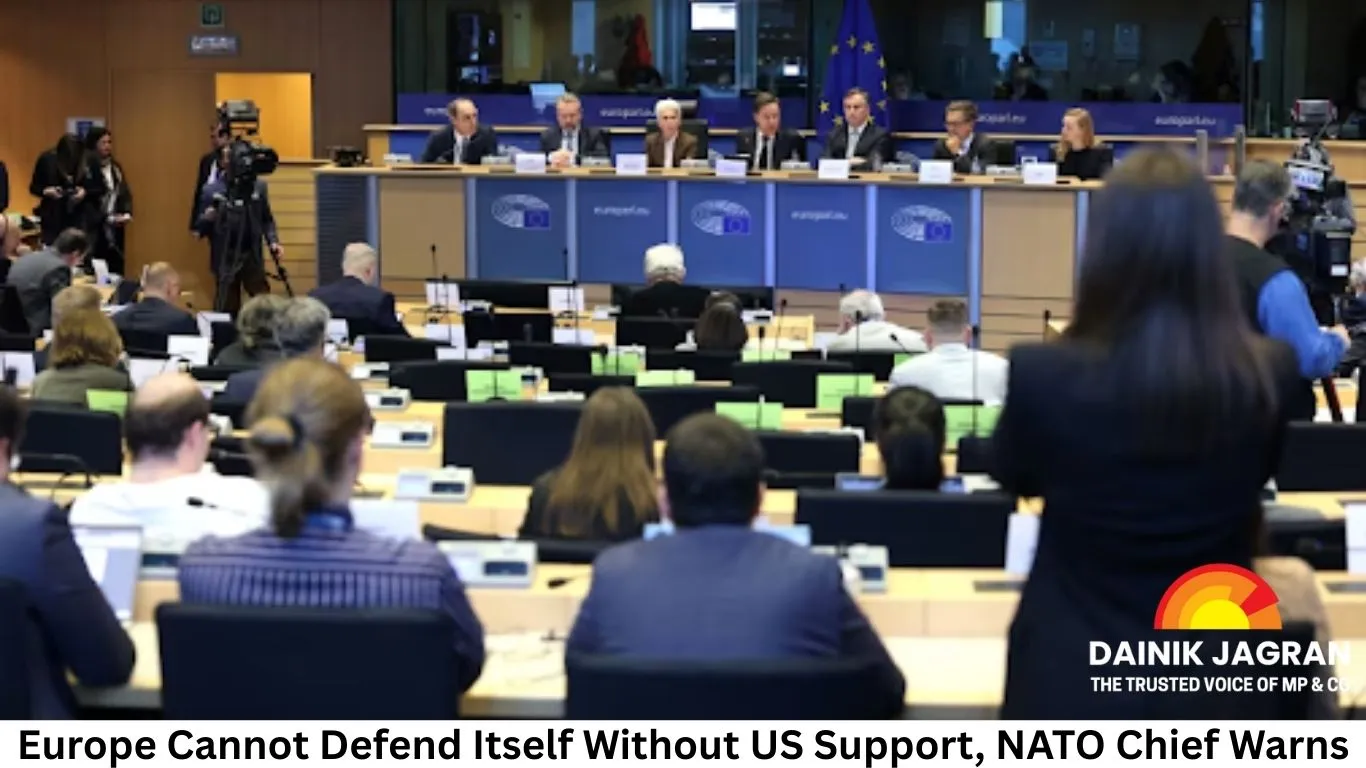
NATO Secretary General Mark Rutte has warned that Europe remains unable to protect itself without American military support, calling for a dramatic increase in defence spending if the continent seeks strategic independence. Addressing committees of the European Parliament in Brussels on Monday, Rutte said Europe would need to raise defence budgets to nearly 10% of GDP and develop its own nuclear capabilities to act without the United States.
Rutte’s remarks come amid renewed debate over burden-sharing within NATO and rising uncertainty over Washington’s long-term commitment to European security under US President Donald Trump. Currently, European NATO members contribute about 30% of the alliance’s overall military spending, with most countries averaging around 2% of GDP on defence.
“If Europe wants to manage alone, it would require massive investment and the loss of the American nuclear security umbrella,” Rutte said. “Spending 5% of GDP by 2035 would still not be enough. To be fully independent, the cost would rise closer to 10%.”
The NATO chief openly supported Trump’s push for tougher defence postures, particularly in the Arctic and around Greenland, an area Trump has repeatedly described as strategically vital. Rutte said he had engaged Trump in discussions to reduce tensions over Greenland and encourage a cooperative NATO framework, though his comments sparked criticism in Denmark and Greenland, whose leaders objected to talks about their future without direct consultation.
Members of the European Parliament questioned Rutte sharply, seeking clarity on his discussions with Trump. While Rutte insisted he has no mandate to negotiate on Denmark’s behalf, concerns persist that US pressure could strain internal NATO unity.
Trump recently withdrew plans to impose a 10% tariff on European goods following talks with Rutte during the World Economic Forum in Davos. Trump later claimed that broad principles regarding Greenland’s security had been agreed upon, though no formal deal has been made public.
Rutte echoed Trump’s assessment that China and Russia pose growing risks in the Arctic, calling for NATO to take greater collective responsibility for the region’s defence. He also defended Trump’s confrontational style, saying it had forced long-delayed conversations about Europe’s military preparedness.
The debate highlights a long-standing imbalance within NATO. Since the end of the Second World War, Europe has relied heavily on US military power, including nuclear deterrence, intelligence, logistics and advanced technology. Washington maintains extensive troop deployments and bases across Europe, providing capabilities that most European armies lack.
If the US were to scale back its role or withdraw from NATO, Europe would face steep costs to replace critical systems ranging from satellites and air refuelling to missile defence and nuclear deterrence. Analysts warn that without American backing, Europe would need decades and trillions of euros to close the gap.
--------
๐จ Beat the News Rush โ Join Now!
Get breaking alerts, hot exclusives, and game-changing stories instantly on your phone. No delays, no fluff โ just the edge you need. โก
Tap to join:ย
๐ข WhatsApp Channel: Dainik Jagran MP CG
Crave more?
๐ Facebook: Dainik Jagran MP CG English
๐ ง Twitter (X): Dainik Jagran MP CG
๐ Instagram: Dainik Jagran MP CG
Share the fire โ keep your crew ahead! ๐๏ธ๐ฅ
Europe Cannot Defend Itself Without US Support, NATO Chief Warns; Calls for Major Defence Spending Hike
Digital Desk
Rutte’s remarks come amid renewed debate over burden-sharing within NATO and rising uncertainty over Washington’s long-term commitment to European security under US President Donald Trump. Currently, European NATO members contribute about 30% of the alliance’s overall military spending, with most countries averaging around 2% of GDP on defence.
“If Europe wants to manage alone, it would require massive investment and the loss of the American nuclear security umbrella,” Rutte said. “Spending 5% of GDP by 2035 would still not be enough. To be fully independent, the cost would rise closer to 10%.”
The NATO chief openly supported Trump’s push for tougher defence postures, particularly in the Arctic and around Greenland, an area Trump has repeatedly described as strategically vital. Rutte said he had engaged Trump in discussions to reduce tensions over Greenland and encourage a cooperative NATO framework, though his comments sparked criticism in Denmark and Greenland, whose leaders objected to talks about their future without direct consultation.
Members of the European Parliament questioned Rutte sharply, seeking clarity on his discussions with Trump. While Rutte insisted he has no mandate to negotiate on Denmark’s behalf, concerns persist that US pressure could strain internal NATO unity.
Trump recently withdrew plans to impose a 10% tariff on European goods following talks with Rutte during the World Economic Forum in Davos. Trump later claimed that broad principles regarding Greenland’s security had been agreed upon, though no formal deal has been made public.
Rutte echoed Trump’s assessment that China and Russia pose growing risks in the Arctic, calling for NATO to take greater collective responsibility for the region’s defence. He also defended Trump’s confrontational style, saying it had forced long-delayed conversations about Europe’s military preparedness.
The debate highlights a long-standing imbalance within NATO. Since the end of the Second World War, Europe has relied heavily on US military power, including nuclear deterrence, intelligence, logistics and advanced technology. Washington maintains extensive troop deployments and bases across Europe, providing capabilities that most European armies lack.
If the US were to scale back its role or withdraw from NATO, Europe would face steep costs to replace critical systems ranging from satellites and air refuelling to missile defence and nuclear deterrence. Analysts warn that without American backing, Europe would need decades and trillions of euros to close the gap.


