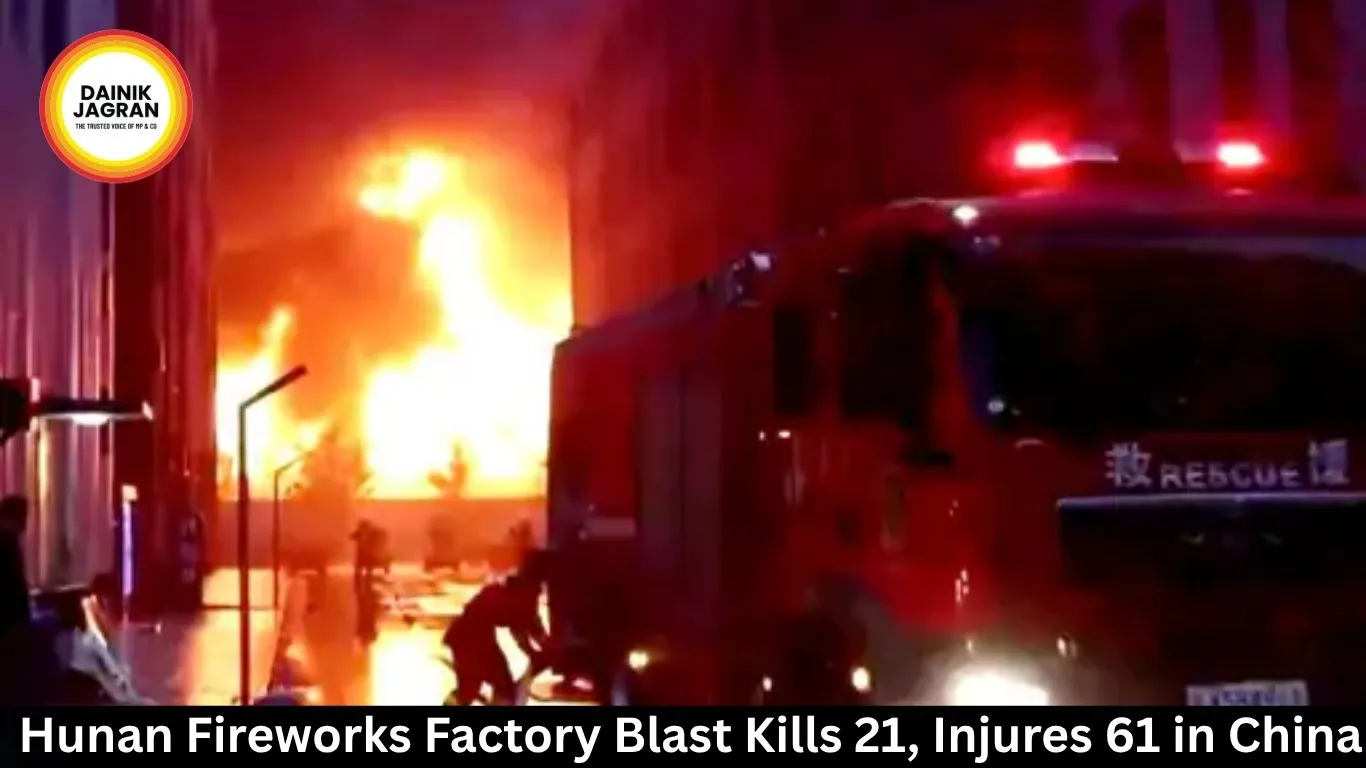
Hunan Fireworks Factory Blast Kills 21, Injures 61 in China
Digital Desk
A fireworks factory explosion in Changsha, Hunan kills 21 and injures 61. Rescue teams deploy robots to locate survivors amid safety concerns.
FIREWORKS FACTORY BLAST IN HUNAN KILLS 21, INJURES 61
Robots deployed to locate survivors as rescue operations intensify across Changsha site
A devastating explosion at a fireworks manufacturing facility in Changsha, Hunan province has claimed at least 21 lives and left 61 others injured, Chinese state media confirmed on Monday evening. The incident underscores persistent safety challenges within China's sprawling fireworks industry, even as authorities vow stricter oversight.
The blast occurred around 4:40 pm local time at the factory premises. Initial reports suggest the force of the explosion was severe enough to shatter windows across neighbouring residential blocks, with debris scattered across a wide radius and local roads cordoned off for safety.
MASSIVE RESCUE OPERATION UNFOLDS
Nearly 500 emergency personnel descended on the factory site within hours of the incident. Rescue teams deployed advanced robotics to navigate through collapsed structures and locate people trapped beneath rubble—a critical step given the unstable conditions and ongoing safety risks at the facility.
Authorities established an evacuation perimeter extending 3 kilometres around the plant, forcing residents to leave homes temporarily. Multiple gunpowder storage warehouses inside the factory were flagged as presenting secondary explosion hazards, prompting rescue workers to adopt cautious protocols. Emergency teams reportedly humidified the surrounding area to reduce the risk of further blasts while continuing operations.
The scale of physical damage became apparent as locals reported structural deformities in nearby homes—buckled door frames, shattered windows, and compromised walls. Some residents chose to leave the area entirely, citing fears over potential additional incidents.
NATIONAL LEADERSHIP STEPS IN
Chinese President Xi Jinping has personally directed authorities to conduct a comprehensive investigation into the accident. His statement, carried by the official Xinhua news agency, called for enhanced risk screening across key industrial sectors, improved hazard control measures, and stricter public safety protocols.
Police have placed the person in charge of the fireworks company under "control measures" as investigations into the blast's cause proceed. The inquiry is expected to examine whether proper safety protocols were followed and whether regulatory oversight was adequate.
RECURRING TRAGEDY IN CHINA'S FIREWORKS SECTOR
The Changsha disaster reflects a troubling pattern within China's fireworks manufacturing industry. Liuyang, located in the same province, is recognised globally as one of the world's largest fireworks production hubs. Yet despite its commercial significance, the region and the broader sector continue to experience fatal accidents with alarming regularity.
Just last year, an explosion at another Hunan fireworks facility killed nine people. The frequency of such incidents has drawn criticism over enforcement of safety standards. In 2023, blasts at residential areas in Tianjin in the northern region killed three people. Earlier this year alone, separate explosions at fireworks shops in Hubei and Jiangsu provinces resulted in 12 and eight deaths respectively—a grim indication of systemic vulnerabilities.
THE HUMAN AND ECONOMIC IMPACT
Survivors among the 61 injured are receiving medical treatment, though casualty figures may yet shift as rescue operations continue. Local hospitals have been mobilised to handle the influx of patients, with some requiring emergency care for severe burns and trauma injuries.
The incident has renewed concerns over workplace safety practices in China's manufacturing sector. Industry observers point to pressures on factory owners to maintain production targets, often at the expense of rigorous safety compliance. Inspections, when conducted, have sometimes been criticised as inadequate or inconsistent.
WHAT COMES NEXT
Beyond the immediate search and rescue phase, questions will mount over regulatory accountability. Authorities have promised a thorough investigation, though past inquiries into industrial disasters have produced mixed results in terms of implementing systemic changes across the sector.
The Changsha blast is likely to trigger fresh reviews of safety standards across fireworks facilities nationwide. However, whether such measures will prove effective in preventing future tragedies remains uncertain. For now, rescue teams continue their work at the site, and the final death toll may still rise as operations proceed.

--------
๐จ Beat the News Rush โ Join Now!
Get breaking alerts, hot exclusives, and game-changing stories instantly on your phone. No delays, no fluff โ just the edge you need. โก
Tap to join:ย
๐ข WhatsApp Channel: Dainik Jagran MP CG
Crave more?
๐ Facebook: Dainik Jagran MP CG English
๐ ง Twitter (X): Dainik Jagran MP CG
๐ Instagram: Dainik Jagran MP CG
Share the fire โ keep your crew ahead! ๐๏ธ๐ฅ
Hunan Fireworks Factory Blast Kills 21, Injures 61 in China
Digital Desk
FIREWORKS FACTORY BLAST IN HUNAN KILLS 21, INJURES 61
Robots deployed to locate survivors as rescue operations intensify across Changsha site
A devastating explosion at a fireworks manufacturing facility in Changsha, Hunan province has claimed at least 21 lives and left 61 others injured, Chinese state media confirmed on Monday evening. The incident underscores persistent safety challenges within China's sprawling fireworks industry, even as authorities vow stricter oversight.
The blast occurred around 4:40 pm local time at the factory premises. Initial reports suggest the force of the explosion was severe enough to shatter windows across neighbouring residential blocks, with debris scattered across a wide radius and local roads cordoned off for safety.
MASSIVE RESCUE OPERATION UNFOLDS
Nearly 500 emergency personnel descended on the factory site within hours of the incident. Rescue teams deployed advanced robotics to navigate through collapsed structures and locate people trapped beneath rubble—a critical step given the unstable conditions and ongoing safety risks at the facility.
Authorities established an evacuation perimeter extending 3 kilometres around the plant, forcing residents to leave homes temporarily. Multiple gunpowder storage warehouses inside the factory were flagged as presenting secondary explosion hazards, prompting rescue workers to adopt cautious protocols. Emergency teams reportedly humidified the surrounding area to reduce the risk of further blasts while continuing operations.
The scale of physical damage became apparent as locals reported structural deformities in nearby homes—buckled door frames, shattered windows, and compromised walls. Some residents chose to leave the area entirely, citing fears over potential additional incidents.
NATIONAL LEADERSHIP STEPS IN
Chinese President Xi Jinping has personally directed authorities to conduct a comprehensive investigation into the accident. His statement, carried by the official Xinhua news agency, called for enhanced risk screening across key industrial sectors, improved hazard control measures, and stricter public safety protocols.
Police have placed the person in charge of the fireworks company under "control measures" as investigations into the blast's cause proceed. The inquiry is expected to examine whether proper safety protocols were followed and whether regulatory oversight was adequate.
RECURRING TRAGEDY IN CHINA'S FIREWORKS SECTOR
The Changsha disaster reflects a troubling pattern within China's fireworks manufacturing industry. Liuyang, located in the same province, is recognised globally as one of the world's largest fireworks production hubs. Yet despite its commercial significance, the region and the broader sector continue to experience fatal accidents with alarming regularity.
Just last year, an explosion at another Hunan fireworks facility killed nine people. The frequency of such incidents has drawn criticism over enforcement of safety standards. In 2023, blasts at residential areas in Tianjin in the northern region killed three people. Earlier this year alone, separate explosions at fireworks shops in Hubei and Jiangsu provinces resulted in 12 and eight deaths respectively—a grim indication of systemic vulnerabilities.
THE HUMAN AND ECONOMIC IMPACT
Survivors among the 61 injured are receiving medical treatment, though casualty figures may yet shift as rescue operations continue. Local hospitals have been mobilised to handle the influx of patients, with some requiring emergency care for severe burns and trauma injuries.
The incident has renewed concerns over workplace safety practices in China's manufacturing sector. Industry observers point to pressures on factory owners to maintain production targets, often at the expense of rigorous safety compliance. Inspections, when conducted, have sometimes been criticised as inadequate or inconsistent.
WHAT COMES NEXT
Beyond the immediate search and rescue phase, questions will mount over regulatory accountability. Authorities have promised a thorough investigation, though past inquiries into industrial disasters have produced mixed results in terms of implementing systemic changes across the sector.
The Changsha blast is likely to trigger fresh reviews of safety standards across fireworks facilities nationwide. However, whether such measures will prove effective in preventing future tragedies remains uncertain. For now, rescue teams continue their work at the site, and the final death toll may still rise as operations proceed.