

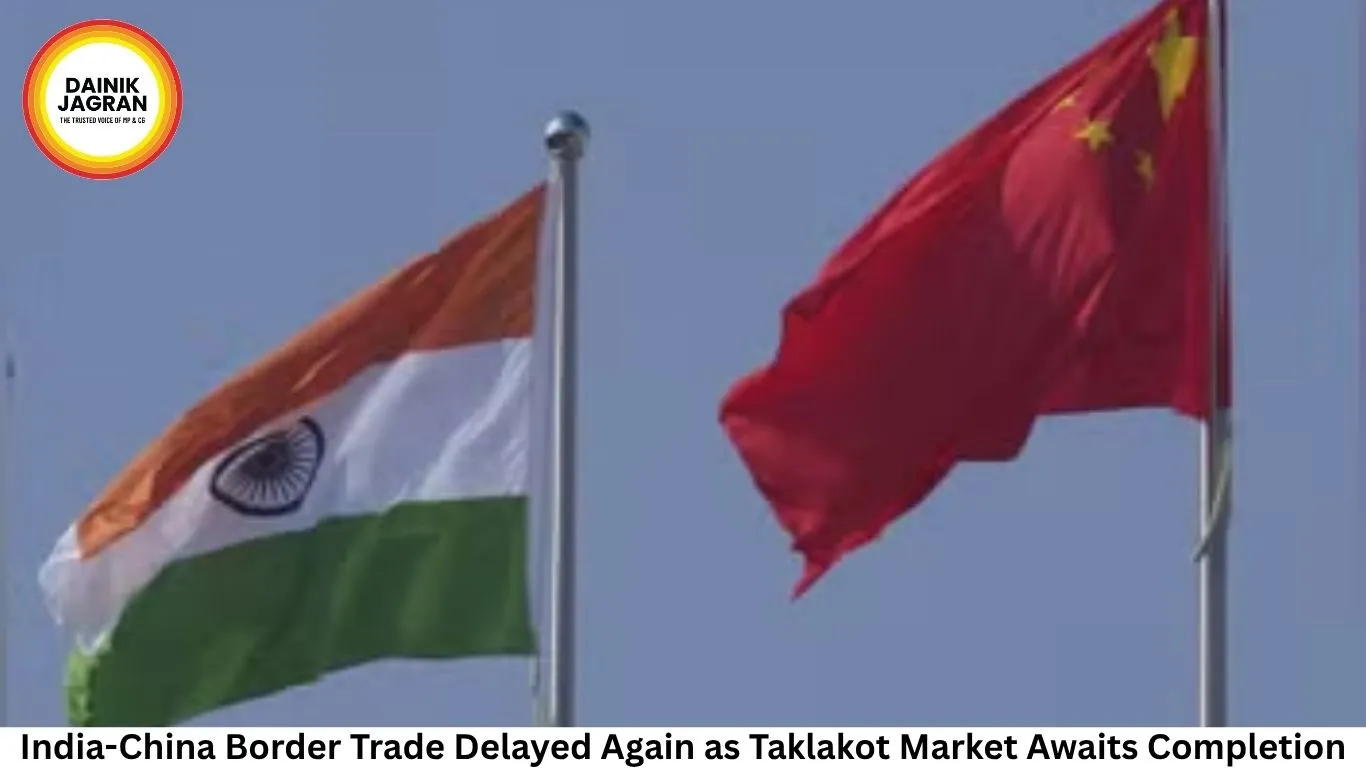
India-China Border Trade Delayed Again as Taklakot Market Awaits Completion
Digital Desk
The resumption of traditional India-China border trade through Lipulekh Pass has been postponed after China informed Indian authorities that shops and warehouses at Taklakot are still under construction. Around 100 Indian traders remain on standby.
The long-awaited resumption of traditional India-China border trade through Uttarakhand's Lipulekh Pass has been postponed once again, with Chinese authorities informing India that commercial infrastructure at Taklakot is not yet ready. Around 100 Indian traders who have already reached Gunji and Nabidhang are now waiting for a revised schedule, while Beijing has not announced a new date for the commencement of trade.
The border trade, which was expected to resume after nearly six years, has generated significant interest among traders and local communities in the Himalayan region. However, the delay has left merchants waiting despite completing most of the required formalities.
China Cites Ongoing Construction
According to Indian officials, China's Foreign Ministry has informed the Indian administration that the construction of shops and warehouses for Indian traders at Taklakot is still underway.
Authorities said China is developing a new commercial complex where Indian traders will be allotted rental shops. Permission to cross the border will be granted only after the facilities are fully completed and officially handed over for commercial use.
Until then, traders will continue to remain stationed on the Indian side of the border.
Trade Passes Issued, Customs Clearance Underway
A total of 134 Indian traders applied to participate in this year's border trade season. The district administration has already issued trade passes to 100 traders and their assistants, while documentation for the remaining applicants, helpers, pony handlers and porters is in the final stages.
Most traders have already transported their export consignments to Gunji, where customs inspection and clearance procedures are currently underway. Several consignments have already completed verification.
To facilitate commercial transactions during the trading season, the State Bank of India (SBI) has also set up banking facilities at Gunji.
Administration Says India is Ready
Pithoragarh Additional District Magistrate Yogendra Singh said all preparations on the Indian side have been completed and customs clearance is progressing as planned.
Officials added that accommodation, food and other essential services have been arranged for traders staying at Gunji and Nabidhang while they await China's final approval.
Sub-Divisional Magistrate Ashish Joshi said this year's trade season has also witnessed increased participation from young entrepreneurs, including a woman trader, reflecting growing interest in the historic border commerce.
Road Connectivity to Transform Trade
The reopening of border trade is expected to bring significant logistical improvements.
Traditionally, traders travelled for several days through difficult Himalayan terrain using horses, mules, yaks and porters to transport goods across the Lipulekh Pass. With improved road infrastructure now in place, vehicles can reach within nearly 100 kilometres of the border, leaving only a short stretch to be covered through traditional transport before connecting with the road network on the Chinese side leading to Taklakot.
The improved connectivity is expected to reduce transportation time, lower logistics costs and increase the volume of cross-border trade.
Historic Trade Route with Strategic Importance
The Lipulekh Pass has served for centuries as an important trade and cultural corridor connecting India, Tibet and Nepal. Historically, traders from the Rang (Rung/Bhotia) community played a central role in maintaining commercial links across the Himalayas through barter-based trade involving salt, wool, grains and other essential commodities.
Before the suspension of trade, the route recorded business worth nearly ₹3 crore in 2019, including exports of around ₹1.25 crore and imports worth approximately ₹1.9 crore.
Many traders also continue to have goods worth more than ₹1 crore stranded in Taklakot since cross-border trade was suspended several years ago. They hope the reopening will allow them to recover or sell these consignments.
The resumption of India-China border trade is expected to boost local livelihoods, revive traditional commerce and strengthen economic activity in Uttarakhand's frontier regions. However, traders will now have to wait until China completes the remaining infrastructure and announces a fresh date for the start of commercial operations.
--------
🚨 Beat the News Rush – Join Now!
Get breaking alerts, hot exclusives, and game-changing stories instantly on your phone. No delays, no fluff – just the edge you need. ⚡
Tap to join:
🟢 WhatsApp Channel: Dainik Jagran MP CG
Crave more?
🅕 Facebook: Dainik Jagran MP CG English
🅧 Twitter (X): Dainik Jagran MP CG
🅘 Instagram: Dainik Jagran MP CG
Share the fire – keep your crew ahead! 🗞️🔥
India-China Border Trade Delayed Again as Taklakot Market Awaits Completion
Digital Desk
The long-awaited resumption of traditional India-China border trade through Uttarakhand's Lipulekh Pass has been postponed once again, with Chinese authorities informing India that commercial infrastructure at Taklakot is not yet ready. Around 100 Indian traders who have already reached Gunji and Nabidhang are now waiting for a revised schedule, while Beijing has not announced a new date for the commencement of trade.
The border trade, which was expected to resume after nearly six years, has generated significant interest among traders and local communities in the Himalayan region. However, the delay has left merchants waiting despite completing most of the required formalities.
China Cites Ongoing Construction
According to Indian officials, China's Foreign Ministry has informed the Indian administration that the construction of shops and warehouses for Indian traders at Taklakot is still underway.
Authorities said China is developing a new commercial complex where Indian traders will be allotted rental shops. Permission to cross the border will be granted only after the facilities are fully completed and officially handed over for commercial use.
Until then, traders will continue to remain stationed on the Indian side of the border.
Trade Passes Issued, Customs Clearance Underway
A total of 134 Indian traders applied to participate in this year's border trade season. The district administration has already issued trade passes to 100 traders and their assistants, while documentation for the remaining applicants, helpers, pony handlers and porters is in the final stages.
Most traders have already transported their export consignments to Gunji, where customs inspection and clearance procedures are currently underway. Several consignments have already completed verification.
To facilitate commercial transactions during the trading season, the State Bank of India (SBI) has also set up banking facilities at Gunji.
Administration Says India is Ready
Pithoragarh Additional District Magistrate Yogendra Singh said all preparations on the Indian side have been completed and customs clearance is progressing as planned.
Officials added that accommodation, food and other essential services have been arranged for traders staying at Gunji and Nabidhang while they await China's final approval.
Sub-Divisional Magistrate Ashish Joshi said this year's trade season has also witnessed increased participation from young entrepreneurs, including a woman trader, reflecting growing interest in the historic border commerce.
Road Connectivity to Transform Trade
The reopening of border trade is expected to bring significant logistical improvements.
Traditionally, traders travelled for several days through difficult Himalayan terrain using horses, mules, yaks and porters to transport goods across the Lipulekh Pass. With improved road infrastructure now in place, vehicles can reach within nearly 100 kilometres of the border, leaving only a short stretch to be covered through traditional transport before connecting with the road network on the Chinese side leading to Taklakot.
The improved connectivity is expected to reduce transportation time, lower logistics costs and increase the volume of cross-border trade.
Historic Trade Route with Strategic Importance
The Lipulekh Pass has served for centuries as an important trade and cultural corridor connecting India, Tibet and Nepal. Historically, traders from the Rang (Rung/Bhotia) community played a central role in maintaining commercial links across the Himalayas through barter-based trade involving salt, wool, grains and other essential commodities.
Before the suspension of trade, the route recorded business worth nearly ₹3 crore in 2019, including exports of around ₹1.25 crore and imports worth approximately ₹1.9 crore.
Many traders also continue to have goods worth more than ₹1 crore stranded in Taklakot since cross-border trade was suspended several years ago. They hope the reopening will allow them to recover or sell these consignments.
The resumption of India-China border trade is expected to boost local livelihoods, revive traditional commerce and strengthen economic activity in Uttarakhand's frontier regions. However, traders will now have to wait until China completes the remaining infrastructure and announces a fresh date for the start of commercial operations.


