

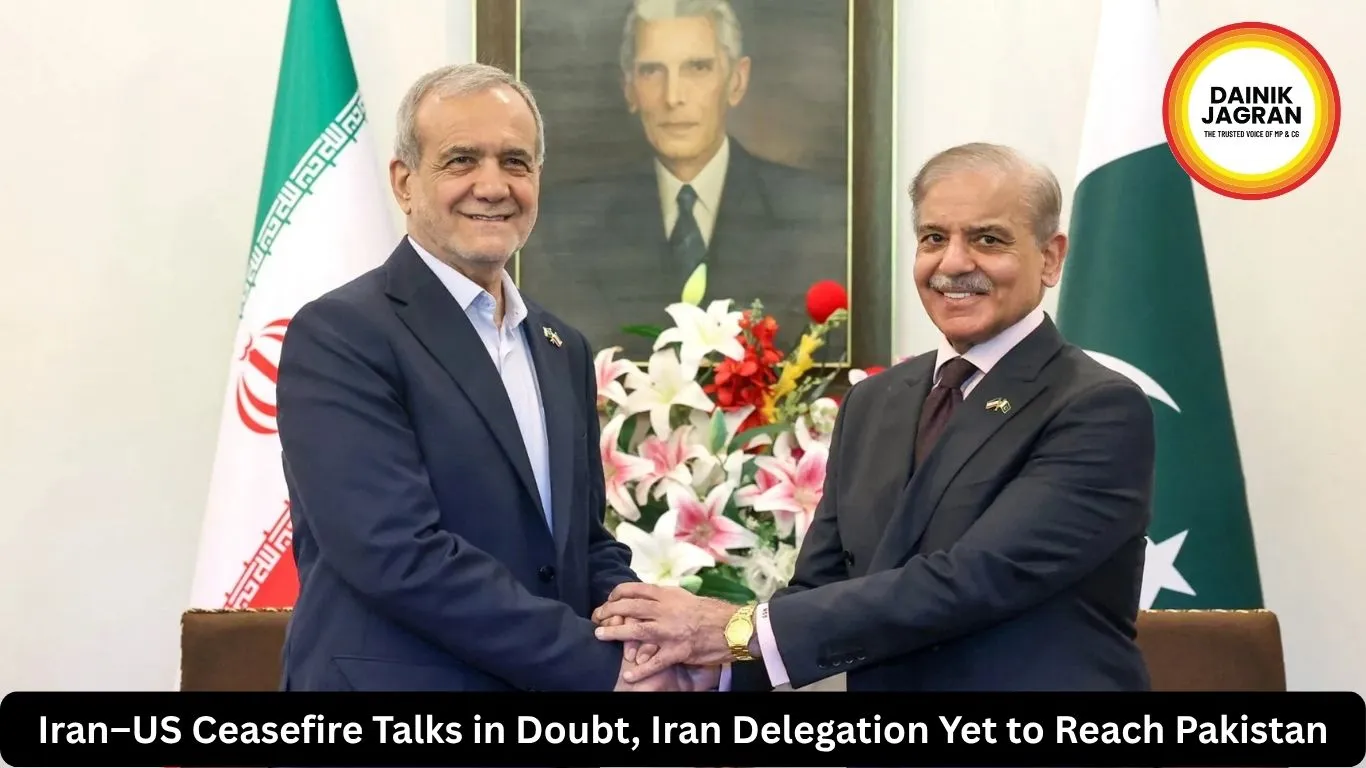
Iran–US Ceasefire Talks in Doubt, Iran Delegation Yet to Reach Pakistan
International Desk
Iran US ceasefire talks Pakistan face delay as Iranian delegation arrival remains uncertain amid rising Middle East tensions and diplomacy talks.
Diplomatic uncertainty has emerged ahead of a scheduled ceasefire dialogue between Iran and the United States, as the Iranian delegation has still not arrived in Pakistan. The high-level talks were expected to take place in Islamabad on Saturday, raising questions about whether the meeting will proceed as planned amid escalating regional tensions.
Delay in Iranian Delegation Arrival
According to reports, the Iranian delegation, which was expected to reach Pakistan ahead of the scheduled negotiations, has not yet arrived. Earlier claims suggested that Iranian representatives had already landed in Islamabad, but Iranian media outlets have denied these reports, clarifying that the delegation is still en route or its travel plan remains uncertain. This delay has created confusion over the status of the upcoming diplomatic engagement.
Background of the Islamabad Ceasefire Talks
The proposed meeting in Islamabad is part of a broader understanding reportedly reached on April 8, under which the United States and Iran agreed to discuss a temporary ceasefire framework. The arrangement was expected to pave the way for two weeks of structured dialogue aimed at reducing tensions and addressing key security concerns between the two nations.
Key Issues on the Negotiation Table
Several critical issues are expected to dominate the discussions between the two sides.
One of the central points is Iran’s nuclear program. The United States is reportedly demanding that Iran halt uranium enrichment activities, remove highly enriched uranium from its facilities, and restrict or shut down parts of its nuclear infrastructure. Iran, however, is seeking relief from sanctions and the return of frozen assets, along with possible compensation.
Another major issue is the strategic Strait of Hormuz, through which a significant share of the world’s oil and gas supply passes. Iran has indicated interest in maintaining influence over the route and potentially imposing transit fees, while the United States insists on unrestricted and secure passage for global trade.
The talks are also expected to cover Iran’s ballistic missile program, with Washington pushing for limits on long-range missile development. In return, Tehran is expected to demand the lifting of economic sanctions and restoration of international financial access.
Rising Regional Tensions Linked to Lebanon and Israel
The diplomatic uncertainty comes amid heightened tensions in the Middle East. Reports suggest Iran has expressed strong dissatisfaction over ongoing Israeli military strikes in Lebanon, which have further complicated the regional environment.
Hezbollah’s Response and Warning to Lebanon’s Government
Hezbollah leader Naim Qassem has urged Lebanon’s government to take a firmer stance against Israel, warning against what he described as concessions that could worsen the situation. Speaking through a televised message on Al-Manar TV, he stated that Hezbollah is not prepared to return to previous conditions and called for a more assertive diplomatic approach.
Qassem also condemned recent Israeli strikes, which reportedly resulted in significant casualties, and warned that continued escalation could destabilize the region further.
Uncertain Outlook for the Islamabad Meeting
With the Iranian delegation’s arrival still unconfirmed and regional tensions rising, uncertainty continues to surround the planned Islamabad talks. Observers are closely watching whether diplomatic channels can remain open or whether the meeting will be postponed due to evolving geopolitical pressures.
--------
🚨 Beat the News Rush – Join Now!
Get breaking alerts, hot exclusives, and game-changing stories instantly on your phone. No delays, no fluff – just the edge you need. ⚡
Tap to join:
🟢 WhatsApp Channel: Dainik Jagran MP CG
Crave more?
🅕 Facebook: Dainik Jagran MP CG English
🅧 Twitter (X): Dainik Jagran MP CG
🅘 Instagram: Dainik Jagran MP CG
Share the fire – keep your crew ahead! 🗞️🔥
Iran–US Ceasefire Talks in Doubt, Iran Delegation Yet to Reach Pakistan
International Desk
Diplomatic uncertainty has emerged ahead of a scheduled ceasefire dialogue between Iran and the United States, as the Iranian delegation has still not arrived in Pakistan. The high-level talks were expected to take place in Islamabad on Saturday, raising questions about whether the meeting will proceed as planned amid escalating regional tensions.
Delay in Iranian Delegation Arrival
According to reports, the Iranian delegation, which was expected to reach Pakistan ahead of the scheduled negotiations, has not yet arrived. Earlier claims suggested that Iranian representatives had already landed in Islamabad, but Iranian media outlets have denied these reports, clarifying that the delegation is still en route or its travel plan remains uncertain. This delay has created confusion over the status of the upcoming diplomatic engagement.
Background of the Islamabad Ceasefire Talks
The proposed meeting in Islamabad is part of a broader understanding reportedly reached on April 8, under which the United States and Iran agreed to discuss a temporary ceasefire framework. The arrangement was expected to pave the way for two weeks of structured dialogue aimed at reducing tensions and addressing key security concerns between the two nations.
Key Issues on the Negotiation Table
Several critical issues are expected to dominate the discussions between the two sides.
One of the central points is Iran’s nuclear program. The United States is reportedly demanding that Iran halt uranium enrichment activities, remove highly enriched uranium from its facilities, and restrict or shut down parts of its nuclear infrastructure. Iran, however, is seeking relief from sanctions and the return of frozen assets, along with possible compensation.
Another major issue is the strategic Strait of Hormuz, through which a significant share of the world’s oil and gas supply passes. Iran has indicated interest in maintaining influence over the route and potentially imposing transit fees, while the United States insists on unrestricted and secure passage for global trade.
The talks are also expected to cover Iran’s ballistic missile program, with Washington pushing for limits on long-range missile development. In return, Tehran is expected to demand the lifting of economic sanctions and restoration of international financial access.
Rising Regional Tensions Linked to Lebanon and Israel
The diplomatic uncertainty comes amid heightened tensions in the Middle East. Reports suggest Iran has expressed strong dissatisfaction over ongoing Israeli military strikes in Lebanon, which have further complicated the regional environment.
Hezbollah’s Response and Warning to Lebanon’s Government
Hezbollah leader Naim Qassem has urged Lebanon’s government to take a firmer stance against Israel, warning against what he described as concessions that could worsen the situation. Speaking through a televised message on Al-Manar TV, he stated that Hezbollah is not prepared to return to previous conditions and called for a more assertive diplomatic approach.
Qassem also condemned recent Israeli strikes, which reportedly resulted in significant casualties, and warned that continued escalation could destabilize the region further.
Uncertain Outlook for the Islamabad Meeting
With the Iranian delegation’s arrival still unconfirmed and regional tensions rising, uncertainty continues to surround the planned Islamabad talks. Observers are closely watching whether diplomatic channels can remain open or whether the meeting will be postponed due to evolving geopolitical pressures.


