

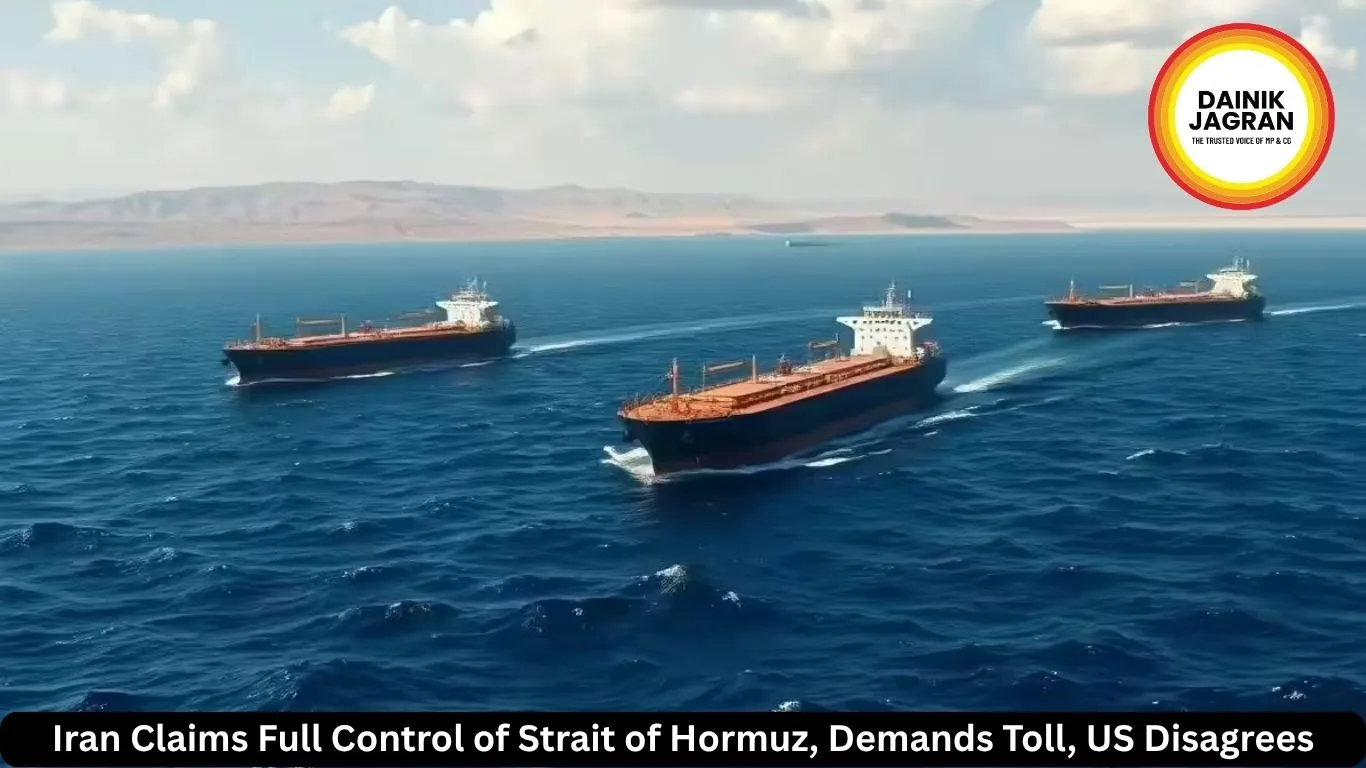
Iran Claims Full Control of Strait of Hormuz, Demands Toll, US Disagrees
International Desk
Iran claims control over Strait of Hormuz, escalating US-Iran tensions and raising global concerns over oil shipping routes.
Tensions between Iran and the United States have intensified following fresh claims over control of the strategically crucial Strait of Hormuz. Iranian Deputy Parliament Speaker Haji Babaei has declared that the waterway falls entirely under Iran’s authority, calling it a “red line” for Tehran and suggesting that ships passing through may be required to pay tolls in Iranian currency.
This statement comes shortly after former US President Donald Trump asserted that American forces had begun clearing naval mines from the strait to ensure safe passage. According to US Central Command, American naval vessels have already navigated through the route, which they claim is being secured against threats allegedly posed by Iran.
Conflicting Claims Over Control of Hormuz
Iran has strongly rejected US claims regarding mine removal and safe passage operations. The Islamic Revolutionary Guard Corps warned that any unauthorized military movement through the strait would face strict retaliation. Tehran maintains that it retains full control over the region and will enforce its sovereignty if challenged.
Failed Peace Talks Add to Uncertainty
Diplomatic efforts between the two nations have so far yielded no results. A 21-hour round of negotiations held in Islamabad reportedly ended without agreement. Key sticking points included the reopening of the Strait of Hormuz and assurances regarding Iran’s nuclear program. US Vice President JD Vance stated that Washington requires absolute guarantees that Iran will not pursue nuclear weapons or capabilities that could enable rapid development.
Military and Political Developments Intensify
Meanwhile, Israeli Prime Minister Benjamin Netanyahu indicated that military operations against Iran are ongoing. He claimed that recent strikes have significantly damaged Iran’s nuclear infrastructure, asserting that the actions were necessary due to Iran nearing weapons capability.
In Lebanon, tensions remain high as well, with reports of injuries following strikes in the Tuffahata area. Regional instability continues to spread, further complicating diplomatic efforts.
Symbolic Messaging and Human Impact
Iranian Parliament Speaker Mohammad Bagher Ghalibaf reportedly carried photographs of children killed in a missile strike earlier this year while traveling to Pakistan. The incident, which Iran blames on US-Israel actions, has added emotional weight to the ongoing conflict.
Prolonged Internet Shutdown in Iran
Iran has been experiencing a nationwide internet shutdown for 44 days, one of the longest recorded globally. Monitoring group NetBlocks reports that the blackout has severely impacted daily life and economic activity, restricting access to information and disrupting businesses. The shutdown began after military strikes on February 28.
International Calls for Restraint
Global leaders are urging both sides to avoid further escalation. The United Kingdom and Oman have expressed concern over the failed talks and rising tensions. UK Prime Minister Keir Starmer and Oman’s Sultan Haitham bin Tariq emphasized the need to maintain ceasefire conditions and prevent any actions that could worsen the situation.
US Warning on Negotiation Breakdown
Vice President JD Vance warned that Iran stands to suffer the most from the breakdown in negotiations. He claimed that the US had presented its most comprehensive proposal, showing flexibility during discussions. However, Iran’s refusal to provide clear commitments on its nuclear intentions has kept the impasse unresolved.
--------
🚨 Beat the News Rush – Join Now!
Get breaking alerts, hot exclusives, and game-changing stories instantly on your phone. No delays, no fluff – just the edge you need. ⚡
Tap to join:
🟢 WhatsApp Channel: Dainik Jagran MP CG
Crave more?
🅕 Facebook: Dainik Jagran MP CG English
🅧 Twitter (X): Dainik Jagran MP CG
🅘 Instagram: Dainik Jagran MP CG
Share the fire – keep your crew ahead! 🗞️🔥
Iran Claims Full Control of Strait of Hormuz, Demands Toll, US Disagrees
International Desk
Tensions between Iran and the United States have intensified following fresh claims over control of the strategically crucial Strait of Hormuz. Iranian Deputy Parliament Speaker Haji Babaei has declared that the waterway falls entirely under Iran’s authority, calling it a “red line” for Tehran and suggesting that ships passing through may be required to pay tolls in Iranian currency.
This statement comes shortly after former US President Donald Trump asserted that American forces had begun clearing naval mines from the strait to ensure safe passage. According to US Central Command, American naval vessels have already navigated through the route, which they claim is being secured against threats allegedly posed by Iran.
Conflicting Claims Over Control of Hormuz
Iran has strongly rejected US claims regarding mine removal and safe passage operations. The Islamic Revolutionary Guard Corps warned that any unauthorized military movement through the strait would face strict retaliation. Tehran maintains that it retains full control over the region and will enforce its sovereignty if challenged.
Failed Peace Talks Add to Uncertainty
Diplomatic efforts between the two nations have so far yielded no results. A 21-hour round of negotiations held in Islamabad reportedly ended without agreement. Key sticking points included the reopening of the Strait of Hormuz and assurances regarding Iran’s nuclear program. US Vice President JD Vance stated that Washington requires absolute guarantees that Iran will not pursue nuclear weapons or capabilities that could enable rapid development.
Military and Political Developments Intensify
Meanwhile, Israeli Prime Minister Benjamin Netanyahu indicated that military operations against Iran are ongoing. He claimed that recent strikes have significantly damaged Iran’s nuclear infrastructure, asserting that the actions were necessary due to Iran nearing weapons capability.
In Lebanon, tensions remain high as well, with reports of injuries following strikes in the Tuffahata area. Regional instability continues to spread, further complicating diplomatic efforts.
Symbolic Messaging and Human Impact
Iranian Parliament Speaker Mohammad Bagher Ghalibaf reportedly carried photographs of children killed in a missile strike earlier this year while traveling to Pakistan. The incident, which Iran blames on US-Israel actions, has added emotional weight to the ongoing conflict.
Prolonged Internet Shutdown in Iran
Iran has been experiencing a nationwide internet shutdown for 44 days, one of the longest recorded globally. Monitoring group NetBlocks reports that the blackout has severely impacted daily life and economic activity, restricting access to information and disrupting businesses. The shutdown began after military strikes on February 28.
International Calls for Restraint
Global leaders are urging both sides to avoid further escalation. The United Kingdom and Oman have expressed concern over the failed talks and rising tensions. UK Prime Minister Keir Starmer and Oman’s Sultan Haitham bin Tariq emphasized the need to maintain ceasefire conditions and prevent any actions that could worsen the situation.
US Warning on Negotiation Breakdown
Vice President JD Vance warned that Iran stands to suffer the most from the breakdown in negotiations. He claimed that the US had presented its most comprehensive proposal, showing flexibility during discussions. However, Iran’s refusal to provide clear commitments on its nuclear intentions has kept the impasse unresolved.


