

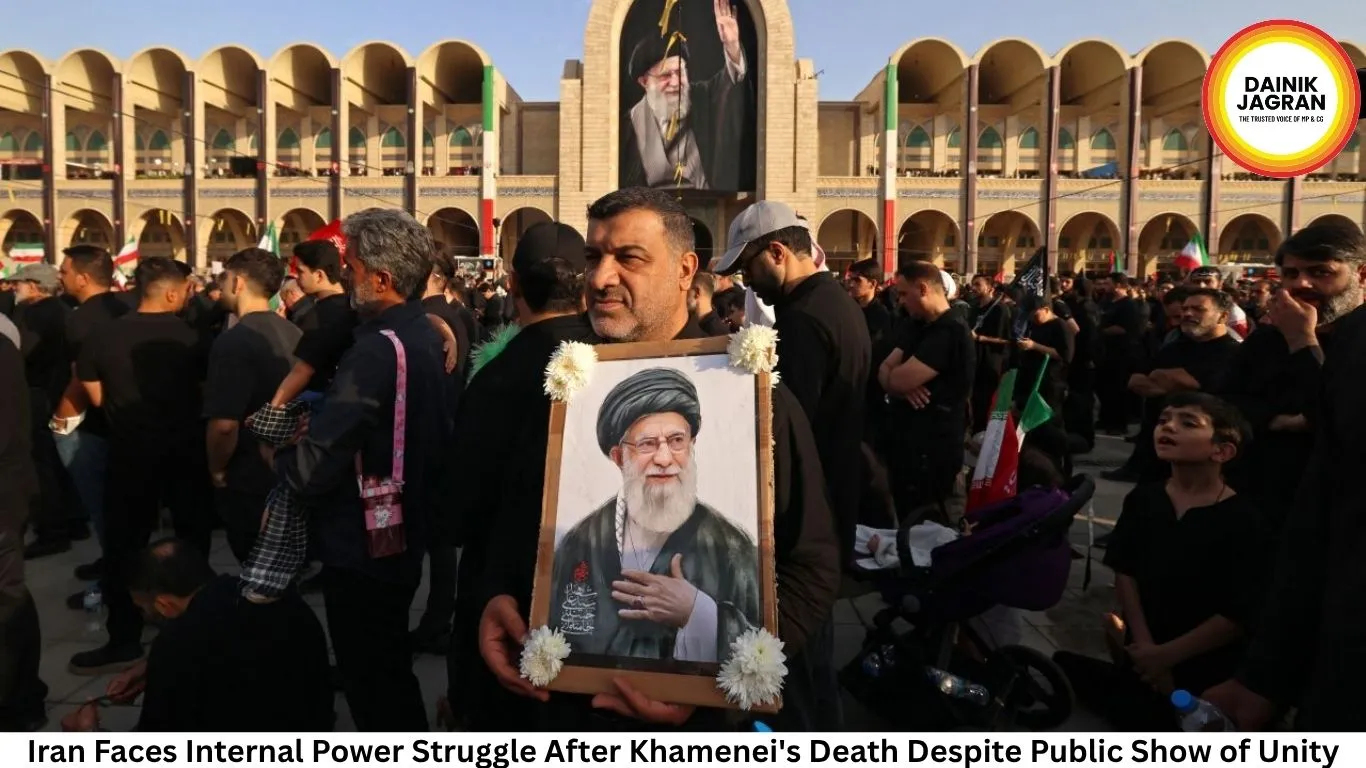
Iran Faces Internal Power Struggle After Khamenei's Death Despite Public Show of Unity

Digital Desk

Iran Faces Internal Power Struggle After Khamenei's Death Despite Public Show of Unity

As Iran bids farewell to former Supreme Leader Ayatollah Ali Khamenei, political divisions between hardliners, pragmatists and reformist voices have resurfaced, raising questions about the future direction of the Islamic Republic.

Iran's political establishment presented a united front during the funeral ceremonies of former Supreme Leader Ayatollah Ali Khamenei, with President Masoud Pezeshkian, Parliament Speaker Mohammad Bagher Ghalibaf, Judiciary Chief Gholamhossein Mohseni Ejei, and senior commanders of the Islamic Revolutionary Guard Corps (IRGC) appearing together in a rare public display of solidarity. However, political observers say the carefully coordinated ceremony has done little to conceal deep divisions within the country's ruling establishment over the future of the Islamic Republic.

According to analysts, Iran is witnessing an increasingly visible contest between conservative hardliners, pragmatic conservatives and reform-minded leaders, each advocating a different vision for the country's political system, economic recovery and relations with the international community. The succession process following Khamenei's death has brought these competing viewpoints into sharper focus.

Debate Over Political Authority

One of the most notable developments has been the emergence of public debate regarding the authority of Iran's Supreme Leader.

According to reports, Vice President Mohammad-Jafar Ghaempanah recently argued that the Supreme Leader should not be viewed as the sole decision-maker in Iran's political system. Speaking at a government event, he reportedly questioned the role of institutions such as Parliament and the Supreme National Security Council if all decisions ultimately rested with one office.

Such remarks would have been considered highly unusual during Khamenei's leadership and are being viewed by analysts as a sign of changing political dynamics within Tehran.

At the same time, state television reportedly interrupted a live address by Parliament Speaker Mohammad Bagher Ghalibaf while he was discussing the ongoing US-Iran Memorandum of Understanding (MoU) negotiations. Media observers interpreted the incident as another indication of disagreements within the political establishment regarding negotiations with Washington.

Economic Pressures Shape Political Debate

Iran's prolonged economic difficulties continue to influence domestic politics.

Years of international sanctions, inflation, currency depreciation and restrictions on trade have placed significant pressure on the country's economy. Reports suggest that senior government officials have warned the leadership that continued economic isolation could worsen shortages of essential goods and increase financial instability.

According to media reports, President Masoud Pezeshkian and senior economic officials argued in favour of pursuing negotiations with the United States, saying that easing sanctions would be important for stabilising the economy and ensuring access to food, medicine and other essential supplies.

Hardliners vs Pragmatists

The divide within Iran extends beyond politics into broader social and foreign policy issues.

Hardline factions continue to oppose major concessions to the United States, while pragmatic leaders have advocated diplomatic engagement to reduce economic pressure and improve regional stability. Reports indicate that a section of the IRGC leadership remains sceptical of negotiations and prefers maintaining a tougher strategic posture.

Political analysts believe the balance of power between these competing factions could shape not only Iran's domestic policies but also the future of its negotiations with the United States and other world powers.

Public Sentiment Remains Complex

Despite the display of unity during Khamenei's funeral, observers note that Iran continues to face significant domestic challenges.

Large-scale anti-government protests in recent years reflected widespread public frustration over economic conditions, political restrictions and social policies. Human rights organisations have reported thousands of casualties and arrests during security crackdowns, although Iranian authorities have defended their actions as necessary to maintain public order.

Analysts say recent military tensions with the United States and Israel temporarily strengthened national unity under the "rally-around-the-flag" effect. However, they caution that long-standing concerns over inflation, unemployment and civil liberties are likely to remain central issues once regional tensions ease.


--------

🚨 Beat the News Rush – Join Now!

Get breaking alerts, hot exclusives, and game-changing stories instantly on your phone. No delays, no fluff – just the edge you need. ⚡

Tap to join: 

🟢 WhatsApp Channel: Dainik Jagran MP CG

Crave more?

🅕 Facebook: Dainik Jagran MP CG English

🅧 Twitter (X): Dainik Jagran MP CG

🅘 Instagram: Dainik Jagran MP CG

Share the fire – keep your crew ahead! 🗞️🔥

english.dainikjagranmpcg.com
10 Jul 2026 By Rishita

Iran Faces Internal Power Struggle After Khamenei's Death Despite Public Show of Unity

Digital Desk

Iran's political establishment presented a united front during the funeral ceremonies of former Supreme Leader Ayatollah Ali Khamenei, with President Masoud Pezeshkian, Parliament Speaker Mohammad Bagher Ghalibaf, Judiciary Chief Gholamhossein Mohseni Ejei, and senior commanders of the Islamic Revolutionary Guard Corps (IRGC) appearing together in a rare public display of solidarity. However, political observers say the carefully coordinated ceremony has done little to conceal deep divisions within the country's ruling establishment over the future of the Islamic Republic.

According to analysts, Iran is witnessing an increasingly visible contest between conservative hardliners, pragmatic conservatives and reform-minded leaders, each advocating a different vision for the country's political system, economic recovery and relations with the international community. The succession process following Khamenei's death has brought these competing viewpoints into sharper focus.

Debate Over Political Authority

One of the most notable developments has been the emergence of public debate regarding the authority of Iran's Supreme Leader.

According to reports, Vice President Mohammad-Jafar Ghaempanah recently argued that the Supreme Leader should not be viewed as the sole decision-maker in Iran's political system. Speaking at a government event, he reportedly questioned the role of institutions such as Parliament and the Supreme National Security Council if all decisions ultimately rested with one office.

Such remarks would have been considered highly unusual during Khamenei's leadership and are being viewed by analysts as a sign of changing political dynamics within Tehran.

At the same time, state television reportedly interrupted a live address by Parliament Speaker Mohammad Bagher Ghalibaf while he was discussing the ongoing US-Iran Memorandum of Understanding (MoU) negotiations. Media observers interpreted the incident as another indication of disagreements within the political establishment regarding negotiations with Washington.

Economic Pressures Shape Political Debate

Iran's prolonged economic difficulties continue to influence domestic politics.

Years of international sanctions, inflation, currency depreciation and restrictions on trade have placed significant pressure on the country's economy. Reports suggest that senior government officials have warned the leadership that continued economic isolation could worsen shortages of essential goods and increase financial instability.

According to media reports, President Masoud Pezeshkian and senior economic officials argued in favour of pursuing negotiations with the United States, saying that easing sanctions would be important for stabilising the economy and ensuring access to food, medicine and other essential supplies.

Hardliners vs Pragmatists

The divide within Iran extends beyond politics into broader social and foreign policy issues.

Hardline factions continue to oppose major concessions to the United States, while pragmatic leaders have advocated diplomatic engagement to reduce economic pressure and improve regional stability. Reports indicate that a section of the IRGC leadership remains sceptical of negotiations and prefers maintaining a tougher strategic posture.

Political analysts believe the balance of power between these competing factions could shape not only Iran's domestic policies but also the future of its negotiations with the United States and other world powers.

Public Sentiment Remains Complex

Despite the display of unity during Khamenei's funeral, observers note that Iran continues to face significant domestic challenges.

Large-scale anti-government protests in recent years reflected widespread public frustration over economic conditions, political restrictions and social policies. Human rights organisations have reported thousands of casualties and arrests during security crackdowns, although Iranian authorities have defended their actions as necessary to maintain public order.

Analysts say recent military tensions with the United States and Israel temporarily strengthened national unity under the "rally-around-the-flag" effect. However, they caution that long-standing concerns over inflation, unemployment and civil liberties are likely to remain central issues once regional tensions ease.


https://english.dainikjagranmpcg.com/international/iran-faces-internal-power-struggle-after-khameneis-death-despite-public/article-21612

Related Posts

Trending News


