


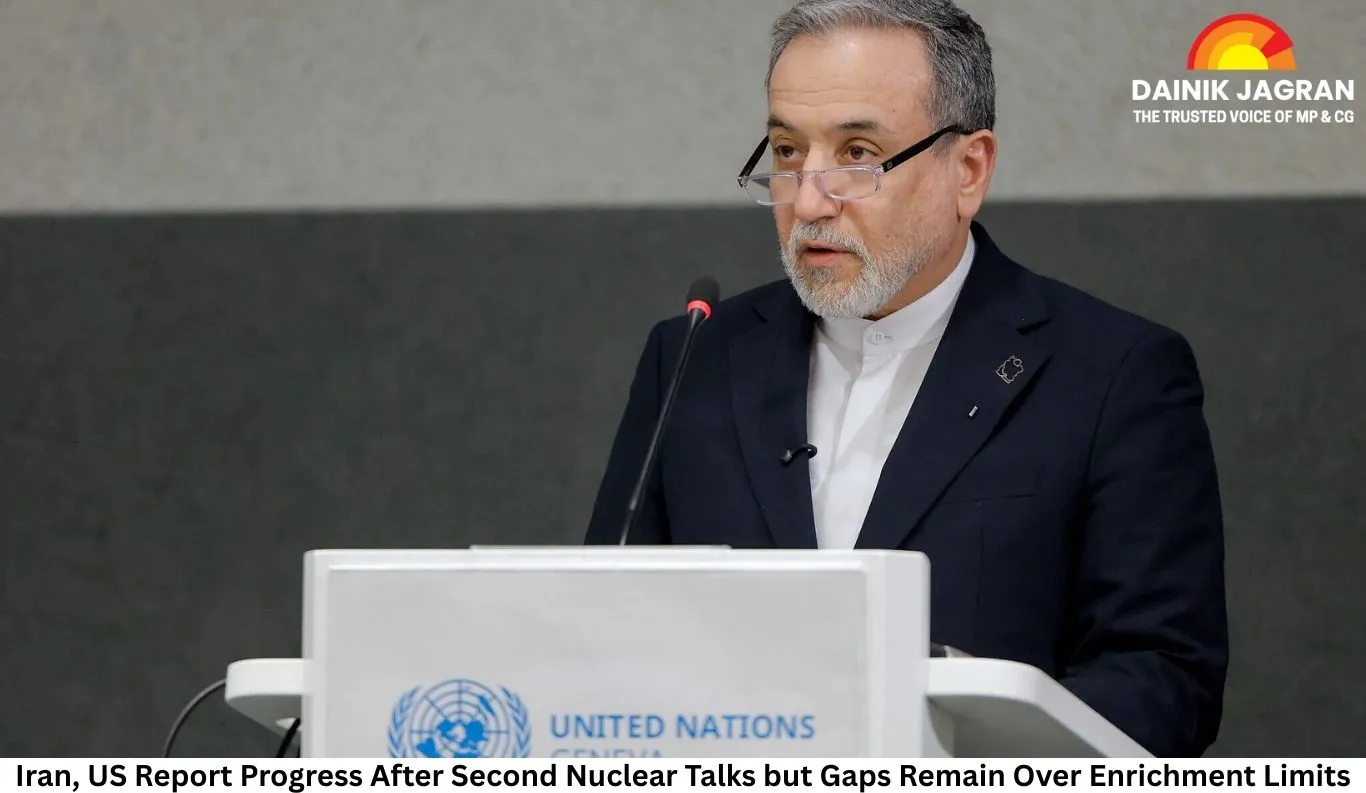
Iran, US Report Progress After Second Nuclear Talks but Gaps Remain Over Enrichment Limits
Digital Desk
Speaking after nearly three hours of talks, Iranian Foreign Minister Abbas Araghchi described the meeting as more constructive than the first round earlier this month. He said negotiators had reached a preliminary understanding that would allow technical teams to begin drafting a framework text. The next phase will involve refining proposals before exchanging draft agreements and setting a date for further negotiations.
Washington also indicated progress but struck a more guarded tone. US Vice President JD Vance, speaking in an interview reported by Fox News, said Tehran had not accepted all of President Donald Trump’s “red lines,” particularly on uranium enrichment and regional security concerns. He nevertheless said diplomacy remained the preferred path if Iran demonstrated flexibility.
The renewed talks come amid heightened regional tension and a visible US military buildup. According to Axios, more than 50 US fighter jets were deployed to the Middle East within 24 hours as part of a broader reinforcement of air and naval assets near Iranian territory. Independent flight trackers reported multiple advanced aircraft movements, underscoring Washington’s effort to maintain pressure while negotiations continue.
Diplomatic engagement resumed earlier this month after previous efforts collapsed during last year’s regional conflict involving Israel. Analysts say the renewed initiative reflects mutual interest in preventing further escalation while addressing concerns over Iran’s nuclear programme, which Western governments argue could shorten the timeline for weapons capability.
A central obstacle remains Tehran’s uranium stockpile, which has reached enrichment levels of about 60 percent purity—far above civilian requirements but below weapons-grade. The United States has pushed for a zero-enrichment standard alongside limits on Iran’s missile programme and its support for armed groups in the region. Iranian officials insist their nuclear activities are peaceful and maintain that enrichment rights are non-negotiable under international law.
No breakthrough agreement was announced, but officials on both sides described the latest session as a step toward structured negotiations. Diplomats involved in the process said the coming weeks will determine whether preliminary principles can translate into a binding accord or whether longstanding mistrust will again stall progress.
.jpg)




