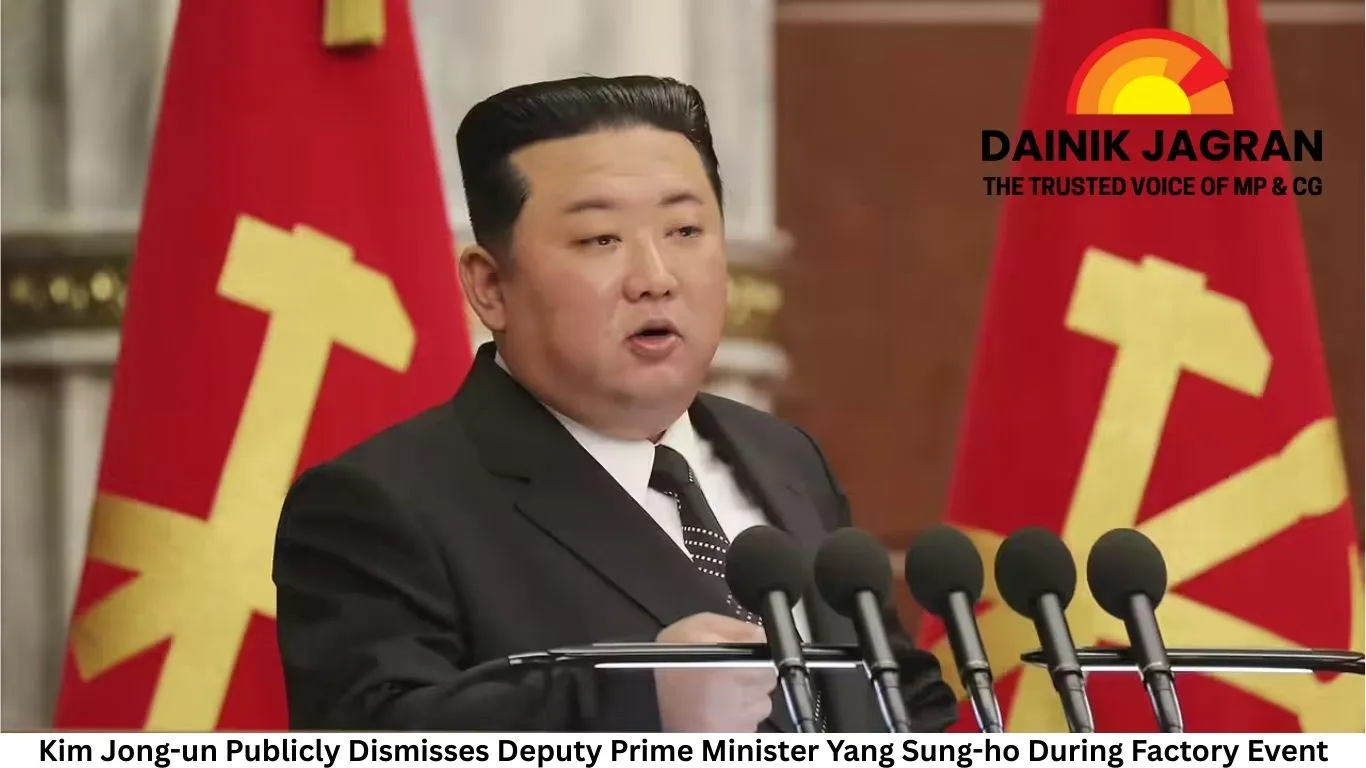
Kim Jong-un Publicly Dismisses Deputy Prime Minister Yang Sung-ho During Factory Event
Digital Desk
According to the state-run Korean Central News Agency (KCNA), Kim visited the complex on Monday to review progress on the machinery upgrade, a key component of the country’s industrial policy. While addressing officials from the stage, Kim directly criticized Yang’s performance and instructed him to leave his post immediately. “Before it gets too late, leave here on your own feet,” Kim was quoted as saying.
Explaining his decision, Kim said Yang lacked the ability to manage large-scale responsibilities and used a blunt analogy to underline his point. “A goat cannot pull a cart. The cart is pulled by oxen, not goats,” he said, adding that Yang’s promotion reflected flaws in the party’s cadre appointment system.
Kim stated that Yang had been given multiple opportunities to correct what were described as serious errors during the first phase of the Ryongsong modernization. Despite repeated warnings, Kim said there was no visible improvement in either planning or execution. He accused the deputy prime minister of offering unrealistic and impractical suggestions to the party’s central committee and of attempting to mislead leadership discussions for personal gain.
At the same time, Kim clarified that Yang’s removal should not be interpreted as branding him “anti-party,” a label that in North Korea can carry severe consequences. Nevertheless, Kim concluded that Yang showed a persistent lack of responsibility and was unfit for any major leadership role.
Yang Sung-ho previously served as Minister of the Machinery Industry before being elevated to deputy premier with oversight of the sector. South Korea’s Yonhap News Agency has reported that he was also associated with the Workers’ Party’s top leadership, though not as a permanent member. No successor has yet been named.
KCNA reported that Kim held multiple economic officials accountable for delays and shortcomings at the Ryongsong project, blaming negligence and incompetence for hindering industrial modernization. The public dismissal comes as the ruling Workers’ Party prepares for its ninth party congress, a period typically marked by heightened discipline within the leadership.
Analysts in Seoul view the episode as part of Kim’s broader effort to enforce accountability and instill fear among officials ahead of the congress. The move follows recent personnel changes, including the replacement of senior military officers responsible for Kim’s personal security.
Public reprimands of this nature remain rare in North Korea, but they echo earlier purges under Kim’s rule, most notably the 2013 execution of his uncle, Jang Song-thaek, which underscored the leader’s willingness to act decisively against perceived failures or disloyalty.