
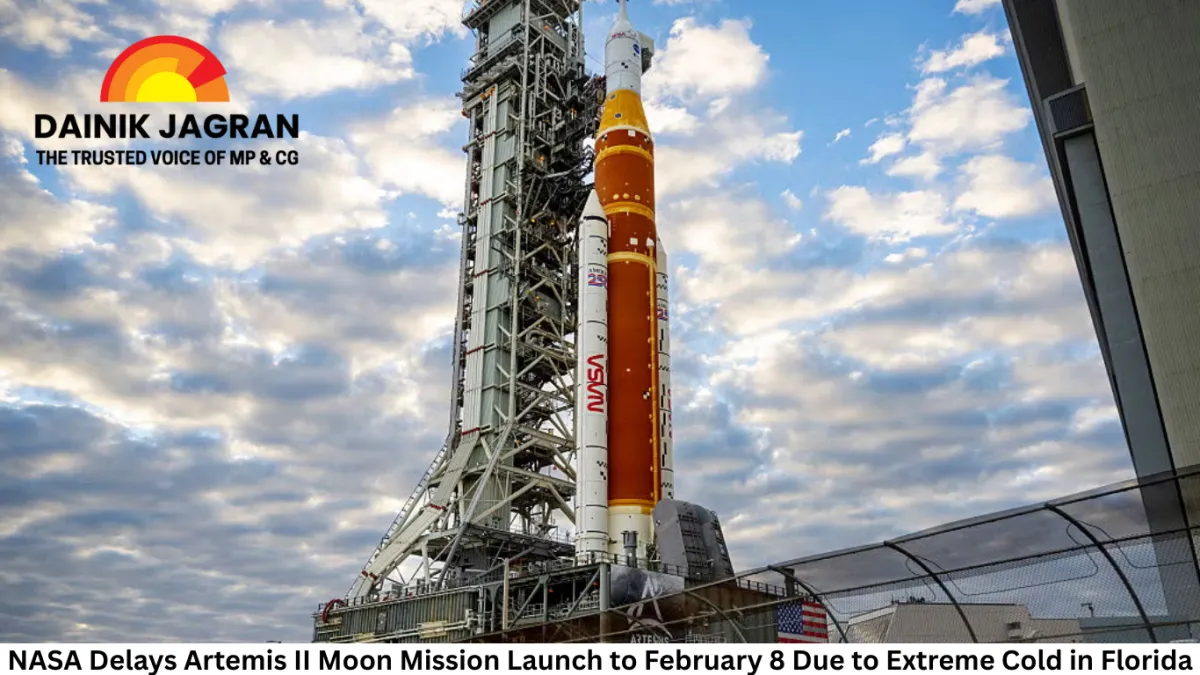
The U.S. space agency confirmed that the weather forced a rescheduling of the mission’s “wet dress rehearsal,” a key pre-launch test involving the fueling of the Space Launch System (SLS) rocket and a full countdown simulation. Initially planned for late January, the rehearsal has now been moved to February 2, effectively ruling out earlier launch windows on February 6 and 7.
NASA officials said the decision was taken to protect both the SLS rocket and the Orion spacecraft, which houses sensitive avionics, propulsion components, and life-support systems. Prolonged exposure to unusually low temperatures can compromise hardware integrity and increase the risk of technical anomalies during fueling and launch operations.
The wet dress rehearsal is regarded as the final major milestone before liftoff. During the test, more than 700,000 gallons of super-cooled liquid hydrogen and liquid oxygen are loaded into the rocket. Conducting this procedure during a natural cold snap would violate safety protocols designed to prevent damage to valves, seals, and fuel lines. Engineers determined that proceeding under such conditions could lead to further delays or costly repairs.
Despite the schedule shift, NASA emphasized that the mission itself remains on track. Artemis II will be the first crewed flight under the Artemis program and will carry astronauts Reid Wiseman, Victor Glover, Christina Koch, and Canadian Space Agency astronaut Jeremy Hansen on a lunar flyby. The mission aims to validate life-support systems, navigation, and spacecraft performance in deep space, paving the way for future lunar landings.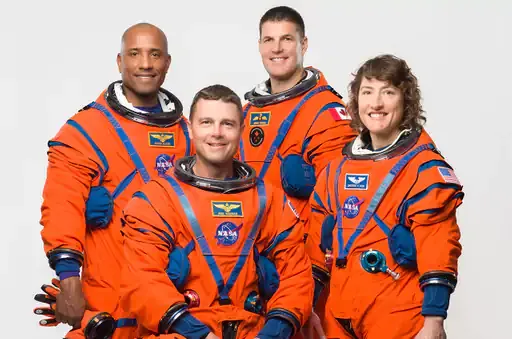
The crew remains in pre-launch readiness as teams continue monitoring weather patterns and preparing for the rescheduled rehearsal. NASA noted that February weather conditions are expected to stabilize, allowing engineers to complete final checks safely.
While the delay marks another adjustment in the Artemis timeline, agency officials reiterated that safety and mission assurance take precedence over speed. Once the rehearsal is successfully completed, Artemis II will be cleared for launch, bringing NASA closer to its goal of returning humans to the Moon for the first time in more than five decades.

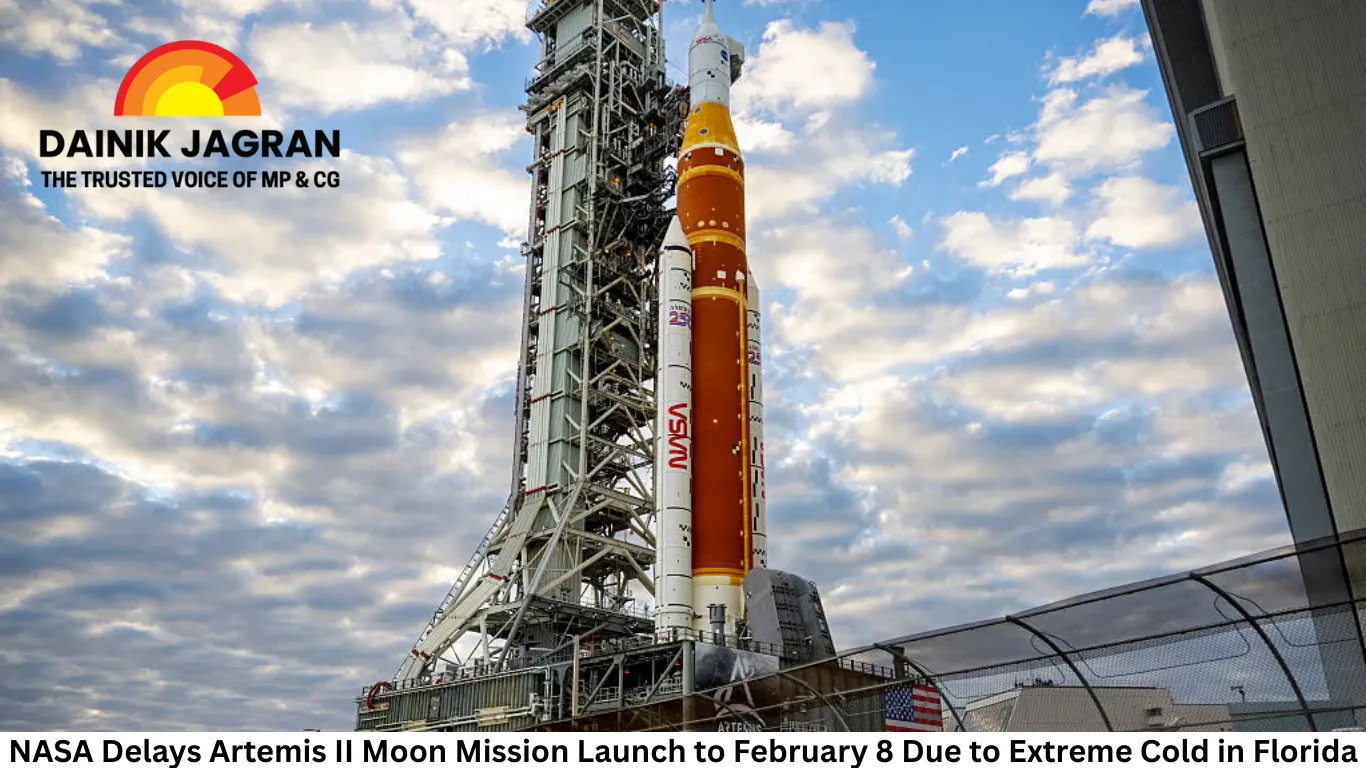
NASA Delays Artemis II Moon Mission Launch to February 8 Due to Extreme Cold in Florida
Digital Desk
The U.S. space agency confirmed that the weather forced a rescheduling of the mission’s “wet dress rehearsal,” a key pre-launch test involving the fueling of the Space Launch System (SLS) rocket and a full countdown simulation. Initially planned for late January, the rehearsal has now been moved to February 2, effectively ruling out earlier launch windows on February 6 and 7.
NASA officials said the decision was taken to protect both the SLS rocket and the Orion spacecraft, which houses sensitive avionics, propulsion components, and life-support systems. Prolonged exposure to unusually low temperatures can compromise hardware integrity and increase the risk of technical anomalies during fueling and launch operations.
The wet dress rehearsal is regarded as the final major milestone before liftoff. During the test, more than 700,000 gallons of super-cooled liquid hydrogen and liquid oxygen are loaded into the rocket. Conducting this procedure during a natural cold snap would violate safety protocols designed to prevent damage to valves, seals, and fuel lines. Engineers determined that proceeding under such conditions could lead to further delays or costly repairs.
Despite the schedule shift, NASA emphasized that the mission itself remains on track. Artemis II will be the first crewed flight under the Artemis program and will carry astronauts Reid Wiseman, Victor Glover, Christina Koch, and Canadian Space Agency astronaut Jeremy Hansen on a lunar flyby. The mission aims to validate life-support systems, navigation, and spacecraft performance in deep space, paving the way for future lunar landings.
The crew remains in pre-launch readiness as teams continue monitoring weather patterns and preparing for the rescheduled rehearsal. NASA noted that February weather conditions are expected to stabilize, allowing engineers to complete final checks safely.
While the delay marks another adjustment in the Artemis timeline, agency officials reiterated that safety and mission assurance take precedence over speed. Once the rehearsal is successfully completed, Artemis II will be cleared for launch, bringing NASA closer to its goal of returning humans to the Moon for the first time in more than five decades.
.jpg)




