

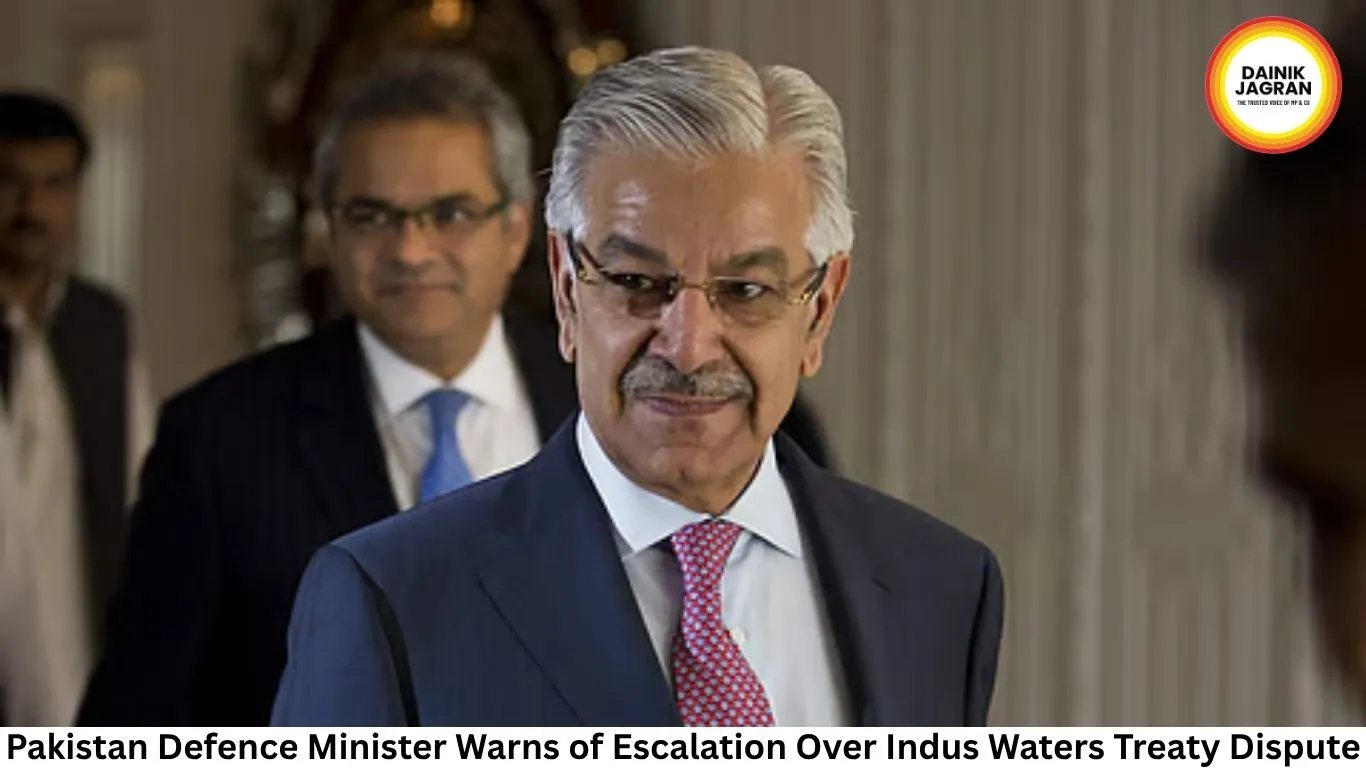
Pakistan Defence Minister Warns of Escalation Over Indus Waters Treaty Dispute

Digital Desk

Pakistan Defence Minister Warns of Escalation Over Indus Waters Treaty Dispute

Khawaja Asif links water security concerns to national security as tensions continue over India's suspension of the Indus Waters Treaty

Pakistan's Defence Minister Khawaja Asif has issued a strong warning regarding the future of the Indus Waters Treaty, stating that any threat to Pakistan's water security could be viewed as a national security issue. His remarks come amid ongoing tensions between India and Pakistan following New Delhi's decision to suspend the decades-old water-sharing agreement after the April 2025 Pahalgam terror attack.

Speaking to Pakistani television channel ARY News, Asif alleged that India was interfering with water flows intended for Pakistan and using water resources as a strategic tool. He said Pakistan could consider all available options if it believed its water security was under serious threat. However, he also acknowledged that he was not fully briefed on all recent developments related to the treaty.

The comments have drawn attention because the Indus Waters Treaty has long been regarded as one of the most durable agreements between the two neighboring countries, surviving multiple wars and periods of heightened diplomatic tensions.

India suspended the treaty after the deadly Pahalgam terror attack in April 2025, which claimed the lives of 26 people. Indian authorities subsequently stated that the agreement would remain suspended until Pakistan took credible and sustained action against cross-border terrorism.

Water Crisis Deepens in Pakistan

The latest diplomatic tensions come at a time when Pakistan is grappling with a severe water shortage. Reports from provincial authorities indicate that water availability has declined significantly in several irrigation systems, particularly in Sindh and Balochistan.

According to official figures cited by local agencies, the North West Canal is facing a water shortage of more than 64 percent, while the Rice Canal has recorded a decline of approximately 38 percent. The Dadu Canal is reportedly experiencing an even sharper reduction in water supply.

The falling water levels have also raised concerns about the performance of key infrastructure such as the Sukkur Barrage, one of Pakistan's most important irrigation networks. Experts warn that prolonged shortages could affect agricultural productivity, food security, and economic activity in water-dependent regions.

Understanding the Indus Waters Treaty

The Indus Waters Treaty, signed in 1960 with the support of the World Bank, governs the sharing of waters from the Indus River system between India and Pakistan. The agreement was signed in Karachi by Indian Prime Minister Jawaharlal Nehru and Pakistani President Ayub Khan after nearly a decade of negotiations.

The treaty covers six major rivers of the Indus basin — the Indus, Jhelum, Chenab, Ravi, Beas, and Sutlej. Together, these rivers support millions of people across South Asia and form the backbone of agricultural activity in both countries.

For decades, the treaty has been viewed internationally as a successful example of cross-border water cooperation despite broader political disputes between the two nations.

Economic and Agricultural Concerns

Pakistan's economy remains heavily dependent on the Indus river system. Approximately 90 percent of the country's agricultural land relies on water supplied through the basin's irrigation network.

Agriculture contributes a significant share of Pakistan's economy and provides livelihoods for a large portion of the rural population. Any prolonged disruption in water availability could therefore have far-reaching consequences for crop production, employment, and food supplies.

Experts have also highlighted potential risks to hydroelectric power generation. Lower inflows into major reservoirs such as the Mangla and Tarbela dams could reduce electricity output, placing additional pressure on industries and households already dealing with energy challenges.

--------

🚨 Beat the News Rush – Join Now!

Get breaking alerts, hot exclusives, and game-changing stories instantly on your phone. No delays, no fluff – just the edge you need. ⚡

Tap to join: 

🟢 WhatsApp Channel: Dainik Jagran MP CG

Crave more?

🅕 Facebook: Dainik Jagran MP CG English

🅧 Twitter (X): Dainik Jagran MP CG

🅘 Instagram: Dainik Jagran MP CG

Share the fire – keep your crew ahead! 🗞️🔥

english.dainikjagranmpcg.com
22 Jun 2026 By Rishita

Pakistan Defence Minister Warns of Escalation Over Indus Waters Treaty Dispute

Digital Desk

Pakistan's Defence Minister Khawaja Asif has issued a strong warning regarding the future of the Indus Waters Treaty, stating that any threat to Pakistan's water security could be viewed as a national security issue. His remarks come amid ongoing tensions between India and Pakistan following New Delhi's decision to suspend the decades-old water-sharing agreement after the April 2025 Pahalgam terror attack.

Speaking to Pakistani television channel ARY News, Asif alleged that India was interfering with water flows intended for Pakistan and using water resources as a strategic tool. He said Pakistan could consider all available options if it believed its water security was under serious threat. However, he also acknowledged that he was not fully briefed on all recent developments related to the treaty.

The comments have drawn attention because the Indus Waters Treaty has long been regarded as one of the most durable agreements between the two neighboring countries, surviving multiple wars and periods of heightened diplomatic tensions.

India suspended the treaty after the deadly Pahalgam terror attack in April 2025, which claimed the lives of 26 people. Indian authorities subsequently stated that the agreement would remain suspended until Pakistan took credible and sustained action against cross-border terrorism.

Water Crisis Deepens in Pakistan

The latest diplomatic tensions come at a time when Pakistan is grappling with a severe water shortage. Reports from provincial authorities indicate that water availability has declined significantly in several irrigation systems, particularly in Sindh and Balochistan.

According to official figures cited by local agencies, the North West Canal is facing a water shortage of more than 64 percent, while the Rice Canal has recorded a decline of approximately 38 percent. The Dadu Canal is reportedly experiencing an even sharper reduction in water supply.

The falling water levels have also raised concerns about the performance of key infrastructure such as the Sukkur Barrage, one of Pakistan's most important irrigation networks. Experts warn that prolonged shortages could affect agricultural productivity, food security, and economic activity in water-dependent regions.

Understanding the Indus Waters Treaty

The Indus Waters Treaty, signed in 1960 with the support of the World Bank, governs the sharing of waters from the Indus River system between India and Pakistan. The agreement was signed in Karachi by Indian Prime Minister Jawaharlal Nehru and Pakistani President Ayub Khan after nearly a decade of negotiations.

The treaty covers six major rivers of the Indus basin — the Indus, Jhelum, Chenab, Ravi, Beas, and Sutlej. Together, these rivers support millions of people across South Asia and form the backbone of agricultural activity in both countries.

For decades, the treaty has been viewed internationally as a successful example of cross-border water cooperation despite broader political disputes between the two nations.

Economic and Agricultural Concerns

Pakistan's economy remains heavily dependent on the Indus river system. Approximately 90 percent of the country's agricultural land relies on water supplied through the basin's irrigation network.

Agriculture contributes a significant share of Pakistan's economy and provides livelihoods for a large portion of the rural population. Any prolonged disruption in water availability could therefore have far-reaching consequences for crop production, employment, and food supplies.

Experts have also highlighted potential risks to hydroelectric power generation. Lower inflows into major reservoirs such as the Mangla and Tarbela dams could reduce electricity output, placing additional pressure on industries and households already dealing with energy challenges.

https://english.dainikjagranmpcg.com/international/pakistan-defence-minister-warns-of-escalation-over-indus-waters-treaty/article-20473

Related Posts

Latest News
