


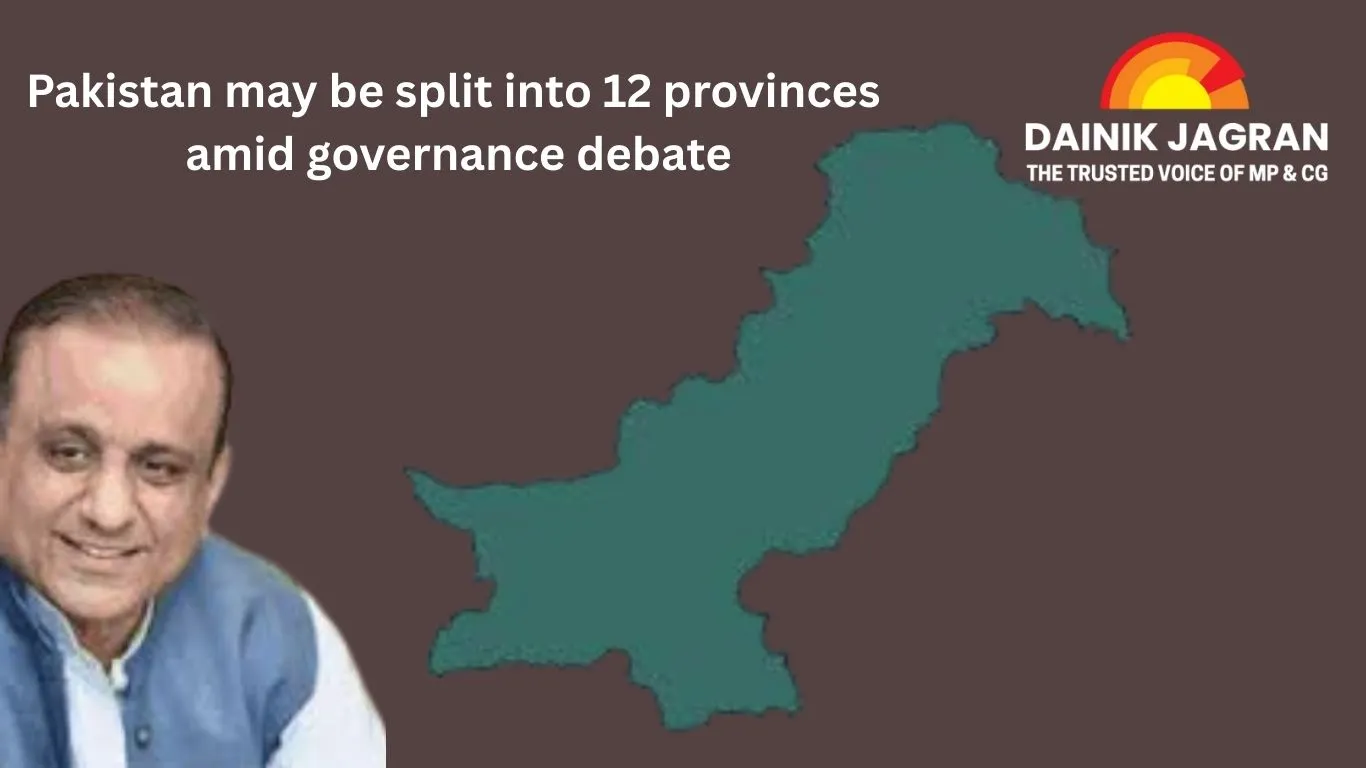
Pakistan may be split into 12 provinces amid governance debate
Digital Desk
Aleem Khan proposed dividing Punjab and Sindh into three provinces each, while Balochistan and Khyber Pakhtunkhwa (KP) would also be partitioned into three smaller regions. The suggested divisions include North, Central, and South Punjab; Karachi Sindh, Central Sindh, and Upla Sindh; North, South, and Tribal KP/FATA Region; and East, West, and South Balochistan. Khan argued that neighboring countries with smaller provinces experience more efficient governance, urging Pakistan to adopt a similar model.
The IPP, part of Prime Minister Shehbaz Sharif’s coalition, strongly supports the proposal, with the Muttahida Qaumi Movement Pakistan (MQM-P) pledging to push for the creation of new provinces through the 28th constitutional amendment.
However, the plan faces opposition from several parties, notably the Pakistan Peoples Party (PPP), which has rejected any division of Sindh. Sindh Chief Minister Murad Ali Shah cautioned that attempts against the province’s interests would not be tolerated. The Awami National Party (ANP) and Baloch nationalist groups have also criticized the move, citing risks to cultural heritage, local identities, and political stability.
Experts note that implementing the proposal would require a constitutional amendment with a two-thirds majority in Parliament. Senior officer Syed Akhtar Ali Shah highlighted that expanding provinces alone would not address governance challenges, pointing to local government weaknesses, uneven law enforcement, and limited administrative powers. Ahmed Bilal Mehboob of think tank PILDAT warned that creating new provinces could be costly, complex, and politically divisive, emphasizing that strengthening local governance should remain the priority.
The debate over Pakistan’s administrative reorganization signals growing tensions within the coalition government and raises broader questions about federalism, resource allocation, and political balance in the country.



.jpg)




