

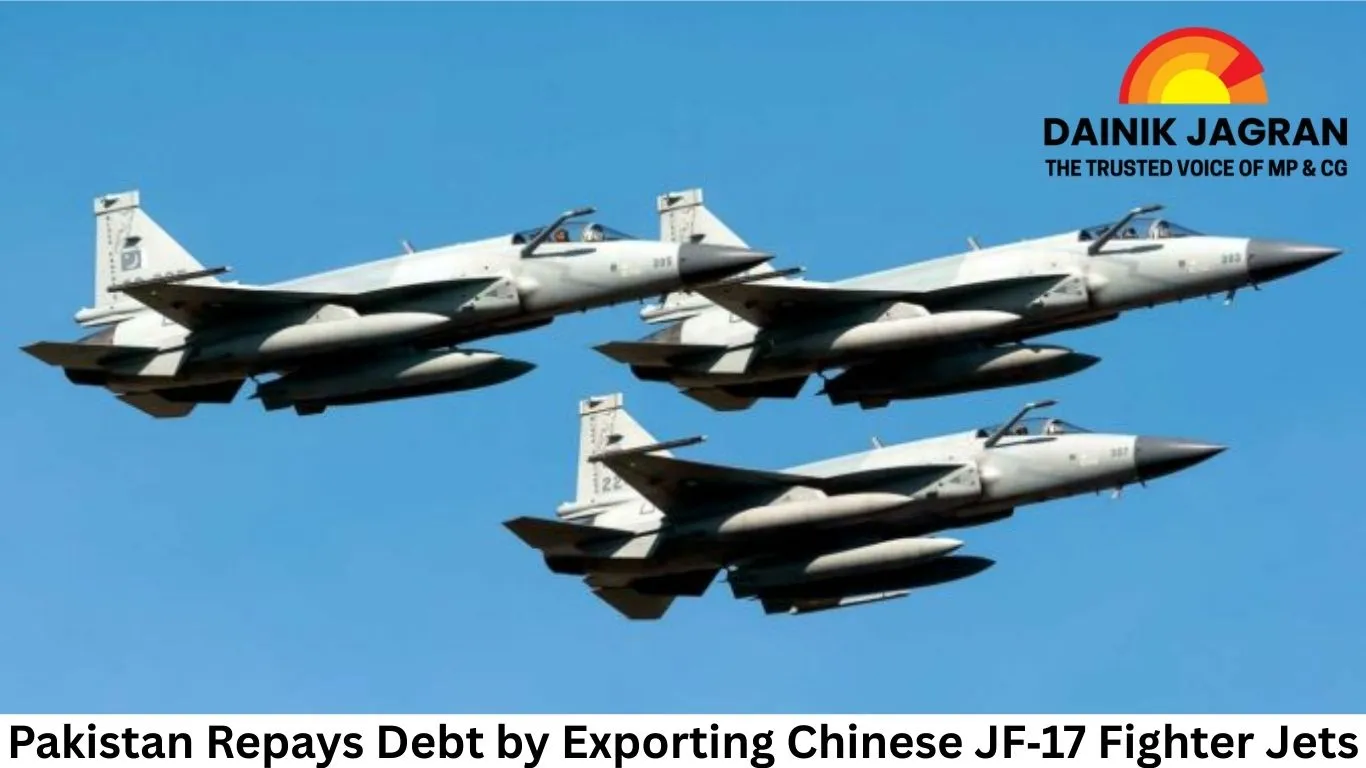
Pakistan Repays Debt by Exporting Chinese JF‑17 Fighter Jets

Digital Desk

Pakistan Repays Debt by Exporting Chinese JF‑17 Fighter Jets

Pakistan has begun using Chinese-made JF‑17 fighter jets to repay portions of its foreign debt, selling the aircraft to multiple countries including Saudi Arabia, Libya, Nigeria, Azerbaijan, Morocco, Indonesia, Ethiopia, and Sudan. The initiative reflects Islamabad’s effort to address its growing economic crisis while leveraging its defense production capabilities.

According to officials, Pakistan has repaid approximately ₹18,000 crore of its debt to Saudi Arabia through a barter-like deal involving JF‑17 fighter jets. The kingdom’s total debt from Pakistan stands near ₹70,000 crore. Each J-series jet, valued at roughly ₹200 crore, directs more than 80% of the proceeds to China, the jets’ co-producer.

The fighter jets are produced at the Pakistan Aeronautical Complex (PAC) in Kamra under a joint venture with China’s Chengdu Aircraft Corporation (CAC). The unit, entirely managed by Chinese personnel, employs about 500 engineers and produces around 50 JF‑17 jets annually. The venture also aims to position Pakistan and China as battle-ready on the global arms market, demonstrating the aircraft’s operational capabilities in simulated scenarios against India and Afghanistan.

“This arrangement allows Pakistan to manage some of its financial obligations while maintaining defense exports,” said a military official familiar with the deal. The sales have been informally described as “Always Brother” deals, highlighting strategic partnerships among Muslim-majority countries involved.

In addition to aircraft, Pakistan is collaborating with Turkey on a kamikaze drone production unit near Lahore, expected to produce approximately 200 drones annually for both domestic use and export.

Prime Minister Shehbaz Sharif has expressed public concern over Pakistan’s mounting reliance on foreign loans. Speaking to business leaders in Islamabad, he said, “I feel ashamed when I go around asking for money. Our economic situation forces repeated appeals for loans abroad.” This acknowledgment underscores the government’s intent to explore alternative mechanisms, such as defense exports, to manage external obligations.

Analysts note that while the JF‑17 sales help reduce debt, the arrangement underscores Pakistan’s dependence on China for defense technology and financial backing. Experts suggest that continued reliance on such barter deals may limit Pakistan’s fiscal autonomy in the long term.

With ongoing economic pressures, Pakistan is expected to continue leveraging military exports to settle debts while expanding partnerships with countries like Turkey to diversify its defense production and foreign exchange earnings.

--------

🚨 Beat the News Rush – Join Now!

Get breaking alerts, hot exclusives, and game-changing stories instantly on your phone. No delays, no fluff – just the edge you need. ⚡

Tap to join: 

🟢 WhatsApp Channel: Dainik Jagran MP CG

Crave more?

🅕 Facebook: Dainik Jagran MP CG English

🅧 Twitter (X): Dainik Jagran MP CG

🅘 Instagram: Dainik Jagran MP CG

Share the fire – keep your crew ahead! 🗞️🔥

english.dainikjagranmpcg.com
02 Feb 2026 By Nitin Trivedi

Pakistan Repays Debt by Exporting Chinese JF‑17 Fighter Jets

Digital Desk

According to officials, Pakistan has repaid approximately ₹18,000 crore of its debt to Saudi Arabia through a barter-like deal involving JF‑17 fighter jets. The kingdom’s total debt from Pakistan stands near ₹70,000 crore. Each J-series jet, valued at roughly ₹200 crore, directs more than 80% of the proceeds to China, the jets’ co-producer.

The fighter jets are produced at the Pakistan Aeronautical Complex (PAC) in Kamra under a joint venture with China’s Chengdu Aircraft Corporation (CAC). The unit, entirely managed by Chinese personnel, employs about 500 engineers and produces around 50 JF‑17 jets annually. The venture also aims to position Pakistan and China as battle-ready on the global arms market, demonstrating the aircraft’s operational capabilities in simulated scenarios against India and Afghanistan.

“This arrangement allows Pakistan to manage some of its financial obligations while maintaining defense exports,” said a military official familiar with the deal. The sales have been informally described as “Always Brother” deals, highlighting strategic partnerships among Muslim-majority countries involved.

In addition to aircraft, Pakistan is collaborating with Turkey on a kamikaze drone production unit near Lahore, expected to produce approximately 200 drones annually for both domestic use and export.

Prime Minister Shehbaz Sharif has expressed public concern over Pakistan’s mounting reliance on foreign loans. Speaking to business leaders in Islamabad, he said, “I feel ashamed when I go around asking for money. Our economic situation forces repeated appeals for loans abroad.” This acknowledgment underscores the government’s intent to explore alternative mechanisms, such as defense exports, to manage external obligations.

Analysts note that while the JF‑17 sales help reduce debt, the arrangement underscores Pakistan’s dependence on China for defense technology and financial backing. Experts suggest that continued reliance on such barter deals may limit Pakistan’s fiscal autonomy in the long term.

With ongoing economic pressures, Pakistan is expected to continue leveraging military exports to settle debts while expanding partnerships with countries like Turkey to diversify its defense production and foreign exchange earnings.

https://english.dainikjagranmpcg.com/international/pakistan-repays-debt-by-exporting-chinese-jf%E2%80%9117-fighter-jets/article-13586

Related Posts

Trending News


