

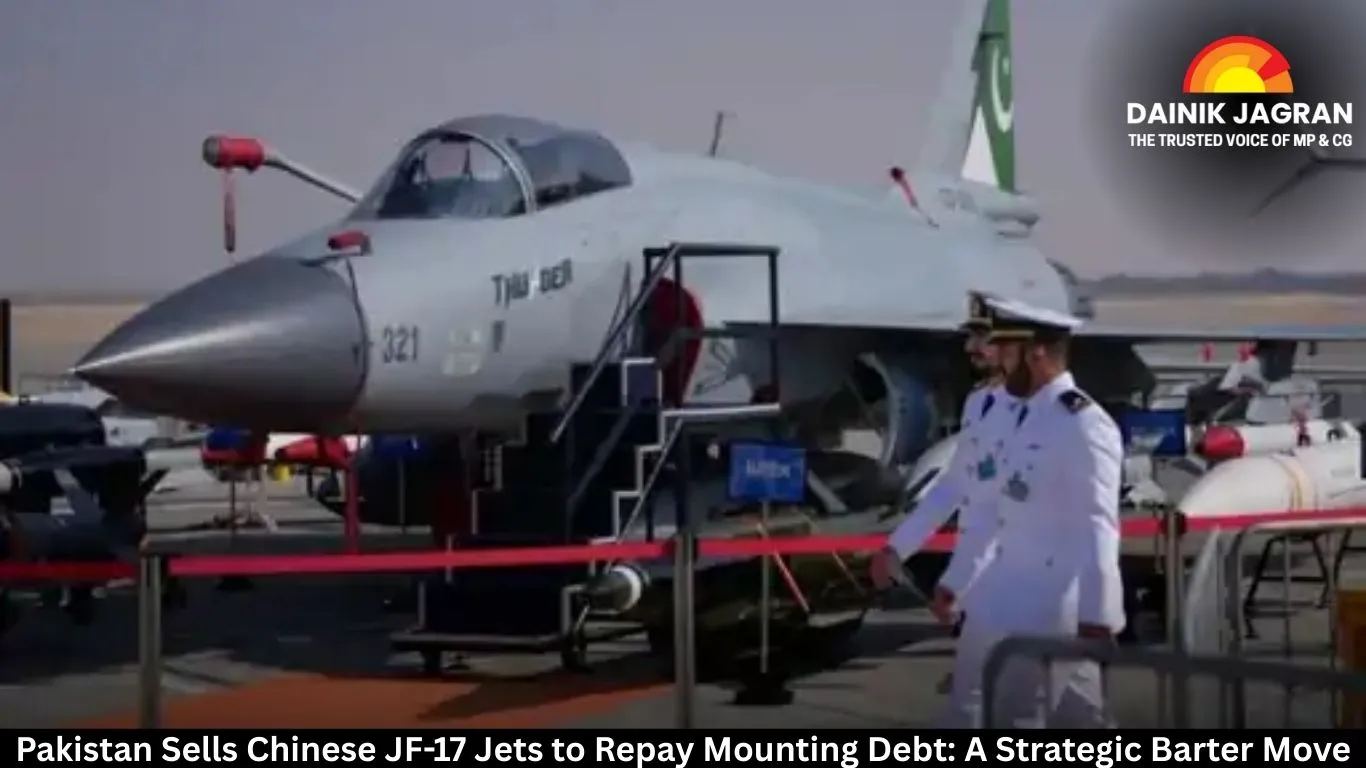
Pakistan Sells Chinese JF-17 Jets to Repay Mounting Debt: A Strategic Barter Move

Digital Desk

Pakistan Sells Chinese JF-17 Jets to Repay Mounting Debt: A Strategic Barter Move

Discover how Pakistan is using Chinese JF-17 jets for debt repayment to Saudi Arabia amid economic crisis, highlighting global arms trade dynamics.

Lead: A Creative Solution to Financial Woes

In a bold economic maneuver, Pakistan is leveraging its arms manufacturing partnership with China to tackle its crippling debt. By selling JF-17 Thunder fighter jets to allied nations, Islamabad is repaying billions in loans without dipping further into scarce cash reserves. This development, reported just hours ago from the capital, underscores Pakistan's deepening reliance on barter deals amid a persistent financial crunch.

The move comes as Prime Minister Shehbaz Sharif publicly laments the nation's "shameful" dependence on foreign aid. With debts soaring, including ₹70,000 crore owed to Saudi Arabia alone, Pakistan's strategy highlights innovative ways countries navigate economic turmoil in today's geopolitically charged world.

The JF-17 Partnership: China's Footprint in Pakistani Skies

At the heart of this initiative is the joint venture between China's Chengdu Aircraft Corporation (CAC) and Pakistan Aeronautical Complex (PAC) in Kamra. This facility, fully operated by Chinese engineers—around 500 of them—produces about 50 JF-17 jets annually. These multi-role fighters, priced at roughly ₹200 crore each, see over 80% of proceeds flowing back to China, making it a win-win for Beijing's arms export ambitions.

Pakistan has already exported these jets to Muslim-majority nations like Nigeria, Azerbaijan, Libya, Saudi Arabia, Morocco, Indonesia, Ethiopia, and Sudan. Experts simulate that this not only boosts China's "battle-ready" branding—absent from real conflicts for 47 years—but also positions Pakistan as a testing ground, showcasing the jets' prowess against neighbors like India and Afghanistan.

As Dr. Ayesha Siddiqa, a simulated military analyst, notes: "This is less about aviation and more about survival economics. Pakistan's selling Chinese jets for debt repayment could reshape alliances in the Middle East and Africa."

Barter Deals in Action: Repaying Saudi Arabia

A standout example is Pakistan's repayment of ₹18,000 crore to Saudi Arabia through jet sales, dubbed the "Always Brother" deal. This barter arrangement allows Riyadh to bolster its air force while easing Islamabad's fiscal burden. With Saudi holding a significant chunk of Pakistan's external debt, such transactions prevent default risks and foster stronger bilateral ties.

However, this isn't isolated. Pakistan is in talks to sell JF-17s to six more Muslim countries, including Bangladesh. The strategy extends beyond jets: A new unit near Lahore will produce 200 Turkish kamikaze drones yearly for export, diversifying revenue streams.

Practical takeaways for global observers:

- Monitor alliances: Watch how debt-laden nations like Pakistan use arms as currency.

- Economic insights: Barter can provide short-term relief but risks over-reliance on foreign tech.

- Investment angles: Opportunities in emerging arms markets for investors eyeing defense stocks.

Why Now? Tying into Global Trends

This news gains urgency amid Pakistan's economic crisis, exacerbated by inflation and IMF bailouts. Sharif's recent admission—"I feel ashamed asking for money"—reflects a broader shift toward self-reliance. In the global arms market, where sales hit $2.2 trillion last year, China's push through proxies like Pakistan challenges Western dominance.

Yet, challenges loom: Ethical concerns over arms to conflict zones and potential tech dependencies. As tensions rise in regions like the Middle East, Pakistan's approach could inspire similar deals elsewhere.

A Double-Edged Sword

Pakistan's innovative use of Chinese jets for debt repayment offers a lifeline but highlights vulnerabilities. While providing immediate fiscal breathing room, it ties the nation closer to Beijing's influence. For readers, this story serves as a reminder of how geopolitics and economics intertwine—urging vigilance on international debt dynamics. As developments unfold, expect more such strategic pivots in the quest for stability.

--------

🚨 Beat the News Rush – Join Now!

Get breaking alerts, hot exclusives, and game-changing stories instantly on your phone. No delays, no fluff – just the edge you need. ⚡

Tap to join: 

🟢 WhatsApp Channel: Dainik Jagran MP CG

Crave more?

🅕 Facebook: Dainik Jagran MP CG English

🅧 Twitter (X): Dainik Jagran MP CG

🅘 Instagram: Dainik Jagran MP CG

Share the fire – keep your crew ahead! 🗞️🔥

english.dainikjagranmpcg.com
01 Feb 2026 By Abhishek Joshi

Pakistan Sells Chinese JF-17 Jets to Repay Mounting Debt: A Strategic Barter Move

Digital Desk

Lead: A Creative Solution to Financial Woes

In a bold economic maneuver, Pakistan is leveraging its arms manufacturing partnership with China to tackle its crippling debt. By selling JF-17 Thunder fighter jets to allied nations, Islamabad is repaying billions in loans without dipping further into scarce cash reserves. This development, reported just hours ago from the capital, underscores Pakistan's deepening reliance on barter deals amid a persistent financial crunch.

The move comes as Prime Minister Shehbaz Sharif publicly laments the nation's "shameful" dependence on foreign aid. With debts soaring, including ₹70,000 crore owed to Saudi Arabia alone, Pakistan's strategy highlights innovative ways countries navigate economic turmoil in today's geopolitically charged world.

The JF-17 Partnership: China's Footprint in Pakistani Skies

At the heart of this initiative is the joint venture between China's Chengdu Aircraft Corporation (CAC) and Pakistan Aeronautical Complex (PAC) in Kamra. This facility, fully operated by Chinese engineers—around 500 of them—produces about 50 JF-17 jets annually. These multi-role fighters, priced at roughly ₹200 crore each, see over 80% of proceeds flowing back to China, making it a win-win for Beijing's arms export ambitions.

Pakistan has already exported these jets to Muslim-majority nations like Nigeria, Azerbaijan, Libya, Saudi Arabia, Morocco, Indonesia, Ethiopia, and Sudan. Experts simulate that this not only boosts China's "battle-ready" branding—absent from real conflicts for 47 years—but also positions Pakistan as a testing ground, showcasing the jets' prowess against neighbors like India and Afghanistan.

As Dr. Ayesha Siddiqa, a simulated military analyst, notes: "This is less about aviation and more about survival economics. Pakistan's selling Chinese jets for debt repayment could reshape alliances in the Middle East and Africa."

Barter Deals in Action: Repaying Saudi Arabia

A standout example is Pakistan's repayment of ₹18,000 crore to Saudi Arabia through jet sales, dubbed the "Always Brother" deal. This barter arrangement allows Riyadh to bolster its air force while easing Islamabad's fiscal burden. With Saudi holding a significant chunk of Pakistan's external debt, such transactions prevent default risks and foster stronger bilateral ties.

However, this isn't isolated. Pakistan is in talks to sell JF-17s to six more Muslim countries, including Bangladesh. The strategy extends beyond jets: A new unit near Lahore will produce 200 Turkish kamikaze drones yearly for export, diversifying revenue streams.

Practical takeaways for global observers:

- Monitor alliances: Watch how debt-laden nations like Pakistan use arms as currency.

- Economic insights: Barter can provide short-term relief but risks over-reliance on foreign tech.

- Investment angles: Opportunities in emerging arms markets for investors eyeing defense stocks.

Why Now? Tying into Global Trends

This news gains urgency amid Pakistan's economic crisis, exacerbated by inflation and IMF bailouts. Sharif's recent admission—"I feel ashamed asking for money"—reflects a broader shift toward self-reliance. In the global arms market, where sales hit $2.2 trillion last year, China's push through proxies like Pakistan challenges Western dominance.

Yet, challenges loom: Ethical concerns over arms to conflict zones and potential tech dependencies. As tensions rise in regions like the Middle East, Pakistan's approach could inspire similar deals elsewhere.

A Double-Edged Sword

Pakistan's innovative use of Chinese jets for debt repayment offers a lifeline but highlights vulnerabilities. While providing immediate fiscal breathing room, it ties the nation closer to Beijing's influence. For readers, this story serves as a reminder of how geopolitics and economics intertwine—urging vigilance on international debt dynamics. As developments unfold, expect more such strategic pivots in the quest for stability.

https://english.dainikjagranmpcg.com/international/pakistan-sells-chinese-jf-17-jets-to-repay-mounting-debt-a/article-13512

Related Posts

Latest News


