


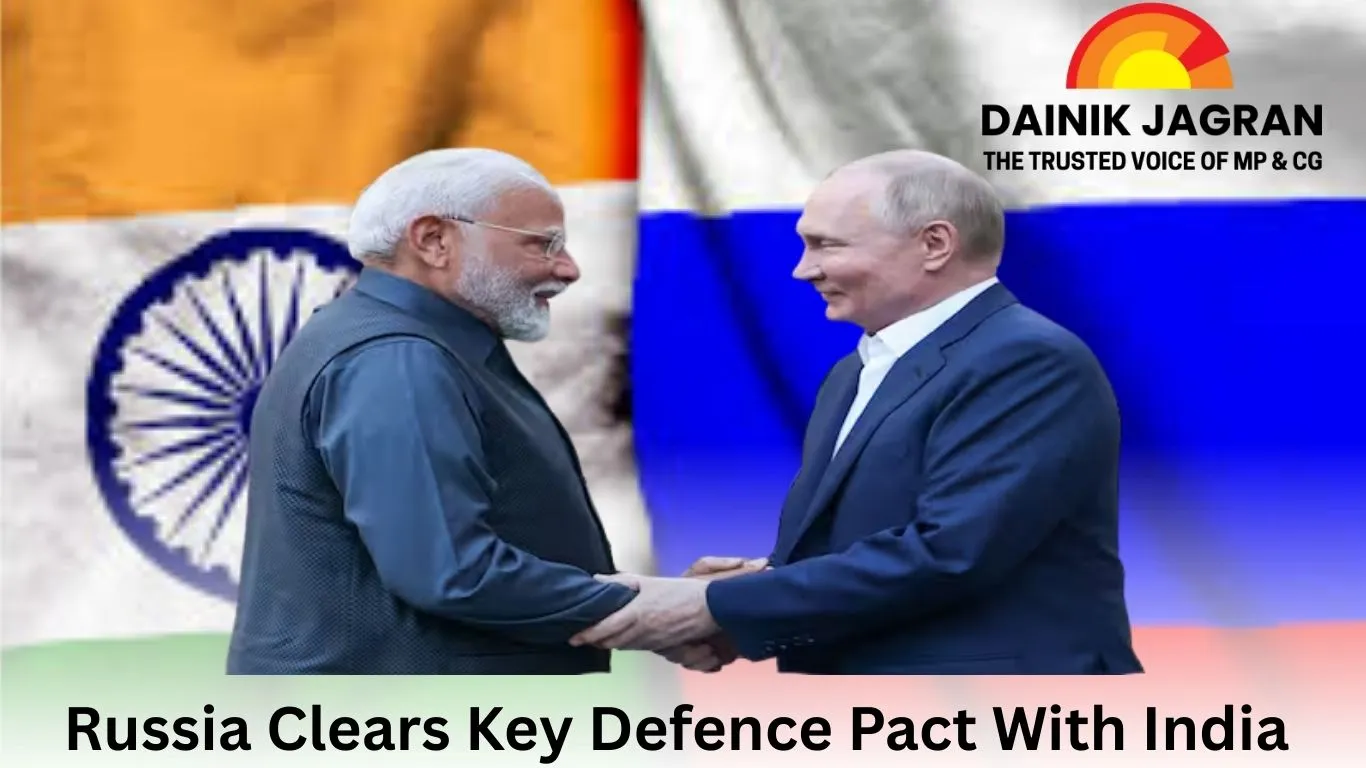
Russia Clears Key Defence Pact With India, Allowing Mutual Use of Military Bases Ahead of Putin’s Visit
Digital Desk
The pact enables both sides to undertake refuelling, maintenance, berthing, and supply operations at each other’s facilities, with costs shared equally. Preparations for the agreement began in February, and Russian Prime Minister Mikhail Mishustin forwarded it for parliamentary approval last week.
State Duma Speaker Vyacheslav Volodin said the move reflects the “deep and time-tested partnership” between the two countries and will significantly enhance defence cooperation. With this agreement, India becomes the only country in the world to have logistics-sharing arrangements with both the United States and Russia.
Indian Navy Chief Admiral Dinesh Tripathi confirmed on Tuesday that the pact is close to operationalisation, adding that it will not affect India’s ties with the U.S. or create friction between Washington and Moscow.
RELOS is expected to broaden India’s strategic reach, particularly in the Arctic, Far East, and Indian Ocean regions where Russia maintains extensive military infrastructure. India has already signed similar agreements with the U.S. (LEMOA), France, Australia, and several Asian partners.
Putin’s visit is expected to focus heavily on defence cooperation. Moscow has indicated its readiness to offer India the fifth-generation Su-57 stealth fighter jet, while discussions may also cover future collaboration on the S-500 air defence system, new BrahMos variants, and joint naval shipbuilding.
New Delhi is also likely to raise the delayed delivery schedule of its S-400 missile defence systems. India had ordered five units, of which three have arrived; the remaining deliveries slowed after the Russia-Ukraine conflict disrupted supply lines.
The approval of RELOS sets the stage for what is expected to be one of the most consequential India–Russia summits in recent years, as both nations navigate shifting geopolitical alignments and tightening Western sanctions on Moscow.

.jpg)




