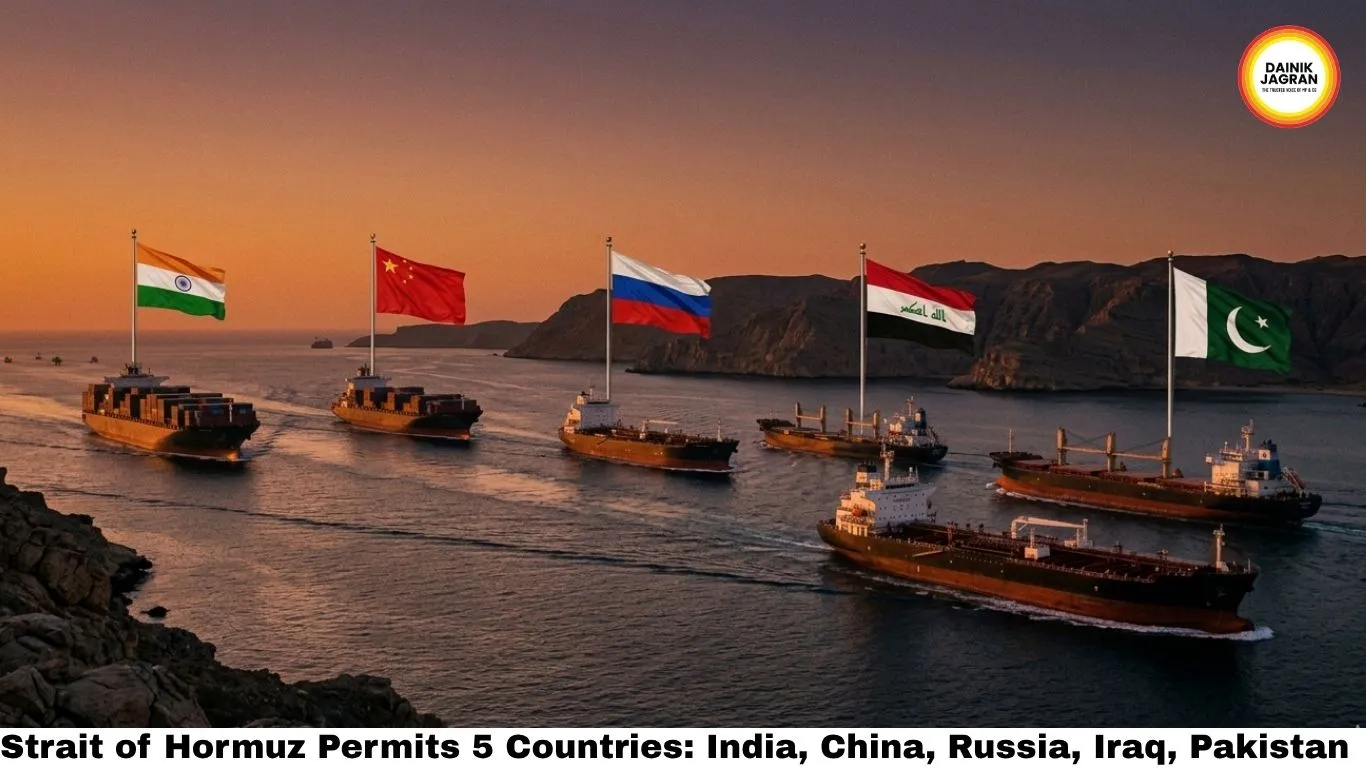
Strait of Hormuz Permits 5 Countries: India, China, Russia, Iraq, Pakistan Get Safe Passage
Digital Desk
Iran has allowed five nations—India, China, Russia, Iraq, and Pakistan—to transit through the Strait of Hormuz amid the West Asia war. US and Israeli ships remain banned.
Iran Names 5 ‘Friendly’ Nations Permitted to Use Strait of Hormuz Amid War
In a major development that has implications for global energy security, Iran has officially announced that five countries—India, China, Russia, Iraq, and Pakistan—will continue to receive safe passage through the Strait of Hormuz amid the ongoing West Asia conflict .
The announcement was made by Iranian Foreign Minister Seyed Abbas Araghchi in an interview with Iranian state television on March 25, 2026. While Iran has effectively restricted access to the strategic waterway for its adversaries, it has carved out an exemption for what it calls "friendly nations" .
"We have permitted certain countries that we consider friendly to pass through (Strait of Hormuz). We allowed China, Russia, India, Iraq, and Pakistan to transit," Araghchi said .
The Consulate General of Iran in Mumbai confirmed the development on social media, sharing the foreign minister's remarks .
The 5 Permitted Nations at a Glance
| Country | Status |
|---|---|
| 🇮🇳 India | Allowed passage |
| 🇨🇳 China | Allowed passage |
| 🇷🇺 Russia | Allowed passage |
| 🇮🇶 Iraq | Allowed passage |
| 🇵🇰 Pakistan | Allowed passage |
‘We Are in a State of War’: Who Is Banned?
While the five nations have been granted access, Araghchi made it clear that ships linked to Iran's adversaries will not be permitted to transit through the strait .
"We are in a state of war. The region is a war zone, and there is no reason to allow the ships of our enemies and their allies to pass through. But it remains open to others," he stated .
According to reports, vessels from the United States, Israel, and certain Gulf nations involved in the ongoing conflict are among those blocked from using the vital waterway .
How Iran Is Controlling the Strait
Iran is not imposing a complete blockade, but it has tightened its grip on the choke point. The Islamic Revolutionary Guard Corps (IRGC) is reportedly overseeing traffic, requiring ships to submit documents, obtain clearance codes, and move through designated corridors under escort .
A report by shipping publication Lloyd's List indicated that since mid-March, vessels have largely avoided traditional routes and are instead following pre-approved paths cleared by Iranian authorities .
The Iranian mission to the United Nations in New York clarified the conditions on March 25:
"Non-hostile vessels, including those belonging to or associated with other States, may—provided that they neither participate in nor support acts of aggression against Iran and fully comply with the declared safety and security regulations—benefit from safe passage through the Strait of Hormuz in coordination with the competent Iranian authorities" .
India’s Diplomatic Success
For India, the announcement represents a significant diplomatic achievement. New Delhi has been engaged in intensive diplomatic efforts focused on ensuring the unimpeded flow of energy through the strait .
The confirmation comes at a critical time when global oil and gas prices have surged following Iran's partial closure of the strait. The Strait of Hormuz handles roughly 20% of global oil and LNG supplies, making it the world's most important energy transit chokepoint .
At least five ships bound for India, including the LPG tankers Jag Vasant and Pine Gas, have already successfully crossed the strait in recent days under the new arrangement .
India Rejects ‘Toll’ Claims
Amid reports suggesting Iran was charging vessels a "toll" for passage, the Indian government pushed back strongly. Rajesh Kumar Sinha, Special Secretary in the Ministry of Shipping, clarified that the Strait of Hormuz is governed by international law:
"As you would know, this is an international strait, and as per international convention, it has the right of freedom of navigation and no levy fee can be imposed on it as per international regulation. Therefore, any fact presented by anyone, any argument made by anyone has no basis. It is baseless" .
Why This Matters: Energy Security
The selective opening of the strait has direct implications for energy security. India imports a significant portion of its crude oil and LPG from West Asia, and any prolonged disruption could affect fuel prices and availability.
However, the Ministry of Petroleum and Natural Gas has reassured citizens that India has 60 days of crude oil stock and one full month of LPG supply secured, calling reports of shortages a "deliberate misinformation campaign" .
The Road Ahead
UN Secretary-General Antonio Guterres has expressed concern over the situation, urging an end to the conflict:
"The prolonged closure of the Strait of Hormuz is choking the movement of oil, gas, and fertilizer at a critical moment in the global planting season. The best way to minimize those consequences is clear: End the war—immediately" .
For now, the five permitted nations can breathe a sigh of relief. Their ships have a corridor through one of the world's most dangerous waterways—but the larger crisis remains unresolved.

--------
🚨 Beat the News Rush – Join Now!
Get breaking alerts, hot exclusives, and game-changing stories instantly on your phone. No delays, no fluff – just the edge you need. ⚡
Tap to join:
🟢 WhatsApp Channel: https://whatsapp.com/channel/0029VbAeWYG72WTxso1CFr2g
Crave more?
🅕 Facebook: English Dainik Jagran MP CG
🅧 Twitter (X): Jagran MP CG
🅘 Instagram: Dainik Jagran MP CG
Share the fire – keep your crew ahead! 🗞️🔥
Strait of Hormuz Permits 5 Countries: India, China, Russia, Iraq, Pakistan Get Safe Passage
Digital Desk
Iran Names 5 ‘Friendly’ Nations Permitted to Use Strait of Hormuz Amid War
In a major development that has implications for global energy security, Iran has officially announced that five countries—India, China, Russia, Iraq, and Pakistan—will continue to receive safe passage through the Strait of Hormuz amid the ongoing West Asia conflict .
The announcement was made by Iranian Foreign Minister Seyed Abbas Araghchi in an interview with Iranian state television on March 25, 2026. While Iran has effectively restricted access to the strategic waterway for its adversaries, it has carved out an exemption for what it calls "friendly nations" .
"We have permitted certain countries that we consider friendly to pass through (Strait of Hormuz). We allowed China, Russia, India, Iraq, and Pakistan to transit," Araghchi said .
The Consulate General of Iran in Mumbai confirmed the development on social media, sharing the foreign minister's remarks .
The 5 Permitted Nations at a Glance
| Country | Status |
|---|---|
| 🇮🇳 India | Allowed passage |
| 🇨🇳 China | Allowed passage |
| 🇷🇺 Russia | Allowed passage |
| 🇮🇶 Iraq | Allowed passage |
| 🇵🇰 Pakistan | Allowed passage |
‘We Are in a State of War’: Who Is Banned?
While the five nations have been granted access, Araghchi made it clear that ships linked to Iran's adversaries will not be permitted to transit through the strait .
"We are in a state of war. The region is a war zone, and there is no reason to allow the ships of our enemies and their allies to pass through. But it remains open to others," he stated .
According to reports, vessels from the United States, Israel, and certain Gulf nations involved in the ongoing conflict are among those blocked from using the vital waterway .
How Iran Is Controlling the Strait
Iran is not imposing a complete blockade, but it has tightened its grip on the choke point. The Islamic Revolutionary Guard Corps (IRGC) is reportedly overseeing traffic, requiring ships to submit documents, obtain clearance codes, and move through designated corridors under escort .
A report by shipping publication Lloyd's List indicated that since mid-March, vessels have largely avoided traditional routes and are instead following pre-approved paths cleared by Iranian authorities .
The Iranian mission to the United Nations in New York clarified the conditions on March 25:
"Non-hostile vessels, including those belonging to or associated with other States, may—provided that they neither participate in nor support acts of aggression against Iran and fully comply with the declared safety and security regulations—benefit from safe passage through the Strait of Hormuz in coordination with the competent Iranian authorities" .
India’s Diplomatic Success
For India, the announcement represents a significant diplomatic achievement. New Delhi has been engaged in intensive diplomatic efforts focused on ensuring the unimpeded flow of energy through the strait .
The confirmation comes at a critical time when global oil and gas prices have surged following Iran's partial closure of the strait. The Strait of Hormuz handles roughly 20% of global oil and LNG supplies, making it the world's most important energy transit chokepoint .
At least five ships bound for India, including the LPG tankers Jag Vasant and Pine Gas, have already successfully crossed the strait in recent days under the new arrangement .
India Rejects ‘Toll’ Claims
Amid reports suggesting Iran was charging vessels a "toll" for passage, the Indian government pushed back strongly. Rajesh Kumar Sinha, Special Secretary in the Ministry of Shipping, clarified that the Strait of Hormuz is governed by international law:
"As you would know, this is an international strait, and as per international convention, it has the right of freedom of navigation and no levy fee can be imposed on it as per international regulation. Therefore, any fact presented by anyone, any argument made by anyone has no basis. It is baseless" .
Why This Matters: Energy Security
The selective opening of the strait has direct implications for energy security. India imports a significant portion of its crude oil and LPG from West Asia, and any prolonged disruption could affect fuel prices and availability.
However, the Ministry of Petroleum and Natural Gas has reassured citizens that India has 60 days of crude oil stock and one full month of LPG supply secured, calling reports of shortages a "deliberate misinformation campaign" .
The Road Ahead
UN Secretary-General Antonio Guterres has expressed concern over the situation, urging an end to the conflict:
"The prolonged closure of the Strait of Hormuz is choking the movement of oil, gas, and fertilizer at a critical moment in the global planting season. The best way to minimize those consequences is clear: End the war—immediately" .
For now, the five permitted nations can breathe a sigh of relief. Their ships have a corridor through one of the world's most dangerous waterways—but the larger crisis remains unresolved.