


Three Emerge as Frontrunners in Bangladesh PM Race Ahead of February 12 Polls
Digital Desk
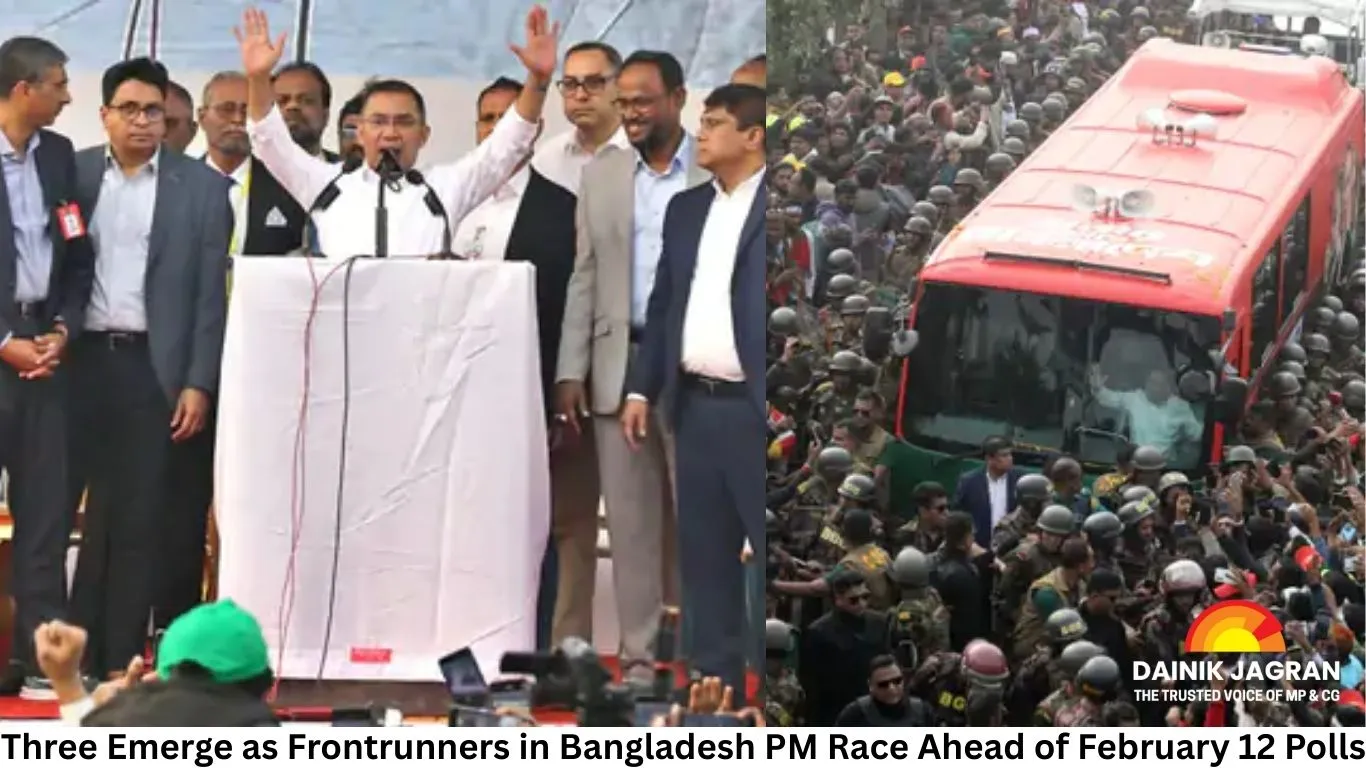
Tarique Rahman, son of former Prime Minister Khaleda Zia, returned to Dhaka on December 25 after 17 years abroad. More than 100,000 Bangladesh Nationalist Party (BNP) supporters gathered outside the airport, and a 13-km roadshow that typically takes minutes stretched beyond three hours. Days later, Khaleda Zia passed away, consolidating Tarique’s control over the party.
Opinion polls in December indicate the BNP holds a commanding lead. If the party secures a majority in the 300 directly elected seats, Tarique is widely expected to be chosen as parliamentary leader and sworn in as Prime Minister. He has sought to project a policy-focused image, promising 10 million jobs within 18 months, welfare “family cards” for low-income households, expanded technical education and major environmental initiatives.
However, the contest has broadened. Jamaat-e-Islami’s Shafiqur Rahman heads an 11-party Islamist alliance formed under a “One Box Policy” aimed at preventing vote fragmentation. Jamaat, which opposed Bangladesh’s 1971 independence and was banned before being reinstated in the late 1970s, remains a polarising force. While critics cite its historical baggage, the party claims millions of supporters and has stepped up outreach to younger voters through social media campaigns and cultural messaging.
Reports that Western diplomats have met Jamaat leaders have fueled debate over foreign engagement, though no formal endorsement has been confirmed.
The third contender, Nahid Islam, represents a generational shift. A prominent figure in the 2024 student-led protests that led to political upheaval, Nahid later served briefly in the interim administration before launching the NCP in February 2025. His party positions itself as a reformist platform for youth and urban voters and has aligned with Jamaat electorally. With nearly 44% of voters under 35, the youth vote could prove decisive.
The election will coincide with a national referendum on the proposed “July Charter,” a 26-point reform document. Voters will cast separate ballots for parliament and the referendum, which could empower the next legislature to act as a constituent assembly.
Bangladesh’s 350-member National Parliament follows the first-past-the-post system, similar to India. The party or coalition securing a majority will determine the next Prime Minister, setting the direction of governance at a pivotal political moment.
.jpg)




