


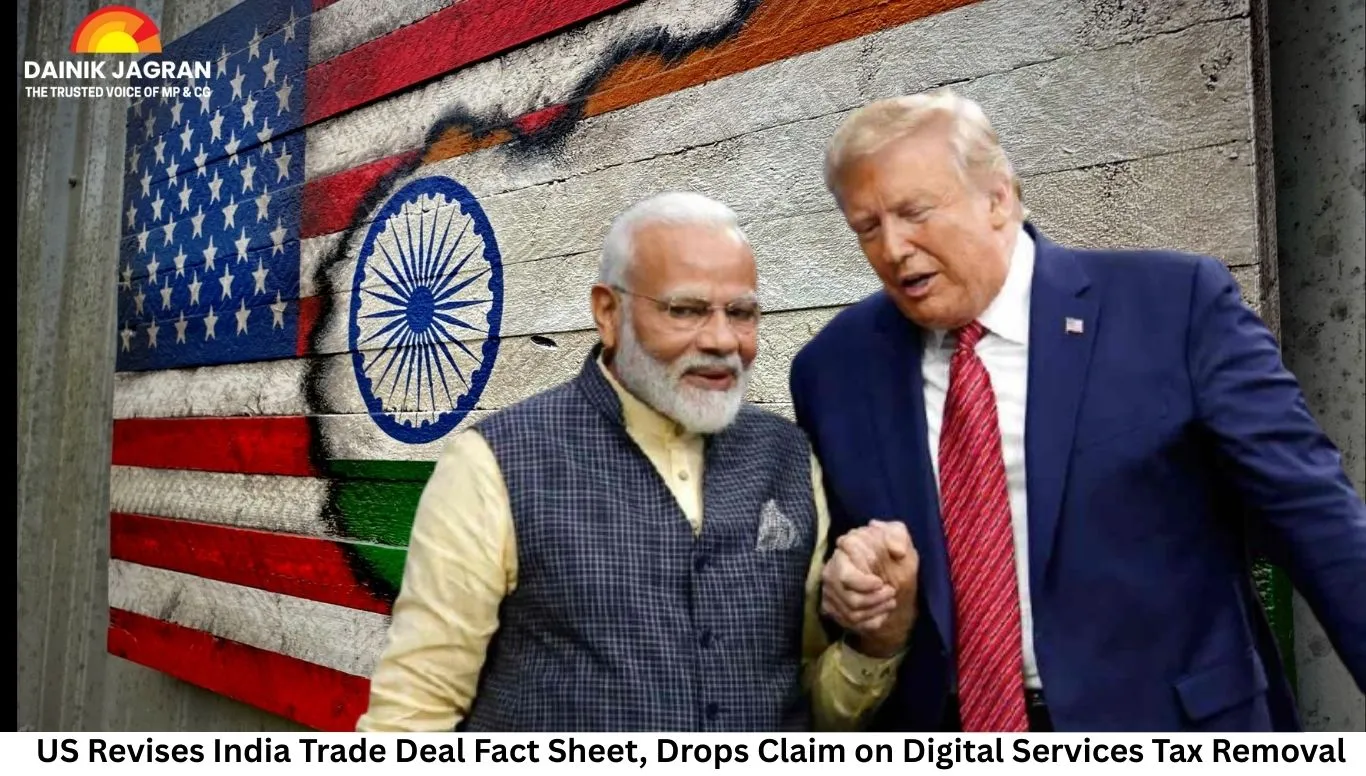
US Revises India Trade Deal Fact Sheet, Drops Claim on Digital Services Tax Removal
Digital Desk
The most significant change concerns digital taxation. In the earlier version, the US stated that India “will remove its digital services taxes” and had “committed” to negotiate strong bilateral digital trade rules addressing discriminatory practices. The revised fact sheet drops the assertion on tax removal and now says only that India has committed to negotiate a robust set of digital trade rules as part of the proposed Bilateral Trade Agreement (BTA).
The modification narrows the scope of what India has formally agreed to, particularly in an area sensitive to large American technology firms. India had already abolished its equalisation levy on specified digital services, such as online advertising, from April 2025. However, foreign digital companies remain subject to taxation under the Significant Economic Presence (SEP) framework introduced in 2018, which applies to non-resident entities crossing defined revenue or user thresholds.
The revised document also adjusts language around trade commitments. It replaces the earlier claim that India had “committed” to purchase over $500 billion worth of American goods with wording that India has expressed its “intent” to do so.
In agriculture, another key revision removes “certain pulses” from the list of US products on which India would cut or eliminate tariffs. The updated statement says India will reduce or remove tariffs on all US industrial goods and a broad range of agricultural products, including dried distillers’ grains, red sorghum, tree nuts, fresh and processed fruits, soybean oil, wine and spirits.
Agriculture remains a politically sensitive sector in both countries. The Indian government has indicated that tariff reductions on selected farm and intermediate goods will be phased in over up to 10 years, giving domestic producers time to adjust. New Delhi has maintained that farmer interests are protected under the interim framework.
Trade between the two countries continues to expand. US agricultural and food exports to India reached $2.25 billion in 2024, led by almonds. India’s agricultural exports to the US were significantly higher at about $6.2 billion, including marine products, rice and spices.
The interim agreement also outlines deeper cooperation in technology trade, including plans to boost exchanges in GPUs and data centre equipment, alongside discussions on standards to ease regulatory compliance. Negotiations toward a comprehensive BTA are expected to continue in the coming months.
.jpg)




