Trump Hints at India Visit Next Year, Praises PM Modi for Cutting Russian Oil Imports
Digital Desk
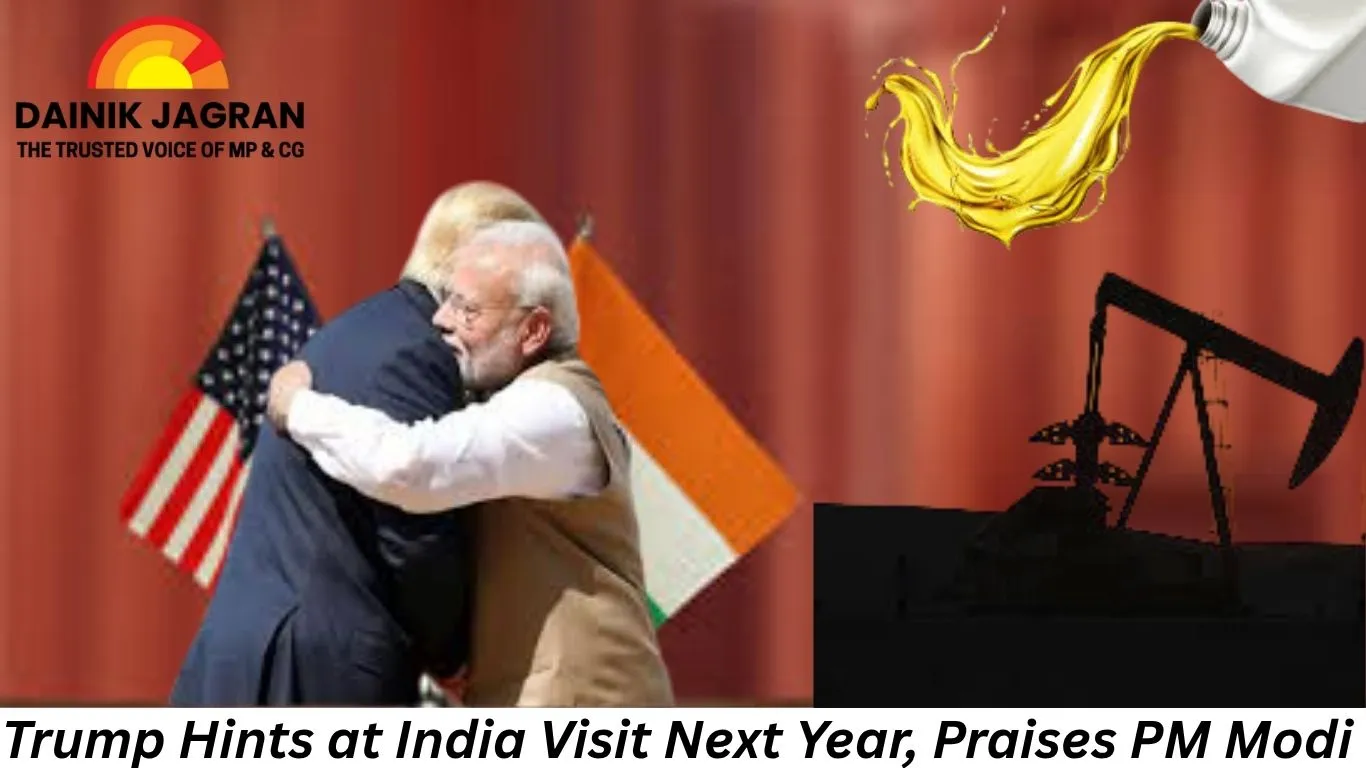
U.S. President Donald Trump on Thursday said he is considering a visit to India next year after receiving an invitation from Prime Minister Narendra Modi. Speaking at the White House, Trump praised Modi as “a good person” and commended India for “significantly reducing oil purchases from Russia.”
The statement came during an interaction with reporters in the Oval Office, where Trump confirmed that discussions on a trade agreement between the two countries are progressing well. When asked if he would visit India in 2026, the President smiled and said, “Yes, possibly.”
Reiterating past claims, Trump said he had helped defuse tensions between India and Pakistan by threatening economic tariffs. “Both are nuclear nations. They were on the verge of war. I told them I’d impose tariffs on both if they fought, and the matter was resolved in 24 hours,” he said.
According to earlier reports, Trump had skipped this year’s Quad Summit in India, citing trade disagreements over New Delhi’s Russian oil imports. His recent remarks come amid ongoing U.S. sanctions aimed at curbing global purchases of Russian crude.
India’s Ministry of External Affairs, however, clarified that no recent conversation took place between Modi and Trump. Spokesperson Randhir Jaiswal said India’s energy policy prioritizes stable prices and secure supply chains, emphasizing diversification of sources “in line with national interests.”
Despite U.S. pressure, Russia remains India’s top oil supplier, accounting for roughly one-third of imports in September 2025. Government refineries have scaled back Russian purchases, while private firms such as Reliance Industries and Nayara Energy continue long-term supply contracts.
Analysts view Trump’s outreach to India as a signal of Washington’s intent to strengthen trade and strategic ties, even as energy cooperation remains a sensitive issue in the evolving U.S.-India relationship.
--------
🚨 Beat the News Rush – Join Now!
Get breaking alerts, hot exclusives, and game-changing stories instantly on your phone. No delays, no fluff – just the edge you need. ⚡
Tap to join:
🟢 WhatsApp Channel: Dainik Jagran MP CG
Crave more?
🅕 Facebook: Dainik Jagran MP CG English
🅧 Twitter (X): Dainik Jagran MP CG
🅘 Instagram: Dainik Jagran MP CG
Share the fire – keep your crew ahead! 🗞️🔥
Trump Hints at India Visit Next Year, Praises PM Modi for Cutting Russian Oil Imports
Digital Desk
The statement came during an interaction with reporters in the Oval Office, where Trump confirmed that discussions on a trade agreement between the two countries are progressing well. When asked if he would visit India in 2026, the President smiled and said, “Yes, possibly.”
Reiterating past claims, Trump said he had helped defuse tensions between India and Pakistan by threatening economic tariffs. “Both are nuclear nations. They were on the verge of war. I told them I’d impose tariffs on both if they fought, and the matter was resolved in 24 hours,” he said.
According to earlier reports, Trump had skipped this year’s Quad Summit in India, citing trade disagreements over New Delhi’s Russian oil imports. His recent remarks come amid ongoing U.S. sanctions aimed at curbing global purchases of Russian crude.
India’s Ministry of External Affairs, however, clarified that no recent conversation took place between Modi and Trump. Spokesperson Randhir Jaiswal said India’s energy policy prioritizes stable prices and secure supply chains, emphasizing diversification of sources “in line with national interests.”
Despite U.S. pressure, Russia remains India’s top oil supplier, accounting for roughly one-third of imports in September 2025. Government refineries have scaled back Russian purchases, while private firms such as Reliance Industries and Nayara Energy continue long-term supply contracts.
Analysts view Trump’s outreach to India as a signal of Washington’s intent to strengthen trade and strategic ties, even as energy cooperation remains a sensitive issue in the evolving U.S.-India relationship.