

In a post on his social media platform Truth Social on Monday, Trump said an adverse ruling could force the government to refund hundreds of billions of dollars to US companies. He claimed the liability could rise into the trillions once compensation claims linked to investments made to avoid tariffs are considered. Describing the tariffs as a national security measure, Trump said overturning them would leave the country unable to manage the financial fallout.
The case before the Supreme Court involves petitions filed by several small businesses and a group of US states. They argue that Trump exceeded his authority by imposing sweeping import duties without congressional approval. The challengers maintain that IEEPA, enacted in 1977, does not explicitly permit tariffs and that the Constitution reserves taxing powers for Congress.
The disputed tariffs include major levies announced last April, which Trump defended as essential to reviving domestic manufacturing and reducing the trade deficit. According to official data, tariffs imposed under IEEPA have generated more than $130 billion, accounting for over half of total US tariff revenue, though they represent a small share of overall federal income.
Before reaching the Supreme Court, two lower courts ruled that Trump lacked the authority to impose global tariffs under the statute. During hearings in November, several justices, including members of the court’s conservative majority, expressed scepticism about whether trade deficits qualify as a “national emergency” under IEEPA. Justice Amy Coney Barrett cautioned that invalidating the tariffs could lead to administrative chaos, particularly in processing refunds—an observation Trump later echoed.
The White House has indicated that alternative legal tools could be used if the court rules against the tariffs. Officials have cited other trade laws that allow the president to impose temporary tariffs of up to 15 percent for 150 days, though such measures would be more limited in scope and duration.
Businesses affected by higher import costs are closely tracking the proceedings. Many have argued that the tariffs disrupted supply chains, raised prices, and created uncertainty. A ruling against the levies could ease cost pressures but would also raise questions about the extent of presidential authority in trade policy.
The Supreme Court’s decision, expected later this year, is likely to have lasting implications for executive power, the balance between Congress and the presidency, and the future direction of US trade policy.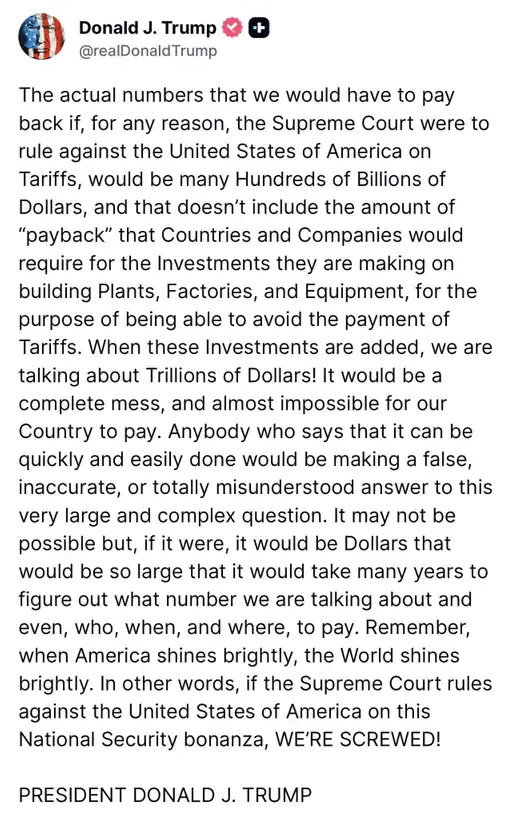

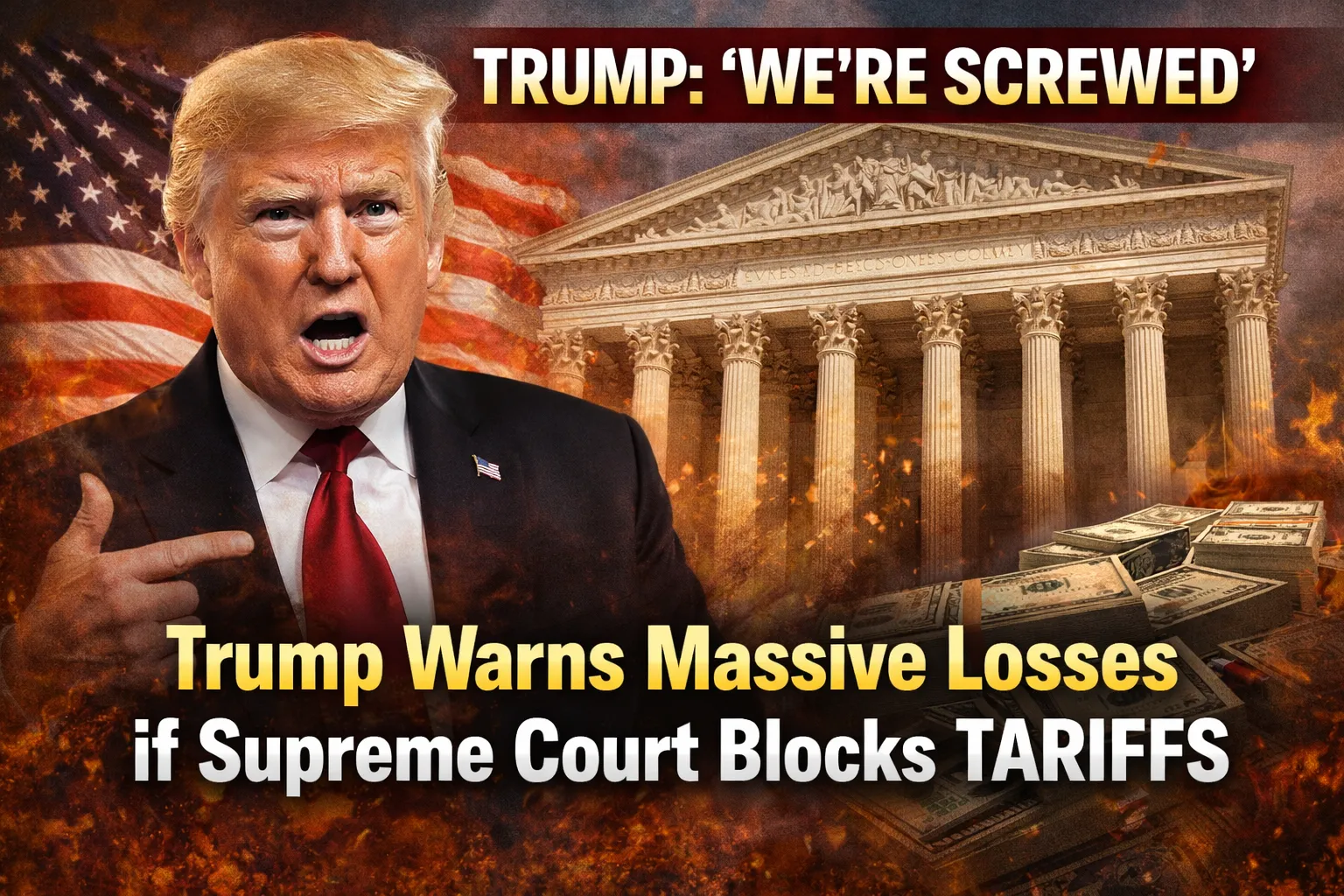
Trump Warns of Trillions in Losses if US Supreme Court Strikes Down Tariffs
Digital Desk
In a post on his social media platform Truth Social on Monday, Trump said an adverse ruling could force the government to refund hundreds of billions of dollars to US companies. He claimed the liability could rise into the trillions once compensation claims linked to investments made to avoid tariffs are considered. Describing the tariffs as a national security measure, Trump said overturning them would leave the country unable to manage the financial fallout.
The case before the Supreme Court involves petitions filed by several small businesses and a group of US states. They argue that Trump exceeded his authority by imposing sweeping import duties without congressional approval. The challengers maintain that IEEPA, enacted in 1977, does not explicitly permit tariffs and that the Constitution reserves taxing powers for Congress.
The disputed tariffs include major levies announced last April, which Trump defended as essential to reviving domestic manufacturing and reducing the trade deficit. According to official data, tariffs imposed under IEEPA have generated more than $130 billion, accounting for over half of total US tariff revenue, though they represent a small share of overall federal income.
Before reaching the Supreme Court, two lower courts ruled that Trump lacked the authority to impose global tariffs under the statute. During hearings in November, several justices, including members of the court’s conservative majority, expressed scepticism about whether trade deficits qualify as a “national emergency” under IEEPA. Justice Amy Coney Barrett cautioned that invalidating the tariffs could lead to administrative chaos, particularly in processing refunds—an observation Trump later echoed.
The White House has indicated that alternative legal tools could be used if the court rules against the tariffs. Officials have cited other trade laws that allow the president to impose temporary tariffs of up to 15 percent for 150 days, though such measures would be more limited in scope and duration.
Businesses affected by higher import costs are closely tracking the proceedings. Many have argued that the tariffs disrupted supply chains, raised prices, and created uncertainty. A ruling against the levies could ease cost pressures but would also raise questions about the extent of presidential authority in trade policy.
The Supreme Court’s decision, expected later this year, is likely to have lasting implications for executive power, the balance between Congress and the presidency, and the future direction of US trade policy.
.jpg)




