


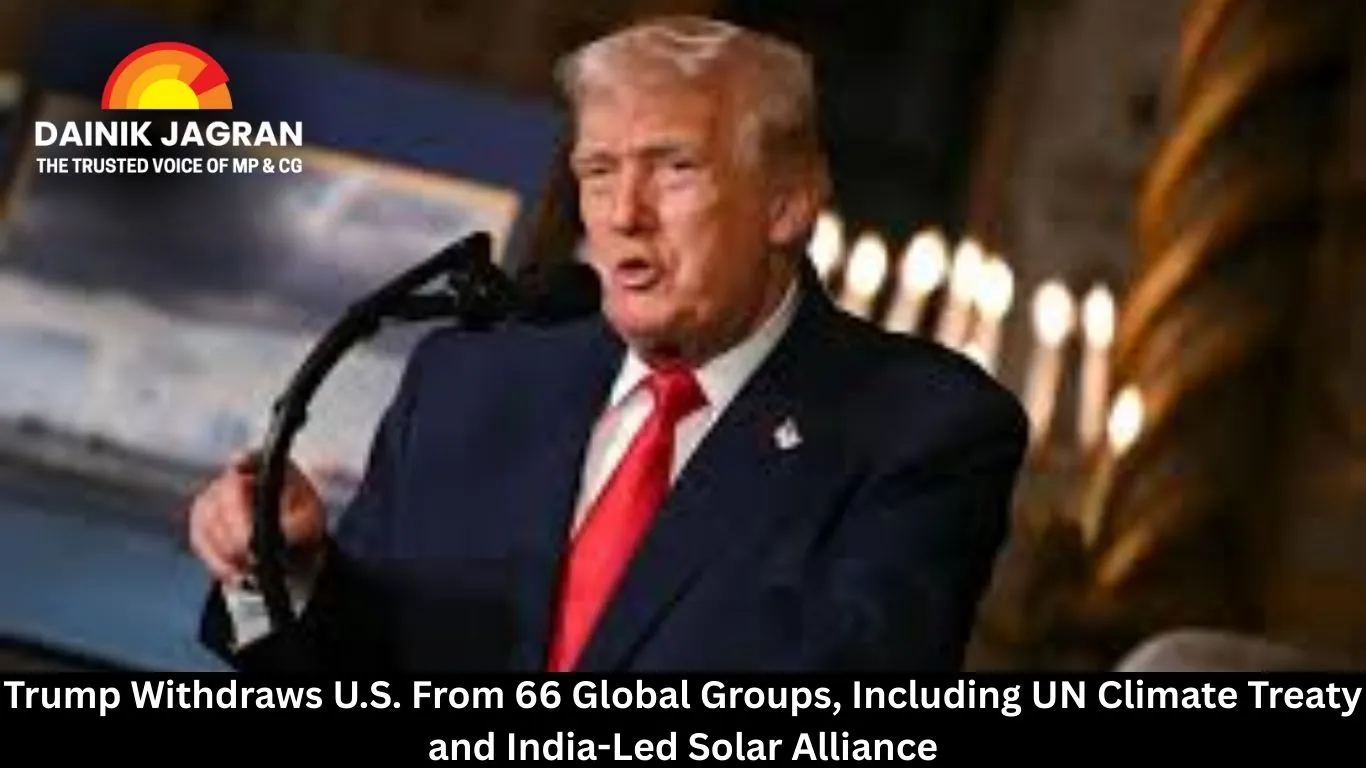
Trump Withdraws U.S. From 66 Global Groups, Including UN Climate Treaty and India-Led Solar Alliance
Digital Desk
U.S. Exits Dozens of Global Pacts in Sweeping “America First” Move, Stunning Allies
In a dramatic shift away from multilateral cooperation, former President Donald Trump has signed an order withdrawing the United States from 66 international organizations, labeling them as “wasteful, ineffective, and no longer serving American interests.”
The move, which includes exiting the foundational UN climate treaty and an India-led solar energy alliance, marks one of the most sweeping unilateral disengagements in recent history and sends shockwaves through global diplomacy.
The memorandum, signed Wednesday, directs federal agencies to halt participation and funding “as soon as possible.” The list spans 31 UN-linked bodies and 35 other international groups, fundamentally reshaping America’s role on the world stage at a time of intertwined climate and health crises.
A Major Blow to Global Climate Action
The decision notably targets the heart of international climate cooperation. The U.S. will withdraw from the United Nations Framework Convention on Climate Change (UNFCCC), the 1992 treaty underpinning the Paris Agreement. This follows the already-announced exit from the Paris pact itself.
“This move is not just symbolic; it’s a debilitating blow to the global fight against climate change,” said Stanford University scientist Rob Jackson. He warns it could encourage other nations to scale back their commitments. The U.S., the world's second-largest emitter, is also leaving the Intergovernmental Panel on Climate Change (IPCC) and the International Renewable Energy Agency.
The withdrawal from the International Solar Alliance, a key initiative co-founded by India and France to promote solar energy in sun-rich nations, is seen as a particular snub to a strategic partner and a growing clean energy market.
Diplomatic Isolation and Economic Costs
Former U.S. climate adviser Gina McCarthy stated the move would make America “the only country outside the UNFCCC,” dismantling decades of diplomatic leadership. “This isn’t just about climate,” she warned. “It isolates us, costs trillions in lost green investment, and cedes economic ground to China.”
The US international withdrawal extends beyond environmental pacts. Exiting groups like the UN Population Fund (UNFPA)—amid disputed claims over its work—and the Global Counterterrorism Forum raises concerns about broader humanitarian and security impacts.
This follows a pattern. In January 2025, Trump withdrew the U.S. from the World Health Organization for a second time, citing its pandemic response. Scientists fear this hampers the fight against AIDS, malaria, and future health crises.
What This Means Moving Forward
Manish Bapna of the Natural Resources Defense Council calls the decision “self-defeating,” weakening U.S. competitiveness. The practical effect is immediate: no U.S. delegations at crucial talks, frozen funding, and a vacuum in global governance.
For now, the world is left to ponder a fractured system of global partnerships. As one European diplomat lamented, “When the U.S. steps back, it doesn’t create an empty seat—it creates a much weaker table.” The long-term cost, experts agree, may be measured not just in diplomatic capital, but in a less stable, less cooperative world.

.jpg)




