


U.S. Intervention in Venezuela Tests the Limits of International Law
Digital Desk
A Precedent of Force: The Global Reckoning After Maduro’s Capture
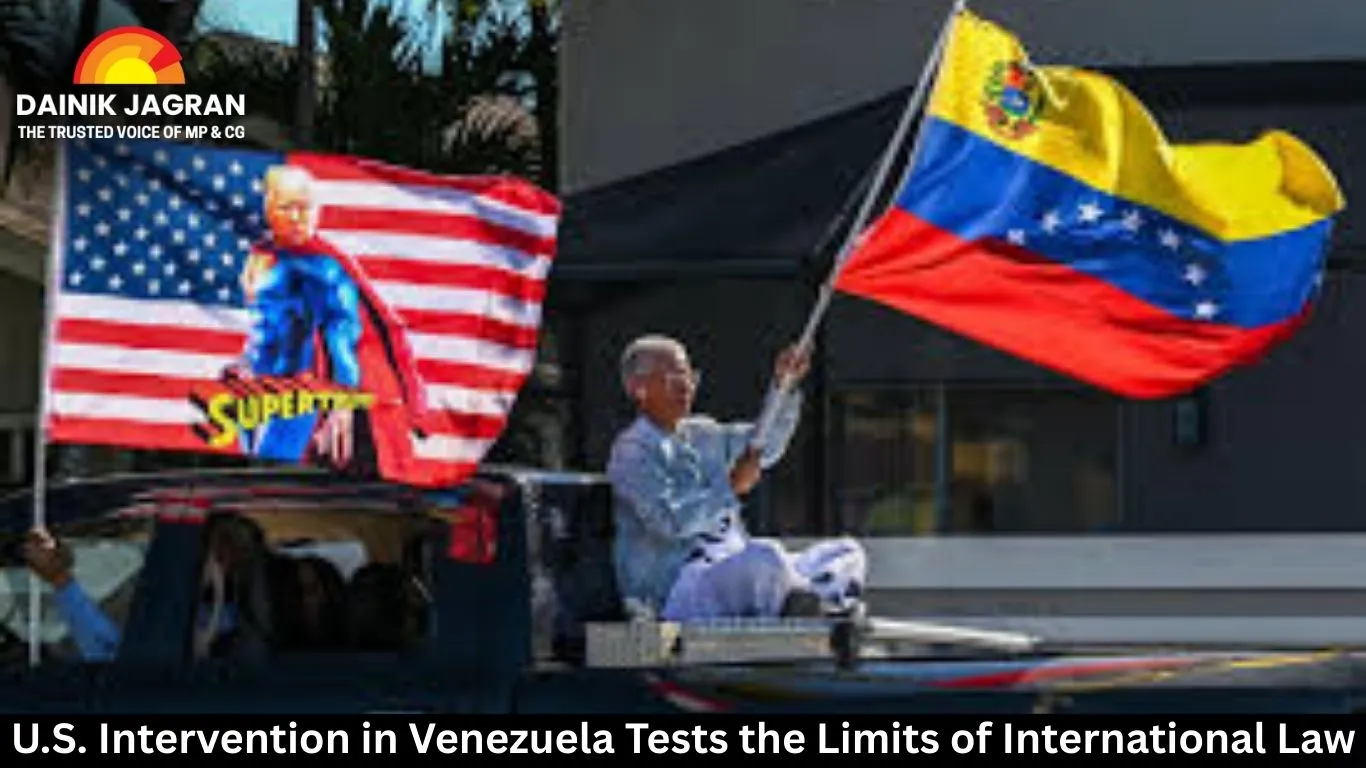
In the early hours of January 3, 2026, a dramatic military operation upended Latin American politics and sent shockwaves through the halls of global diplomacy. U.S. forces captured Venezuelan President Nicolás Maduro and his wife, Cilia Flores, in Caracas and swiftly transported them to New York to face narcoterrorism charges. This bold strike, framed by Washington as a justified action against a “narco-terrorist regime,” has ignited an urgent debate at the United Nations and beyond, challenging core tenets of the international order.
The immediate aftermath saw an emergency UN Security Council meeting, where the legality of the action was fiercely contested. While the United States defended its move, a coalition of nations, including regional powers Brazil, Chile, Colombia, and Mexico, issued a stern rebuke. They condemned the “unilateral military actions” as a violation of the UN Charter’s fundamental principles prohibiting the use of force and affirming state sovereignty.
The Legal and Diplomatic Firestorm
At the heart of the controversy is Article 2(4) of the UN Charter, which expressly forbids the threat or use of force against the territorial integrity of any state. The U.S. has argued its action falls under self-defense, citing Maduro’s alleged role in flooding America with deadly drugs. However, legal experts and opposing nations sharply reject this justification, arguing it sets a perilous precedent where a powerful country can militarily intervene in another based on domestic criminal indictments.
“One could easily imagine a Chinese indictment of a Taiwanese leader, under specious grounds, as lubricating a Chinese attack on Taiwan,” warns Justin Logan of the Cato Institute, highlighting the global ripple effects of this legal rationale. The European Union, while critical of Maduro’s legitimacy, stressed that combating transnational crime “must be addressed through sustained cooperation in full respect of international law”.
Energy and the “Trump Corollary”
Beyond law, the Venezuela intervention is a stark manifestation of the so-called “Trump Corollary” to the Monroe Doctrine—a policy aimed at denying influence in the Western Hemisphere to external powers like China and Russia. The operation directly targeted a key ally of both Beijing and Moscow; China had extended over $60 billion in loans to Venezuela and purchased the majority of its oil exports.
The prize is Venezuela’s vast but crippled oil industry. Once producing 3.5 million barrels per day, output has collapsed to around 1 million due to mismanagement and sanctions. President Trump has stated that “very large US oil companies” will be tasked with rebuilding the sector. However, analysts caution that recovery is a decade-long, multibillion-dollar endeavor requiring political stability that is far from guaranteed.
A World on Notice
The capture of Nicolás Maduro is more than a regional event. It is a signal that has been received in capitals worldwide. For adversaries, it demonstrates a willingness to use unilateral force. For allies, it deepens concerns over the volatility of U.S. power. And for the global south, it starkly questions whether the rules-based order applies equally to all.
As the UN debate continues, the ultimate cost of this operation remains unwritten. It has achieved a tactical objective but at the strategic price of eroding diplomatic norms and inviting a more unpredictable and confrontational global landscape.
The world is now watching to see if this becomes an isolated event or a template for a new, more coercive era of international relations.
.jpg)




