Trump Refuses to Lift Blockade Without Deal, Iran Says Ready for Conflict
International Desk
US–Iran tensions escalate as Trump says blockade will continue until a deal is reached. Iran warns it is ready for conflict before ceasefire ends.
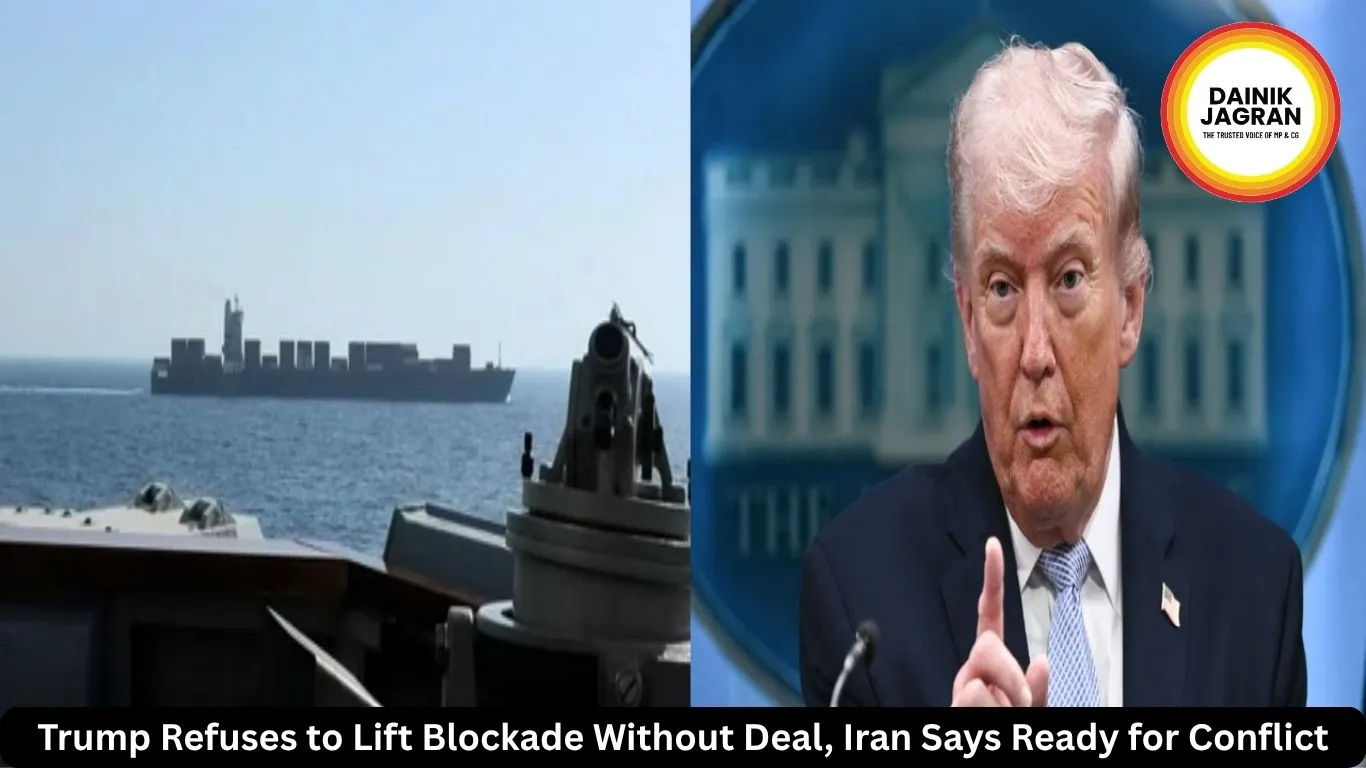
US–Iran tensions have sharply escalated after US President Donald Trump заявил that the naval blockade on Iranian ports will remain in place until Tehran agrees to a deal. The statement comes just days before a temporary ceasefire between the two sides is set to expire, raising concerns of renewed hostilities.
The latest developments mark a critical phase in the ongoing standoff, with both nations adopting hardened positions. The situation remains fluid and is being closely tracked as part of the latest news today across global diplomatic and security circles.
Trump’s position
Trump said the blockade, imposed roughly a week ago, has significantly disrupted Iran’s economy and maritime operations. In a social media post, he claimed that the US holds a strong advantage in the current situation and would not ease pressure without a formal agreement.
According to officials, Washington views the blockade as a strategic tool to compel Tehran into negotiations on terms favourable to the US.
Iran’s response
Iran responded strongly, with Parliament Speaker Mohammad Baqer Ghalibaf stating that Tehran would not bow to threats or pressure tactics. He accused the US of attempting to manipulate negotiations by violating ceasefire norms and escalating tensions.
Ghalibaf indicated that Iran has strengthened its military preparedness over the past two weeks and is ready to respond if conflict resumes. His remarks reflect a firm stance that aligns with broader government updates emerging from Tehran.
Ceasefire deadline nears
The temporary ceasefire between the US and Iran is set to expire on Wednesday evening (US time). Trump has indicated that there is little chance of extending it if no agreement is reached before the deadline.
Sources suggest that both sides are preparing for multiple scenarios, including a breakdown of talks and possible military escalation. The approaching deadline has intensified diplomatic activity, making this a key international news development.
Talks in Pakistan
Amid rising tensions, an Iranian delegation is expected to travel to Islamabad for potential negotiations with US representatives. Reports indicate that the talks could mark a second round of dialogue, although Iran’s foreign ministry earlier denied any formal plans.
Iran has reportedly set conditions for participation, including the presence of US Vice President JD Vance. Senior US officials, including special envoy Steve Witkoff and Jared Kushner, may also join the discussions.
Strait activity slows
Maritime traffic through the Strait of Hormuz has slowed significantly. Data shows that only 16 vessels passed through the strategic route on Monday, reflecting the impact of the blockade and heightened security concerns.
The US has also seized an Iranian-linked vessel attempting to transit the strait, further escalating tensions. Iran has warned of consequences, signalling that the maritime front could become a flashpoint.
Regional implications
The developments come amid broader instability in the Middle East, including ongoing ceasefire talks between Israel and Lebanon. Analysts say that any escalation between the US and Iran could have ripple effects across the region, affecting energy markets and global trade. This remains a high-impact public interest story, with implications for international security, oil prices, and diplomatic relations.
What lies ahead
With the ceasefire deadline approaching and negotiations uncertain, the coming days will be crucial. Diplomatic efforts in Pakistan may offer a narrow window for de-escalation, but both sides appear prepared for confrontation.

--------
🚨 Beat the News Rush – Join Now!
Get breaking alerts, hot exclusives, and game-changing stories instantly on your phone. No delays, no fluff – just the edge you need. ⚡
Tap to join:
🟢 WhatsApp Channel: Dainik Jagran MP CG
Crave more?
🅕 Facebook: Dainik Jagran MP CG English
🅧 Twitter (X): Dainik Jagran MP CG
🅘 Instagram: Dainik Jagran MP CG
Share the fire – keep your crew ahead! 🗞️🔥
Trump Refuses to Lift Blockade Without Deal, Iran Says Ready for Conflict
International Desk
US–Iran tensions have sharply escalated after US President Donald Trump заявил that the naval blockade on Iranian ports will remain in place until Tehran agrees to a deal. The statement comes just days before a temporary ceasefire between the two sides is set to expire, raising concerns of renewed hostilities.
The latest developments mark a critical phase in the ongoing standoff, with both nations adopting hardened positions. The situation remains fluid and is being closely tracked as part of the latest news today across global diplomatic and security circles.
Trump’s position
Trump said the blockade, imposed roughly a week ago, has significantly disrupted Iran’s economy and maritime operations. In a social media post, he claimed that the US holds a strong advantage in the current situation and would not ease pressure without a formal agreement.
According to officials, Washington views the blockade as a strategic tool to compel Tehran into negotiations on terms favourable to the US.
Iran’s response
Iran responded strongly, with Parliament Speaker Mohammad Baqer Ghalibaf stating that Tehran would not bow to threats or pressure tactics. He accused the US of attempting to manipulate negotiations by violating ceasefire norms and escalating tensions.
Ghalibaf indicated that Iran has strengthened its military preparedness over the past two weeks and is ready to respond if conflict resumes. His remarks reflect a firm stance that aligns with broader government updates emerging from Tehran.
Ceasefire deadline nears
The temporary ceasefire between the US and Iran is set to expire on Wednesday evening (US time). Trump has indicated that there is little chance of extending it if no agreement is reached before the deadline.
Sources suggest that both sides are preparing for multiple scenarios, including a breakdown of talks and possible military escalation. The approaching deadline has intensified diplomatic activity, making this a key international news development.
Talks in Pakistan
Amid rising tensions, an Iranian delegation is expected to travel to Islamabad for potential negotiations with US representatives. Reports indicate that the talks could mark a second round of dialogue, although Iran’s foreign ministry earlier denied any formal plans.
Iran has reportedly set conditions for participation, including the presence of US Vice President JD Vance. Senior US officials, including special envoy Steve Witkoff and Jared Kushner, may also join the discussions.
Strait activity slows
Maritime traffic through the Strait of Hormuz has slowed significantly. Data shows that only 16 vessels passed through the strategic route on Monday, reflecting the impact of the blockade and heightened security concerns.
The US has also seized an Iranian-linked vessel attempting to transit the strait, further escalating tensions. Iran has warned of consequences, signalling that the maritime front could become a flashpoint.
Regional implications
The developments come amid broader instability in the Middle East, including ongoing ceasefire talks between Israel and Lebanon. Analysts say that any escalation between the US and Iran could have ripple effects across the region, affecting energy markets and global trade. This remains a high-impact public interest story, with implications for international security, oil prices, and diplomatic relations.
What lies ahead
With the ceasefire deadline approaching and negotiations uncertain, the coming days will be crucial. Diplomatic efforts in Pakistan may offer a narrow window for de-escalation, but both sides appear prepared for confrontation.