


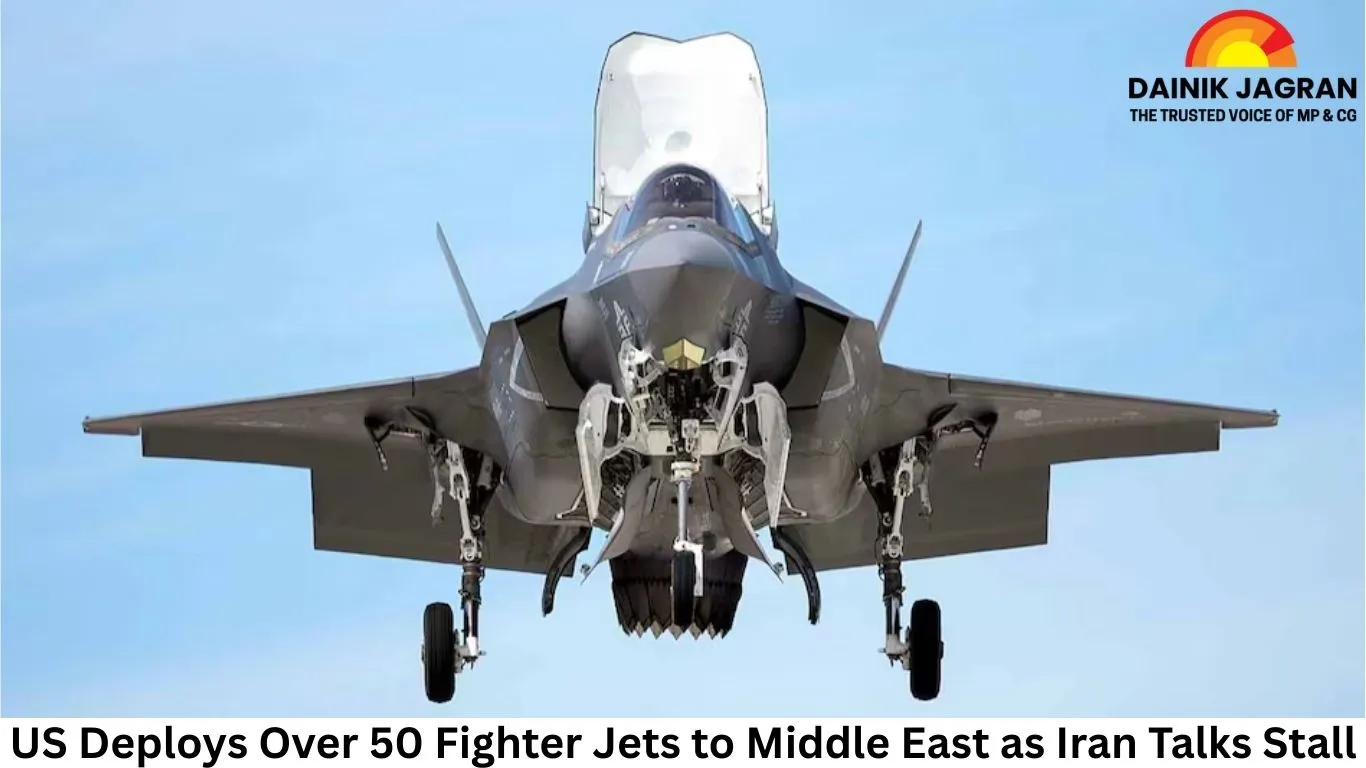
US Deploys Over 50 Fighter Jets to Middle East as Iran Talks Stall
Digital Desk
US Vice President JD Vance said Tehran had not agreed to conditions set by President Donald Trump, warning that Washington retains “other options” if negotiations fail. In a television interview, Vance described parts of the dialogue as constructive but said key disputes remain unresolved, underscoring the fragile state of diplomacy over Iran’s nuclear programme.
Military observers also reported aerial refuelling tankers accompanying the fighter deployment, suggesting preparations for sustained operations. Separately, a US official told Associated Press that a carrier strike group is moving toward the region, accompanied by guided-missile destroyers, further strengthening American military presence already expanded earlier this year.
The escalation comes as Iran conducted naval exercises near the Strait of Hormuz, temporarily restricting navigation in parts of the critical oil transit route. Iranian state media said the drills involved missile tests and were intended to assess operational readiness. Maritime security firms reported vessels in the area received radio warnings before the exercise began.
The waterway is among the world’s most strategically vital shipping corridors, carrying roughly one-fifth of global oil supply. According to the US Energy Information Administration, there is no fully practical alternative route for most exports from Gulf producers, making any disruption a concern for global markets.
Iranian Foreign Minister Abbas Araghchi struck a cautiously optimistic tone after talks, telling a conference at the United Nations that a “new window” had opened for a durable agreement benefiting all parties. He warned, however, that Iran is prepared to respond to any attack and that consequences would extend beyond its borders.
At the core of the dispute is Iran’s ballistic missile programme, which Tehran calls a non-negotiable element of its defence strategy. Washington, meanwhile, wants broader concessions, including limits on Tehran’s regional partnerships with groups such as Hezbollah and the Houthis, as well as guarantees related to regional security involving Israel.
Analysts say the parallel tracks of diplomacy and military signalling reflect a familiar strategy: negotiations backed by visible deterrence. Whether the current talks produce a breakthrough or deepen confrontation may depend on proposals expected from Tehran in the coming weeks. Until then, the situation remains tense, with military movements and diplomatic messages unfolding simultaneously.
.jpg)




