


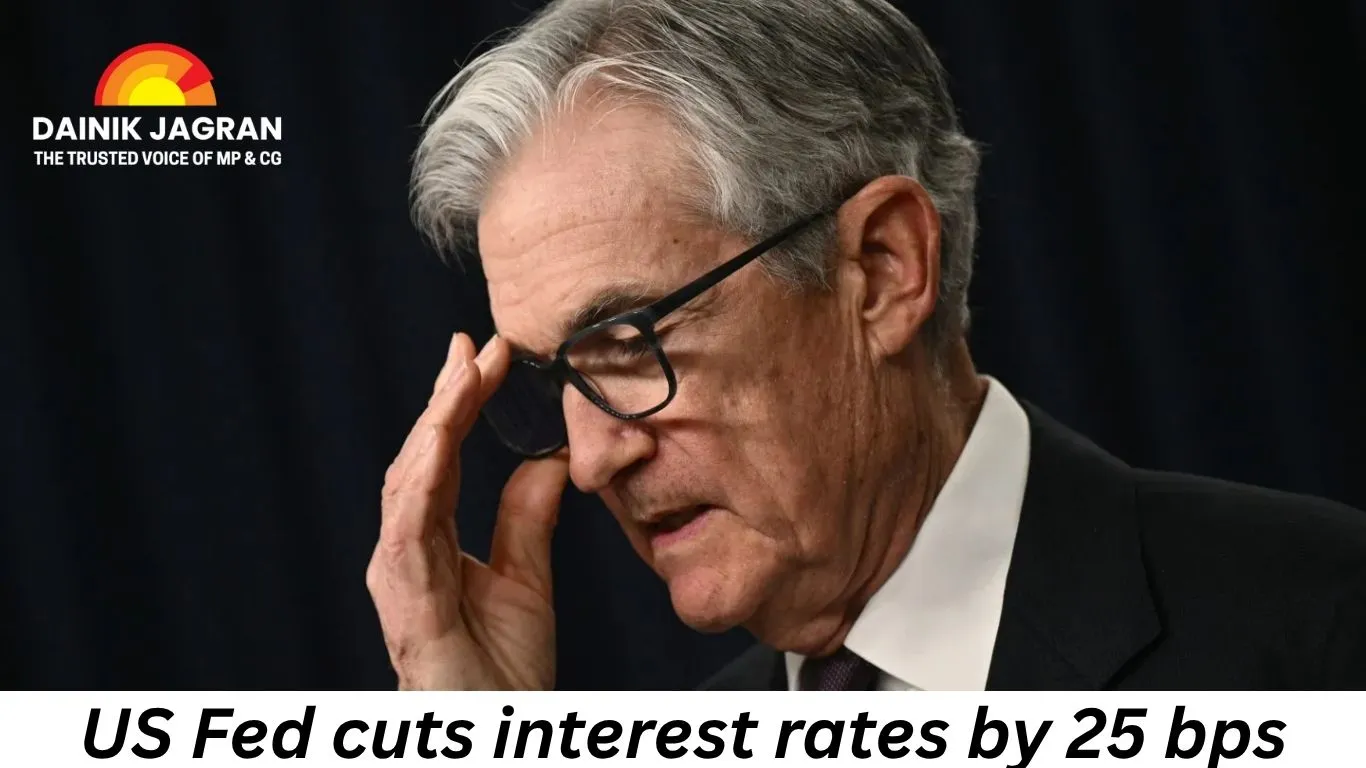
US Fed cuts interest rates by 25 bps: Key rate now between 3.75% and 4% amid labour market concerns
Digital Desk
The decision was backed by a 10–2 majority vote within the committee.
In its statement, the Fed noted that economic activity continues to expand at a moderate pace. “Job gains have slowed this year, and the unemployment rate has edged up but remains low through August; more recent indicators align with these trends. Inflation has moved up since earlier in the year and remains somewhat elevated,” the statement read.
Fed Chair Jerome Powell, in his post-meeting remarks, described the US labour market as “less dynamic and somewhat softer” than earlier in the year, attributing part of the slowdown to reduced immigration. However, he clarified that the weakness in hiring is not accelerating.
This marks the lowest interest rate in three years, extending the Fed’s easing cycle that began in September after a nine-month pause. The move reflects rising concerns over cooling job growth and trade-related disruptions, as the Fed shifts its focus toward employment stability while inflation remains above the 2% target.
Why it matters
The rate cut comes amid persistent inflation and the ongoing US government shutdown, which has limited the availability of economic data for policymakers. It is also the second consecutive rate cut, following the one in September — the first since December last year.
Dissenting voices
Two members of the FOMC opposed the decision:
-
Stephen Miran, on leave from the Council of Economic Advisers under President Donald Trump, favoured a larger 50 bps cut.
-
Jeffrey Schmid, President of the Federal Reserve Bank of Kansas City, voted to keep rates unchanged.
Fed to end quantitative tightening on December 1
Along with the rate cut, the Fed announced it will end its quantitative tightening (QT) — the gradual reduction of its asset holdings — effective December 1. The Fed’s balance sheet, which expanded sharply during the pandemic, has been contracting since then.
The FOMC provided no forward guidance for its next move. The next meeting is scheduled for December 9–10, where markets will watch for signals on whether another cut could follow.
The Fed’s September “dot plot” had already hinted at two more rate cuts in 2025, pointing to a gradual shift toward a more accommodative policy stance amid an uncertain global outlook.
Inflation and policy backdrop
The Consumer Price Index (CPI) inflation currently stands at 3%, lower than expected but still above the 2% goal. The Fed had earlier cut rates three times in 2024 before pausing to assess the impact of President Trump’s tariff policies. Rates were held steady at 4.25%–4.50% for five consecutive meetings until July 2025.
Market implications
The rate cut — bringing borrowing costs to a three-year low — is expected to ease lending conditions and support household and business spending.
For emerging markets like India, the move could prove beneficial, potentially reducing capital outflow pressures and improving investor sentiment. However, the extent of the impact will depend on Powell’s future guidance and global market reaction.
Currently, GIFT Nifty futures are trading 90 points lower at 26,166, indicating a likely gap-down opening on Thursday.




.jpg)




