


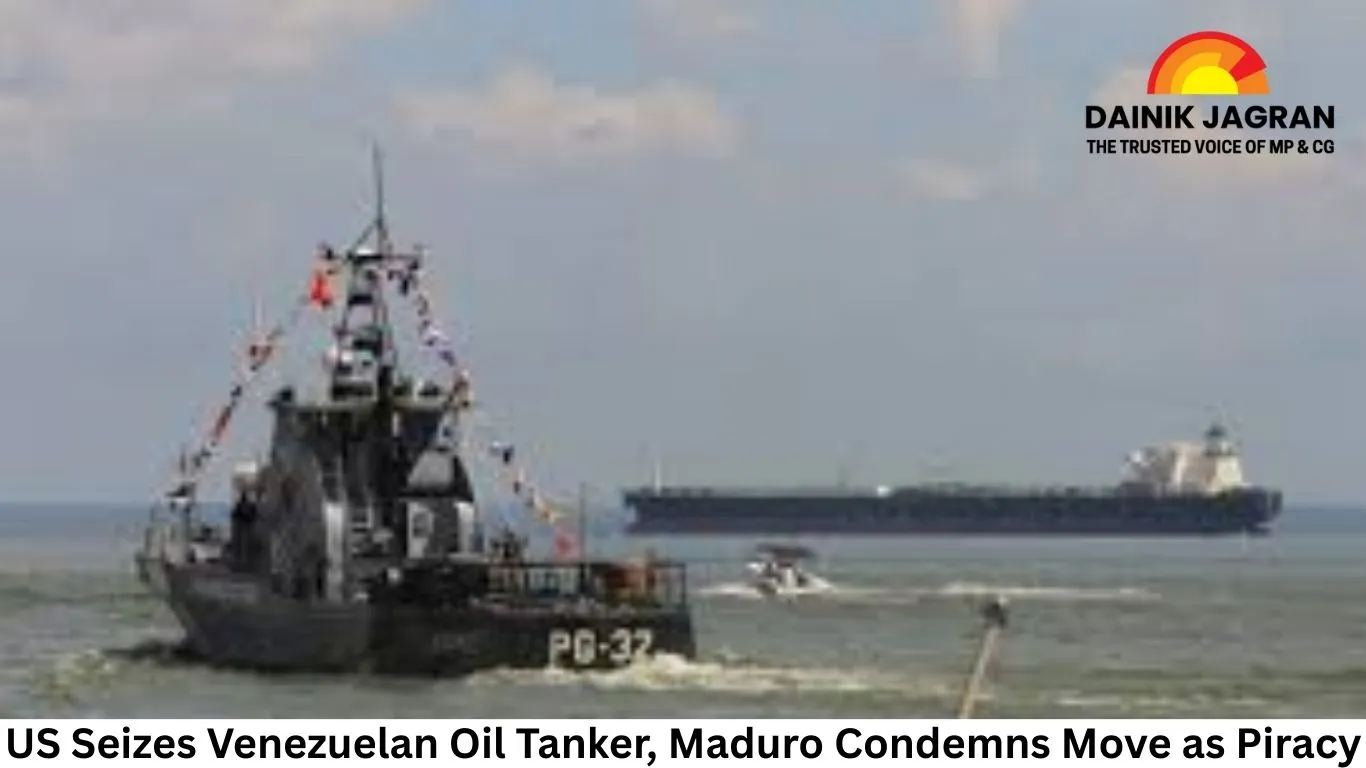
US Seizes Venezuelan Oil Tanker, Maduro Condemns Move as Piracy
Digital Desk
President Donald Trump confirmed the operation at the White House, describing the vessel as “perhaps the largest tanker ever” and indicated that the US would retain the oil onboard. Bondi stated the tanker had been on US sanctions lists for years due to illegally transporting oil from Venezuela and Iran, with proceeds allegedly supporting foreign terrorist organizations. The seizure was executed jointly by the FBI, Homeland Security Investigations, and the Coast Guard, with military assistance from the Department of Defense.
The Venezuelan government, led by President Nicolás Maduro, condemned the action, calling it piracy and theft, and accused the US of attempting to seize the country’s vital oil resources. Venezuela relies heavily on oil revenues to fund essential imports, including food and medicine. While China currently purchases around 80% of Venezuelan oil, US sanctions have effectively blocked direct sales to America.
The incident comes amid escalating tensions between the two nations. US officials have reportedly deployed three Aegis-guided missile destroyers—USS Gravely, USS Jason Dunham, and USS Sampson—along with 4,000 troops, P-8A Poseidon aircraft, and an attack submarine in the Caribbean, signaling potential further operations.
This marks the latest in a series of confrontations, with the US citing concerns over drug trafficking and sanctioned oil smuggling via Venezuelan vessels, though evidence of these claims remains undisclosed. Analysts warn the operation could heighten regional instability and strain diplomatic relations between Washington and Caracas.
The US maintains that such operations aim to disrupt illicit networks, while Venezuela frames them as violations of sovereignty, raising questions about the legal and geopolitical ramifications of the seizure.



.jpg)




