

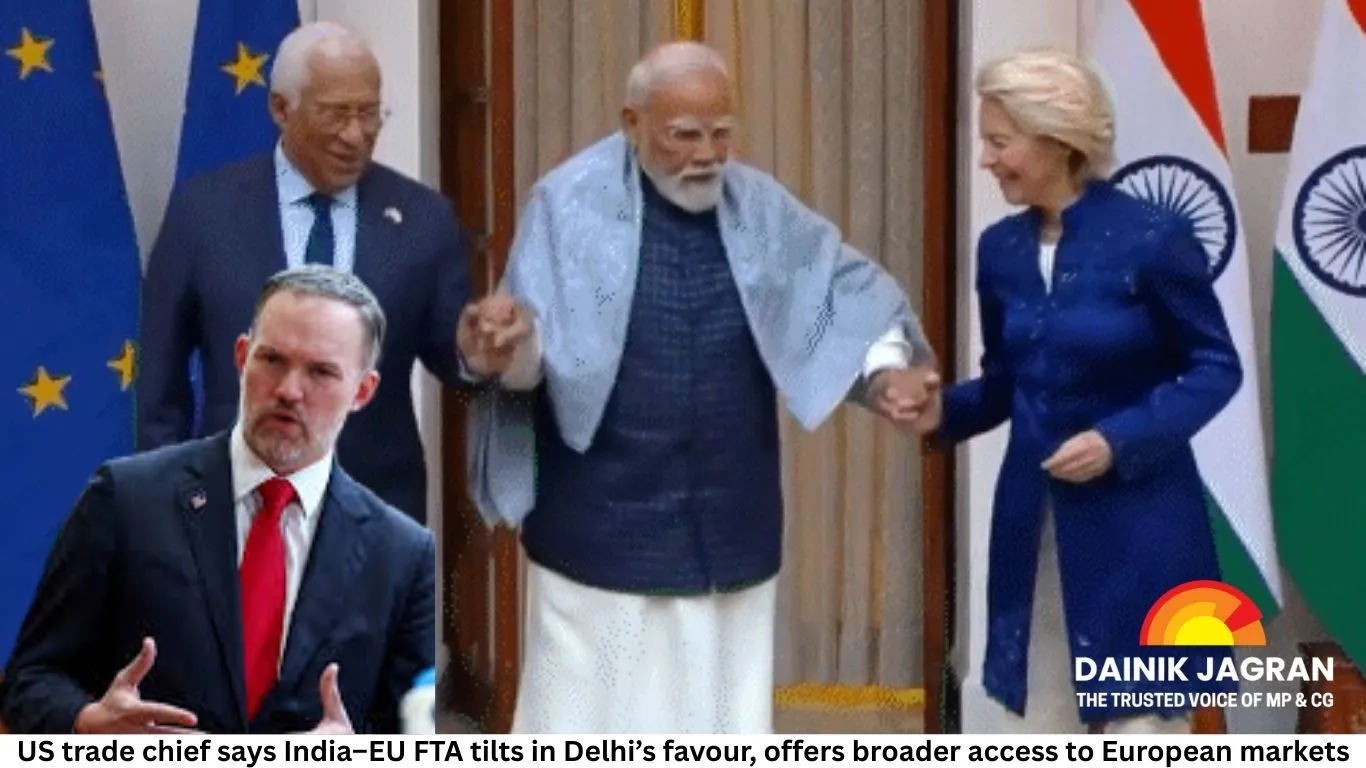
US trade chief says India–EU FTA tilts in Delhi’s favour, offers broader access to European markets

Digital Desk

US trade chief says India–EU FTA tilts in Delhi’s favour, offers broader access to European markets

The Free Trade Agreement (FTA) signed between India and the European Union is likely to benefit India more than Europe, according to Jamison Greer, a senior US trade official, who said the deal appears “tilted” in New Delhi’s favour by granting India wider access to European markets.

Greer said he had reviewed parts of the agreement and found that India stands to gain the most once the pact comes into force. “India seems to be benefiting from it. India is getting greater market access in Europe,” he said, calling the FTA a significant win for Indian exporters and businesses.

Greer noted that beyond trade in goods, the agreement could also include provisions easing the movement of Indian professionals to Europe. While he said full details were not yet public, he pointed to statements by European Commission President Ursula von der Leyen on improving mobility for Indian workers across EU member states. Such measures, he said, could open new opportunities for skilled Indian workers and strengthen India’s position in services trade.

The India–EU FTA was signed on January 27 in New Delhi and has been described by both sides as the “mother of all trade deals.” Once implemented, it is expected to create a combined market of nearly two billion people and cover about 25 per cent of global GDP. Under the agreement, tariffs on 99 per cent of India’s exports to the EU will be eliminated, while duties on over 97 per cent of EU exports to India will be reduced.

Greer attributed the EU’s urgency in finalising the deal partly to changing US trade policies. He said Washington’s renewed focus on domestic manufacturing and tighter market access under President Donald Trump has pushed Europe to look for alternative large markets. “The US is no longer offering easy access,” Greer said, adding that India has emerged as a natural partner for the EU amid global trade realignments.

According to officials, the FTA could come into force by 2027, subject to approval by the European Parliament and EU member states. European Commission estimates suggest the agreement will cut tariffs worth around €4 billion annually and generate employment on both sides.

The deal will also have visible effects in India’s consumer market. Import duties on European cars are set to fall sharply from 110 per cent to 10 per cent, though capped annually, while tariffs on European wines and spirits are expected to drop significantly.

While the European Commission has hailed the agreement as a strategic success, international observers, including US officials, see India as the principal beneficiary, gaining market access, investment opportunities and greater leverage in global trade at a time of shifting economic alliances.

--------

🚨 Beat the News Rush – Join Now!

Get breaking alerts, hot exclusives, and game-changing stories instantly on your phone. No delays, no fluff – just the edge you need. ⚡

Tap to join: 

🟢 WhatsApp Channel: Dainik Jagran MP CG

Crave more?

🅕 Facebook: Dainik Jagran MP CG English

🅧 Twitter (X): Dainik Jagran MP CG

🅘 Instagram: Dainik Jagran MP CG

Share the fire – keep your crew ahead! 🗞️🔥

english.dainikjagranmpcg.com
28 Jan 2026 By Nitin Trivedi

US trade chief says India–EU FTA tilts in Delhi’s favour, offers broader access to European markets

Digital Desk

Greer said he had reviewed parts of the agreement and found that India stands to gain the most once the pact comes into force. “India seems to be benefiting from it. India is getting greater market access in Europe,” he said, calling the FTA a significant win for Indian exporters and businesses.

Greer noted that beyond trade in goods, the agreement could also include provisions easing the movement of Indian professionals to Europe. While he said full details were not yet public, he pointed to statements by European Commission President Ursula von der Leyen on improving mobility for Indian workers across EU member states. Such measures, he said, could open new opportunities for skilled Indian workers and strengthen India’s position in services trade.

The India–EU FTA was signed on January 27 in New Delhi and has been described by both sides as the “mother of all trade deals.” Once implemented, it is expected to create a combined market of nearly two billion people and cover about 25 per cent of global GDP. Under the agreement, tariffs on 99 per cent of India’s exports to the EU will be eliminated, while duties on over 97 per cent of EU exports to India will be reduced.

Greer attributed the EU’s urgency in finalising the deal partly to changing US trade policies. He said Washington’s renewed focus on domestic manufacturing and tighter market access under President Donald Trump has pushed Europe to look for alternative large markets. “The US is no longer offering easy access,” Greer said, adding that India has emerged as a natural partner for the EU amid global trade realignments.

According to officials, the FTA could come into force by 2027, subject to approval by the European Parliament and EU member states. European Commission estimates suggest the agreement will cut tariffs worth around €4 billion annually and generate employment on both sides.

The deal will also have visible effects in India’s consumer market. Import duties on European cars are set to fall sharply from 110 per cent to 10 per cent, though capped annually, while tariffs on European wines and spirits are expected to drop significantly.

While the European Commission has hailed the agreement as a strategic success, international observers, including US officials, see India as the principal beneficiary, gaining market access, investment opportunities and greater leverage in global trade at a time of shifting economic alliances.

https://english.dainikjagranmpcg.com/international/us-trade-chief-says-india%E2%80%93eu-fta-tilts-in-delhi%E2%80%99s-favour/article-13249

Related Posts

Trending News


